|
 |












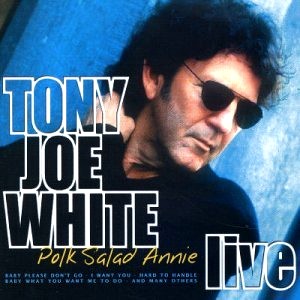
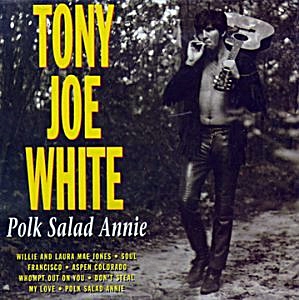
Tony Joe White is an American singer-songwriter from Louisiana who composed three songs that Elvis recorded (‘Polk Salad Annie’, ’I’ve Got A Thing About You Baby’ and ‘For Ol’ Times Sake’), as well as the popular 'Rainy Night in Georgia'.
EIN’s Piers Beagley met Tony Joe White in 2003 for a long chat about Elvis and music over wine & cigarettes.
EIN: Your songs feature so many great characters like Old Man Willis and Polk Salad Annie. Did you know these people? TJW: Sure, all those characters I knew - Polk Salad Annie is real. See, those swamp songs were all written about real characters from where I grew up. Down by the river there were a group of girls who played like tomboys and Annie could o' been any one of them. They loved shootin' and fishin', climbing trees, everything. 'Old Man Willis', 'Roosevelt and Ira Lee' they are all real people I grew up with and they make great stories.
EIN: You’ve played with a lot of Elvis’ musicians, several were even on your first album. TJW: Yeah, in fact Norbert Putnam and David Briggs were with me on ‘Polk Salad Annie’ when we first cut it. They were, like, “swampers” from Alabama who happened to be up in Nashville at the time doing a lot of Country music. When I came into town all of a sudden they all got a chance to swamp out a little bit! I’ve been especially lucky and played with a lot of musician heroes of mine. EIN: A lot of those were Nashville-based musicians, yet didn’t you live in Texas originally before coming to Nashville? TJW: I lived in Corpus Christi (Texas) for 12 years. I left Louisiana when I was just out of High school and went on down to Corpus where I started writing. I was about nineteen or twenty years old. That was where things started to move because until then, in the clubs, I was doing John Lee Hooker, Lightnin’ Hopkins and Elvis tunes every night. They were my heroes but then, when I started writing, it all turned into the swamp feel. That’s down-to-earth soul swamp music. EIN – I have an original 45 of yours ‘Groupie Girl’ from 1970 which was a big hit in England but I believe that you were even more successful in France initially. TJW: I got so many requests for that song that I need to learn it again! But in France it was 'Soul Francisco’ that took off first, even before ‘Polk’. I was still playing in a club in Corpus Christi for 10 dollars a night, just me and my guitar and a wooden box as a drum. My manager comes in and says “Hey Tony Joe, you got some interviews in France to do as you’ve got yourself a top 5 record there”. It seemed as far a way as Mars to me. It’s funny because there weren’t many English speaking records on the charts there in those days so it just had to be the feel of the record. They felt like the music was coming out of my heart & my soul and the French just seemed to connect. I remember playing huge theatres with 2,000 people and just me and my guitar and singing 'The High Sheriff' – They didn’t know what I’m sayin’ but they were all feelin’ it and just dancin’ & clapping. It was great.
EIN: There was a period where you seemed to concentrate on your song writing, so do you prefer the writing or performing? TJW: Well the writing is always a thing that just comes along. A guitar lick sneaks up on me or something – I never know when it is going to come. After I’ve been out on the road for a while I just go back into the woods and build me a little campfire and get my guitar out and wait for the things to come or not come – who knows? EIN: The list of people who have recorded your songs is amazing and you seem so prolific. It doesn’t seem that you can have ever had that writer’s block period that songwriters often do? TJW: I’ve never thought about it. I’ve never considered that I was trying to write. It would be a terrible thing to be a briefcase writer where you had to write a song a day or whatever. It would freak me out. With me it just happens when it does. EIN: What is the song that has been the biggest success for you? Perhaps ‘Rainy Night In Georgia’? TJW: ‘Rainy Night’ has been covered a lot and ‘Polk’ has been covered a bit but I think ‘Rainy Night’ has something over a hundred versions of it. But I could never forget Brook Benton’s version of it. I had just recorded ‘Rainy Night’ for my album in ‘69 but I really wasn’t into it, you know. A bit too slow and cool. Then when I heard Brook Benton’s version I went "Shit, I gotta’ learn that!" - it was so good. EIN: Elvis sings one line of it in his Elvis On Tour movie, it’s such a beautiful song. TJW: That came about ‘cos my sister lived in Marietta, Georgia. I went down there to find a job and I ended up driving a dump truck for the highway department - as well as playing my guitar. It would rain for days and nights down there. I was inspired by that Bobbie Gentry song 'Ode to Billie Joe' that I heard on the radio - and that pushed me to try some original songs, as well as the Elvis and blues stuff I was doin' on stage. I sure spent a lot of rainy nights in Marietta, Georgia!
EIN: What did you think of his version of your ‘For Ol’ Times Sake’? TJW: His version of that kills me. I especially like seeing him in that live movie with him on stage really cutting up on my songs. EIN: Was that time in Las Vegas the only time you hung out with Elvis? TJW: Oh no, I was down there in Memphis for those Stax sessions too. EIN: When he recorded your songs ‘For Ol’ Times Sake’ and ‘I’ve Got A Thing About You Baby’ in July 1973? TJW: I was living in Memphis at the time and it was about 4 o’clock in the morning when my phone rings. This German voice says "Mr. White, we are down at Stax Records do you have any more songs? We need to do some songs." I said "Well, who in the hell is this, why you calling me at this time?" He explained that he was Freddy Bienstock, Elvis’ publisher. I asked if Felton was down there and he said he was. So I got up and ran into my studio and ran off a copy of ‘For Ol’ Times Sake' and ‘I’ve Got A Thing About You Baby’ and one other and went down the studio. I drove all the way to downtown Memphis and was met in this low, dark alleyway by two shady men in hats and coats. They said in this thick German accent "Did you bring zee tapes?" and I was ushered into this little bitty room! It was so strange and freaky, man. A real seedy part of town and these guys in their ‘50s or ‘60s and they had a little reel-to-reel in this dark cubby hole. They sit me down on a chair and they played two bars of ‘For Ol’ Times Sake’ and ‘I Got A Thing’ and they played the third song. They said "We like the first two. Now you can go!" I said, "Hey man, I’ve driven this far where’s Felton?" They said, "You don’t need Felton. We like these songs. You can go!" So at that point I realised just how out of contact Elvis had got with the street, to be letting these two old men out there be picking his tunes and stuff. But at this point luckily Felton walked in and took me into the studio with me and him and Elvis, so it was cool then. I was in the studio when he recorded of ‘For Ol’ Times Sake’ and I could tell that he really connected with the sadness of the lyrics and the blues. He really sang on that song. EIN: Did you ever get sidelined by them wanting a percentage of your publishing like they did with other songwriters? TJW: No, they were cool then. They only asked for a little bit of the publishing of ‘For Ol’ Times Sake’ but the rest of them they were fine with. Elvis’ management seemed to want to keep a barrier between him and the writers and not only that, but life in general. It seemed such a waste to have such a great voice like Elvis’ but then keep him away real life and surrounded by all those…sycophants. EIN: Did you see him again after those Stax sessions in 1973? TJW: Yeah, I did see him again later in 1976 when he’d done got bad, you know, ‘that way’. We said "Hi" but by then it was pretty awful and pretty weird. Sad. I wished he’d stayed around longer because, you know, he had such a great voice. EIN: It has been a pleasure to meet you and we could talk for ages. TJW: You take care of yourself, it’s been cool. Interview by Piers Beagley. Click to comment on this Interview -
For more info about Tony Joe White go to www.tonyjoewhite.com Tony Joe White was interviewed in Sydney 2003 by Piers Beagley Click here for EIN's interview with James Burton Click here for EIN's interview with Sweet Inspiration Myrna Smith. Click here for EIN's interview with Memphis Horns Wayne Jackson EIN Website content © Copyright the Elvis Information Network.
Elvis Presley, Elvis and Graceland are trademarks of Elvis Presley Enterprises. The Elvis Information Network has been running since 1986 and is an EPE officially recognised Elvis fan club.
|
|