







Quote:

"Elvis Presley is the greatest cultural force in the 20th century."

(Leonard Bernstein)


Quote:

"If you're an Elvis fan, no explanation is necessary; If you're not an Elvis fan, no explanation is possible."

(George Klein)


Quote:

"For a dead man, Elvis Presley is awfully noisy."

(Professor Gilbert B. Rodman)


Quote:

"History has him as this good old country boy, Elvis is about as country as Bono!"

(Jerry Schilling)


Quote:

"Absolute id crashed into absolute superego...as the uptightset man in America shook hands with just about the loosest."

(Mark Feeney on the 'Elvis meets Nixon' meeting)


Quote:

"Elvis is everywhere"

(Mojo Nixon & Skid Roper)


Quote:

"...especially in the South, they talk about Elvis and Jesus in the same breath"

(Michael Ventura, LA Weekly)


Quote:

"The image is one thing and the human being is another...it's very hard to live up to an image"


(Elvis Presley, Madison Square Garden press conference, 1972)


Quote:

"Elvis was a major hero of mine. I was actually stupid enough to believe that having the same birthday as him actually meant something"

(David Bowie)


Quote:

"No-one, but no-one, is his equal, or ever will be. He was, and is supreme"

(Mick Jagger)


Quote:

"I wasn't just a fan, I was his brother...there'll never be another like that soul brother"

(Soul legend, James Brown)


Quote:

"Before Elvis there was nothing!"

(John Lennon)


Quote:

"There were rock 'n' roll records before Heartbreak Hotel, but this was the one that didn't just open the door…it literally blasted the door off its rusted, rotten, anachronistic hinges…. producing....no propelling, an unstoppable, fundamental and primordial shift in not only musical, but social, political and cultural history"

(JNP, BBC website)


Quote:

"Elvis, the musician, is largely a relic belonging to the baby boomer generation...Elvis, the icon, is arguably one of the most potent symbols of popular culture"

( Dr. John Walker)


Quote:

"It [rock & roll] was always about Elvis; not just because he was Elvis, but because he was the big star"

(Bono from U2)


Quote:

"If they had let me on white radio stations back then, there never would have been an Elvis"

(Little Richard)


Quote:

"Elvis loved opera, and he especially liked Mario Lanza. He would watch The Student Prince which was set in Heidelberg, over and over again. He loved the power of the big voices. And he loved big orchestras. He liked real dramatic things"

(Marty Lacker in 'Elvis and the Memphis Mafia')


Quote:

"If life was fair, Elvis would be alive and all the impersonators would be dead"

(Johnny Carson)


Elvis' #1 Pop Singles on Cashbox, USA:

Heartbreak Hotel (1956)

Don't Be Cruel (1956)

Hound Dog (1956)

Love Me Tender (1956)

Too Much (1957)

All Shook Up (1957)

Teddy Bear (1957)

Jailhouse Rock (1957)

Don't (1958)

Stuck On You (1960)

It's Now Or Never (1960)

Are You Lonesome Tonight? (1960)

Surrender (1961)

Good Luck Charm (1962)

Return To Sender (1962)

In The Ghetto (1969)

Suspicious Minds (1969)

Burning Love (1972)

(The Cashbox chart is now defunct)


Elvis Facts:

Elvis was 5' 11" tall


Elvis' natural hair color was dark blond


Elvis' blood type was O Positive


Elvis' shoe size was 11D


One of Elvis'( maternal) ancestors, Morning White Dove (born 1800, died 1835), was a full-blooded Cherokee Indian


Elvis' uncle, Noah Presley, became Mayor of East Tupelo on January 7, 1936


The Presley family moved to Memphis on November 6, 1948


Elvis was issued a Social Security card in September 1950 with the # 409-52-2002


In 1954 some of the shows played by Elvis & The Blue Moon Boys were at the Overton Park Shell; the Bel-Air Club; Sleepy-Eyed John's Eagle's Nest Club and the Louisiana Hayride


Elvis' first manager was Scotty Moore, then Bob Neal, before signing with Colonel Tom Parker


The first DJ to play an Elvis record was Fred Cook (WREC), not Dewey Phillips (WHBQ). However, Dewey had the distinction of being the first DJ to play an Elvis record in its entirety


Elvis once dated famous stripper, Tempest Storm


Elvis was filmed from the waist up only during his 3rd and final appearance on The Ed Sullivan Show


In the 50s Elvis was friendly with rising stars, Natalie Wood, Robert Wagner and Ty (Bronco Lane) Hardin


Gladys Presley was 46 years old when she died, not 42, as many books suggest


The Roustabout album sold 450,000 copies on its initial release, 150,000 copies more than any of the preceding three soundtrack LPs. It was Elvis' last "soundtrack" album to reach #1 on the major album charts in the US


Elvis received $1m for filming Harum Scarum (aka Harum Holiday). The film grossed around $2m in the US


Elvis and Priscilla married on May 1, 1967


They were officially divorced on October 9, 1973


Elvis earns nearly $3.5m in 1968 and pays just over $1.4m in income tax


Elvis' return to live performing in Las Vegas on July 31, 1969 was in front of an "by invitation only" audience. Stars in attendance included Wayne Newton, Petula Clark, Shirley Bassey, Burt Bacharach and Angie Dickinson


On January 9, 1971, the national Junior Chamber of Commerce (Jaycees) announced Elvis as one of "The Top Ten Young Men of the Year". Elvis spoke at the official awards ceremony on January 16


"Elvis: Aloha From Hawai" made entertainment history on January 14, 1973, when it was beamed around the world by satellite. In the Philippines it drew 91% of the audience, in Hong Kong 70%. The viewing audience was estimated at more than 1 billion


For his 4 week Hilton Vegas season in August 1973 Elvis received $610,000

Sales of Elvis' 1973 album, Raised On Rock, were less than 200,000 units on its initial release


Elvis paid $2,959,000 in income tax in 1973


In December 1976 Elvis was sworn in as a special deputy sheriff of Shelby County (Memphis) by Sheriff Gene Barksdale


Elvis' final live concert was in Indianapolis on June 26, 1977

When Elvis died, he and his father Vernon, were embroiled in an FBI investigation called Operation Fountain Pen

More than 1,500 books have been published about The King in more than 30 languages


At Dec 2005 Elvis' biggest selling album in the US is the budget priced, Elvis' Christmas Album, with accredited sales of 9 million units (fingers crossed it reaches 10 million to give Elvis his first "Diamond" award)


By early2006, Sony BMG's "collectors label", Follow That Dream, had released more than 50 Elvis CDs


During the 1980s, tour guides at Graceland stated that Elvis' biggest selling album (globally) was Moody Blue, with sales exceeding 14 million


While Sony BMG estimates Elvis' global sales exceed 1 billion, the company is unable to substantiate this figure. Accredited sales worldwide are estimated to be less than 400 million


Lamar Fike talks to EIN (Part 2)

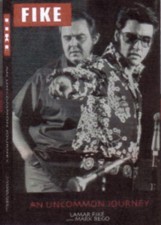
 EIN note: Lamar Fike is currently working on his life story...all the great and funny things that have happened to him throughout the years. This will be a good one!


Introduction by Lamar Fike:

I was born in Mississippi in 1935 and  moved to Memphis in 1957. I went to Columbia Military Academy  and gradusted in 1954. I also met Elvis in '54 and began working for him in '57 although we never got paid. I travelled with him for years and then later ran Hill and Range's office in Nashville that also housed Elvis' publishing companies in Nashville and then during tours became lighting director and was with Elvis until he died.

Quote:

 "I don't think Elvis knew he was dying. Just like all of us think we ain't going to die. You think, "Shit. I'll make it." Until you wake up and go, "Holy shit. I'm dying here!"

- Lamar Fike, in "Elvis and the Memphis Mafia"


The Comeback Years
 
EIN: Lamar, in Elvis Aaron Presley: Revelations of the Memphis Mafia (EAPRRM) you mention a dream Elvis had where he was on trial for his life. What was this all about?
 

LF: In the final few years, one time Elvis told me he had this dream where he was on trial in a courtroom and the prosecuting attorney was the Colonel! Red and Priscilla were witnesses for the prosecution. Many of the Memphis Mafia guys were in the courtroom, including me, and Elvis said none of us would defend him. The only people on his side were two members of the jury, Sol Schwartz and Lee Ableser. They were the jewelers in Beverly Hills who made his TCB jewelry. It was a real strange dream as the judge was dressed in white, not black, and carried a black medical bag. Elvis saw the dream as an omen that the end was near.

EIN: The '68 Comeback Special. What a fantastic time.  As one of the people present during filming what did you think of Steve Binder?

LF: Number one, I hated the term Comeback Special because he never left. Number two, Steve  was a brilliant director and I found him to be a fascinating person. His approach to how Elvis' special should be was thoughtful and contemporary.

Very unlike the Colonel's idea of an old-style Christmas show. Than God Steve and Elvis had their way! And you know what, while Steve had the conceptual ideas for the special, in charge of the musical side was definitely Elvis. It was a good mix, Elvis and Steve.

EIN: The Elvis & Steve Binder on Sunset Boulevard story.  A myth appears to have grown up around this incident.  Can you set the record straight.

LF: It happened. The (Jerry) Hopkins book says Steve took Elvis out on Sunset Boulevard to show Elvis he could go out in public and not be mobbed, to show him he wasn't a big star anymore. And Hopkins says people were just knocking into him, not recognizing him.

Well, yes, Steve Binder did take Elvis out onto Sunset Boulevard, but man let me tell you, it was wild. A real mess. We had to fight to get Elvis back in once people saw it was Elvis. So much for him no longer being a big star!

EIN: The return to live performing in Las Vegas.  How exciting a time was this?

LF: In the beginning it was unbelievable but as the Colonel always did, he ran it into the ground and it became boring to Elvis. The Colonel just never got it that Elvis needed a creative challenge. In those final years it was a case of "if only..."

EIN: In the late 60's-early 70's Elvis was enjoying a massive revival on the charts.  How did he react to his renewed popularity?

LF: He felt like he was back in the swing of things where he belonged. He hadn't really been away but after the shallow films he had a chance to show he still had it. A lot of the music he was recording then was good, a return to his roots.
 
EIN: Do you feel the Vegas schedule of 4 weeks with 2 shows a night contributed to Elvis' physical and emotional decline in the 1970's?

LF: Absolutely. It sapped his motivation and desire to perform. Nobody goes to Vegas and plays four weeks anymore, they usually only do a week. Four weeks is a marathon and the repetition of cramming 60 shows into that period can be really monotonous and mind and body sapping.

 EIN: From the early 70s on, Elvis' recordings assumed a greater "country music" flavor.  While this was consistent with Elvis' love of that genre and its increasing popularity with the public, what direction, if any, do you think Elvis' music would have taken had he not died in August 1977?

LF: I think he would have continued to do songs that were great regardless of the genre. Elvis was very attuned to changes in musical taste and as his career showed, he was able to adapt, in fact, often lead those changes. His influence with younger audiences may have changed over the years but he would still have been an important musical force, and always will be.


People in Elvis' life

Lamar, in one or two words how would you describe:

Gladys Presley: Sweet and kind       

Vernon Presley: Hard shell soft inside

Minnie Mae Presley: Totally innocent

Marty Lacker: Up front, truthful  

Billy Smith: Guilless

Joe Esposito: Arrogant and false bravado

Charlie Hodge: Likeable and country

Alan Fortas: Arguably one of my best friends

Red West: Truly a friend

Sonny West: Never quit talking

Larry Geller: Shallow but he thought he was deep

Dave Hebler: Pleasant and easy going

George Klein: Assumed he knew more than he did

Marvin "Gee Gee" Gambill Jr.: Simple

The Colonel: Complicated

David Stanley: Honest and tough

Billy Stanley: He always seemed lost

Rick Stanley: Funny

Dee Presley: Interesting

Priscilla Presley: Biologically lucky

Ann-Margret: Sweet kind and beautiful

Shelley Fabares: Same as above

Linda Thompson: Hilariously funny strikingly beautiful

Ginger Alden: Plastic

Dr Nick: Ambitious and interfering

Joan Deary: Didn't know her

Felton Jarvis: Ambitious good song man

Lamar Fike: Brilliant, Wonderful Likeable and irresistable

 
The Final Years

EIN: Some people say that had Elvis lived he would have become a preacher.  What do you think?

LF: Not no, but hell no!
  
EIN: Elvis' idiosyncracies.  What were some of the things Elvis did that frustrated or annoyed you?

LF: Pick one.

EIN: The April 1973 Lake Tahoe season was one of the low points in Elvis' career.  Variety magazine described Elvis' performance as "weak, delivery is flabby".  What was the problem at that time?

LF:  At that time Elvis was tired of everything. Vegas and touring had become monotonous. Elvis was starting to put on weight and the necessary creative challenge just wasn't there. It was a sign of things to come.

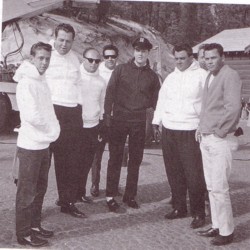
Opposite (L. to R.): Billy Smith; Ray Sitton; Marty Lacker; Joe Esposito; Elvis; Lamar Fike; Red West (behind Lamar); Sonny West - taken on set of Kid Galahad

EIN: During Elvis' supercop/superfly period what were some of the things you all got up to?

LF: About him being a policeman was his dream and this was another chance to live out his dream. He was really caught up in catching the bad guys. He knew a lot of cops including some who were narcs.

Mostly we'd stick to little stuff. Elvis would put on his cop uniform and we'd go out while he stopped traffic. He'd pull a guy over, tell him he was driving too fast, and give him a safety lecture. We'd cruise around in Elvis' light blue Mercedes and Elvis would say, "Here we go, Lamar. Out to serve law and order."

Occasionally he'd chase people down the interstate. They didn't get a speeding ticket...they'd get an autograph!

At times though, when Elvis was high, his mind took over and things became bigger than life.

Elvis told Dave Hebler once that he'd been on a narc raid in Denver and he'd sneaked up behind this guy with a sawed-off shotgun. Elvis used to tell the story several ways but to Dave he said the guy heard him and was about to blast him, when Elvis hit him with a karate chop to the neck and killed him.

 EIN: April Fool's Day 1975 in Vegas.  You and the Colonel appeared on stage dressed as Santa Claus and there was also a water fight.  Sounds like a real hoot.  What happened that night to provoke such hi-jinks?
 
LF: It was a simple case of boredom. Elvis didn't know we were going to do it but as the consummate professional he handled it well giving us our minute in the limelight before getting back to business. The audience were laughing like crazy when we did it. It shows something about the Colonel too!
 
EIN: By all accounts, in 1975 Elvis suffered a number of episodes where he found it difficult to breathe. At that time how concerned were you becoming about his physcial and emotional health?
 
LF: I was real concerned, as were many of the other guys. But what could we do? We could try and tell Elvis to slow down, take care of himself, but in the end we couldn't do it for him! He had to do it himself, and sadly he didn't. It would be nice to blame someone or some others for Elvis' decline and eventual death but the reality is you can't save someone if they don't want to save themselves.

EIN: Elvis' 41st birthday celebration was in Vail, Colorado.  It was supposed to be a dream vacation.  What happened?

LF: It wasn't a dream.  Elvis was pretty well stoned and out of his mind. He was doing a lot of Dilaudid and threatening to kill everyone in sight. God, he even flew Dr Nick in a couple of times to get more prescriptions. He was also doing a lot of uppers at the time which didn't help.

EIN: Lamar, in 1976 you were living and working in Nashville.  What was your relationship with Elvis and the MM at that time? 

LF: It was really no change. I always was working for him.  

EIN: Did Elvis ever reveal his feelings about his weight gain in the last few years of his life? 

LF: If he ignored it it wouldn't go away. Elvis thought he could lose the extra weight overnight. A lot of it was fluid retention so Elvis could drop quite a few pounds quite quickly but his diet and medical problems meant the problem wasn't going to go away.

I remember talking with Elvis one day and the weight thing came up. I said, "Elvis, your mother went through the same thing you're going through. You realise that, don't you?"

And he said, "Sometimes I think about that."

As I said in EAPRMM, Elvis' physical deterioration in those last years was just horrible.

EIN: In March 1977 Elvis cancelled dates in Louisiana, Alabama, Georgia and Florida.  Elvis was hospitalised but this was apparently a smokescreen.  What was the real story?
 
LF: Elvis was worn out and he and Ginger were fighting. He didn't want to do the shows. We flew back home to the hospital but this was just an excuse so he wasn't sued for breach of contract. We added the canceled gigs to the next tour. They also tried to detox him when he checked into the hospital.
 
EIN: Lamar, a few days before Elvis died you had an almost prophetic conversation with Joe Esposito.  Can you share it with us?

LF: I'd been talking to Elvis and he told me he was tired and didn't feel good. I told him he could cancel the tour but he said he needed the money. What he really needed was a long break, six months in Hawaii or Europe or something. I suggested that to him but he felt obligated.

Later, Joe and I were talking on the phone and I was concerned about Elvis and I told Joe I didn't think we were going to make the tour and we didn't. It wasn't that I thought Elvis was going to die I just thought he wasn't well and not in the right shape to complete the tour.

EIN: Elvis was well known for his strong personality and will.  Despite this, on an emotional level many fans believe the MM should have done more to help Elvis.  What do you say to this?

LF: As I said before, nobody can make someone do what they don't want to do.  We tried but had we not, he would have died years before. Uninformed people make uninformed statements.

EIN: How much do you think was Elvis affected by a self-destructive tendency?

LF: It was all consuming.

EIN: In your opinion what was the biggest disappointment for Elvis in his life? 

LF: Not touring outside the US.

EIN: A related question, what do you think was the biggest missed opportunity in Elvis' life? 

LF: Again, not touring outside the US.

EIN: Lamar, how did Elvis' death affect you?
 
LF: I still can't get over it. I miss him every day.
 
 
Post 1977

EIN: Albert Goldman's biography is widely despised by Elvis fans.  In 2005, how do you feel about your involvement with it?

LF: My involvement was only to introduce him to people, I had nothing to do what he wrote.  Can't we all get over this!
 
EIN: Because of Goldman's anti-Elvis narrative its positive points are easily overlooked.  What do you think Goldman's book brought to the Elvis world?
 
LF: Nothing.
 
EIN: The Elvis Mob was a frank and illuminating special about Elvis and the Memphis Mafia.  It was also a lot more self-contained and accessible than the much longer, but excellent, series, All The King's Men.  How did you feel filming both documentaries?

LF: I enjoyed both and while All The King's Men was sadder at times, it was definitely more enjoyable with the guys. I feel the two documentaries have allowed us to express sense of what it was like being around Elvis and how we felt about the good times and the bad.

EIN: Was it in any way a cathartic experience?
 
LF: Absolutely! After all the bad press many of us have received over the years it was goddamn good to get the chance to tell the real story, warts and all.
 
EIN: Wayne Newton and his emotionally powerful song "The Letter", is allegedly based on a cry for help written by Elvis.  In your opinion, is the note fact or fiction?

LF: Fact. Newton bought it from Sotheby's. It was written by Elvis at a very down, desolate time in his life around the end of '76. The story is that he wrote it on a telephone pad, then screwed it up and threw it away, but someone saved it.

You've got to understand, Elvis was only human even if many want to sanctify him to a higher level. On an emotional level he was no different to you or I...he had feelings, strong feelings, and he was searching for what eludes so many of us, inner fulfilment and inner peace.

 
EIN: Why will Elvis' music and legacy live on?

LF: I think it's a cyclical thing. I liken it to Aboriginal cave drawings which hand down history from generation to generation. With Elvis, parents pass on his music to their children and so on. Also, a lot of his music will be timeless so future generations will discover it in decades to come.

EIN: What do you think would Elvis think of some of today's stars like Eminiem and Pink? 

LF: He wouldn't. Think of them that is.

EIN: Fans can only imagine what it was like being part of the MM and around Elvis.  How would you sum up the experience?

LF: Historically unbelievable! We had the privilege to share the life of one of the biggest superstars the world has ever known.

EIN: Lamar, a final question.  What is your biggest regret about your time with Elvis - is there anything you would do differently if you had the time over again?
 
LF: I can honestly say there is nothing I would do differently if I had my time again.
 
EIN: Lamar, thank you very much for talking to us.  I know fans the world over wish you all the best for the future and as an Aussie I hope some day soon we might see you visit "downunder".

LF: I'd love to come "downunder". I've been there twice before and love the country and its people. I'm also a big fan of Nicole Kidman. She's an an amazing actress...I think her legs end somewhere between Sydney and Melbourne.

And on that memorable quote we end our interview with the "brilliant, wonderful likeable and irresistable", Lamar Fike


Click here to read Part 1 of Lamar's interview with EIN

Click hear to read Marty Lacker's interview with EIN


Click to buy "Elvis and the Memphis Mafia"

(the eagerly anticipated re-issue of "Elvis Aaron Presley: Revelations of the Memphis Mafia"


Click to comment on this interview


Click to view the "Memphis Mafia" website


"Bright lights city moved their soul....

They strode into town

With a swagger and ready fist,

Protecting the people's King

Good ole boys, one and all,

Flashy badges and an orgy of excess,

Their life was for living

Hard, fast and fun,

Fighters and lovers

With a "downhome" cheeky grin,

If you were looking for TROUBLE

You'd come to the right place...

Be prepared...

As they'd "scatter" you all over the place"


(from "The Ballad of the Memphis Mafia", anonymous, 2003)


Lamar Fike was interviewed in December 2005 by EIN's Nigel Patterson. The interview was conducted both by telephone and email.

Latest Reviews
The King (graphic novel)
'Elvis On Tour Outtakes' DVD review
'Hitstory' CD EIN in depth review
CD: Hitstory (USA edition)
FTD: Summer Festival
Book: The Year the Music Changed
Playboy magazine: In Bed With Elvis
DVD: Born To Rock
Book: Elvis Aaron Presley: A Candle In The Wind
FTD: Too Much Monkey Business
Book: Desert Storm
Book: Elvis On Stamps
Photobook: A Tribute To The King
DVD: Lilo & Stitch 2
FTD: Elvis Today
Concert: Elvis Leaves His Mark
Book: Elvis-UFO Connection
Book: Behind The Image Vol. 2
Book: Elvis on Screen
DVD: Elvis & Me
FTD: All Shook Up
FTD: Tickle Me
CD: Elvis by the Presleys
Book: Warman's Elvis Field Guide
DVD: Why Elvis?
Book: Dewey and Elvis
CD: Black & White Elvis
CD: All Shook Up
Book: Rough Guide to Elvis
FTD: Rockin' Across Texas
FTD: Elvis Is Back
TV Special: "Elvis by the Presleys"
Book: Elvis by the Presleys
CD: A Legendary Performer Vol. 5
Mini-series: Elvis
FTD: Big Boss Man
Latest Articles
Graceland 2005
Elvis and Las Vegas
The man who bought Elvis (Robert Sillerman)
Presley Commission Report
Paul McCartney on Heartbreak Hotel
Barbara Pittman
Mario Lanza meets Elvis
A Kick Upwards For Elvis' Movies
How Mario Lanza influenced Elvis
Enduring economic power of Elvis
Graceland - the ultimate bachelor pad
Elvis was not a racist!
The Definitive Elvis "blues" album
Elvis on The Creative Edge - Part 2 - The CD
'Elvis Seriously'- Why is Elvis' voice too often ignored
Elvis & Ed Sullivan - The Real Story
It's Over - Gordon Minto on 18 #1's
Elvis - symbol of freedom or not?
The importance of being Elvis
Elvis rules on television! (updated August 2005)
Tribute to Elvis (16 August 2005)
Elvis in the 50s - Maxine Brown
Meeting Elvis & Priscilla
How & where to sell your Elvis collection
Elvis in the 1970s
More on Elvis on TV
"Orion" gunned down!
Elvis Is Back
Elvis - Hero with 1000 faces
Elvis Film Guide
Elvis rules on television! (updated May 2005)
Elvis & other major artists miss out on Grammy Awards
How did Elvis die?
 
Latest Interviews
Marty Lacker (part 2)
Marty Lacker (part 1)
David Bendeth, producer of 'Elvis 30#1s'
Ernst Jorgensen
Ernst Jorgensen & Roger Semon 2002 FTD discussion
Ronald King (Elvis On Stamps)
Bernard Lansky
Albert Wertheimer
Priscilla Presley
Marshall Terrill
Lisa Presley on Larry King Show
Tony Joe White
Stanley Oberst
Bud Glass (part 2)
Red & Sonny West
Ed Bonja (Part 2)
Ernst Jorgensen
Phil Aitcheson (Presley Commission)
 
Audio-visual
Elvis On Tour (Hampton Roads) footage
Elvis On Tour
Graceland cam
Listen to the Elvis "strung out" in Vegas audio
The "Real" Elvis off-stage
Unreleased Elvis audio now online
View EPE Graceland tourism ads
View video of "All Shook Up" opening night on Broadway
 
Reference
All about Elvis
All about Elvis tribute artists
All about Lisa Presley
All about Graceland
Elvis books 2005-07
Elvis film guide
Elvis Online Virtual Library
Elvis Presley Research Forum
Elvis was a racist? (archives)
Elvis Week 2005
Links to Elvis' family & friends
Online Elvis Symposium
Sale of EPE "Archives"
6th Elvis Website Survey
Spotlight on The King
"Wikipedia" Elvis bio


Quote:

"Elvis Presley is the supreme socio-cultural icon in the history of pop culture"

(Dr. Gary Enders)


Quote:

" Elvis is the 'glue' which holds our society together....which subconciously gives our world meaning"

(Anonymous)


Quote:

"Eventually everybody has to die, except Elvis"

(humorist Dave Barry)


Quote:

"He is the "Big Bang", and the universe he detonated is still expanding, the pieces are still flying"

(Greil Marcus, "Dead Elvis")


Quote:

"I think Elvis Presley will never be solved"

(Nick Tosches)


Quote:

"He was the most popular man that ever walked on this planet since Christ himself was here"

(Carl Perkins)


Quote:

"When I first heard Elvis' voice I just knew I wasn't going to work for anybody...hearing him for the first time was like busting out of jail"

(Bob Dylan)


Quote:

"When we were kids growing up in Liverpool, all we ever wanted was to be Elvis Presley"

(Sir Paul McCartney)


Quote:

"You can't say enough good things about Elvis. He was one of a kind"

(Johnny Cash)


Quote:

"It isn't enough to say that Elvis is kind to his parents, sends money home, and is the same unspoiled kid he was before all the commotion began. That still isn't a free ticket to behave like a sex maniac in public"

(Eddie Condon, Cosmopolitan)


Elvis records reaching #2 & #3 on the Cashbox Pop Singles chart:

#2: A Fool Such As I (1959)

#2: A Big Hunk Of Love (1959)

#3: Hard Headed Woman (1958)

#3: One Night (1958)

#3: (You're The Devil) In Disguise (1963)


Elvis Facts:

Tickets for Elvis' show on March 29, 1957 in St. Louis cost $2.00 to $2.50


While in Germany Elvis was hospitalised with tonsillitis in October 1959


Despite being an illegal immigrant, photographic evidence shows Colonel Tom Parker traveled to Canada with Elvis in 1957


Elvis strongly believed there weren't enough good songs in King Creole to justify releasing a soundtrack album. RCA initially agreed, releasing two very successful EPs from the movie. A soundtrack LP eventually followed


During the 1960s Elvis had his own football team, Elvis Presley Enterprises, which played in the Menphis touch football league. In the 1962 final, EPE narrowlt lost to Delta Automatic Transmission. 6-13.


In Clambake, (Elvis) Scott Hayward's driving licence shows February 23, 1940...taking 5 years off Elvis' real age


In the 1970s Elvis was ofered $5m to stage a concert in front of the Pyramids in Egypt. When the Colonel declined the offer, Saudi billionaires raised the offer to $10m