'Destined To Give'
The Legendary Generosity of Elvis Presley
By Sally A. Hoedel
Book Review by Nigel Patterson, June 2026
|
Book Review
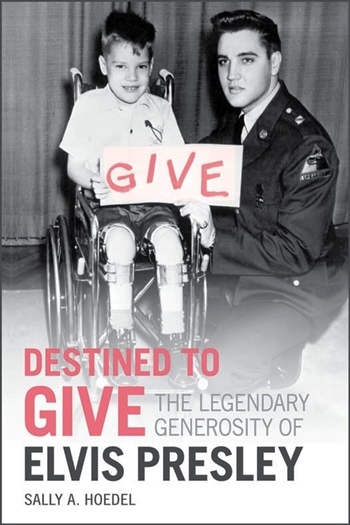
Destined to Give:
The Legendary Generosity of Elvis Presley
Sally A. Hoedel
Reviewed by Nigel Patterson, June 2026
“Community truly was everything to Elvis. He cared deeply about the people who influenced his youth. He remembered those who helped him and wanted to pay it forward in adulthood”……Sally A. Hoedel
With the publication of “Destined to Give”, author-researcher, Sally Hoedel, completes her trilogy of books about Elvis. Her earlier releases were the popular “Destined to Die Young” and “Destined to Fly: The Story of Pilot Ron Strauss”.
Prior to the release of “Destined to Give” there had been two substantive releases about Elvis’ compassion for others:
- The Best of Elvis: Recollections of A Great Humanitarian, Cindy Hazen and Mike Freeman, Memphis Explorations, 1992 & 1994
- Elvis A Humanitarian, Paul Bélard, Linden Press, 2019
A major point of differentiation between these releases and “Destined to Give” is that a fundamental key element of the latter is why Elvis was motivated to give. Ms Hoedel details how his compassion to help others, his learned behavior, was rooted in faith, survival and his understanding of “what it is like to be invisible in society”.
Those who have read the author’s earlier Elvis books will be familiar with her articulate and easy to read writing style. Again, in her latest book, Ms Hoedel provides a story that is not only insightful, but a strikingly human account of its subject.
While the core intent of “Destined to Give” is about Elvis’ compassion for others, the author has framed her narrative within a chronological biography of his life and career. Her ability to highlight important issues relating to “both” his life and generous nature shines throughout and this review will cover both elements, as together they offer a greater understanding of who Elvis was and (the evolution of) what motivated him - for the academic minded, discussion in the book includes “pathological altruism” and the neglect of one’s own needs.
The main narrative contains 12 chapters spread across three evocatively titled parts:
- Dawn of Salvation (January 1935-December 1957)
- Standing in the Sun (December 1957-July 1971)
- Night Falls (January 1971-August 1977)
Many of the chapter titles are similarly evocative such as “Changed for Good”, “Evolution of Checkbook Charity”, and “Vagabond and Vegas”.
Throughout the book the author uses reflections by those who knew Elvis to illustrate her points. And there are many!
The motivation that drove Elvis to help others is exemplified (summarized) by the opening paragraph to the final chapter (“The Good Guy”) of the book:
“If you’re in trouble or hurt or need – go to poor people. They’re the only ones that’ll help – the only ones.” John Steinbeck wrote those lines in his Great Depression novel, 'The Grapes of Wrath', in 1939. Elvis Presley knew the plight of the disadvantaged, ignored and vulnerable of society. He was born into an easily dismissed community of marginalized people. Throughout his lifetime, he never let go of the lessons learned through hardships.”
“Destined to Give” provides a comprehensive account of Elvis’ helping others, both his well-known major fundraising events (1961 Memphis shows, Aloha from Hawaii, et al) and those not well-known (annual contributions to local charities and helping strangers).
The book includes countless examples of Elvis’ giving to others and often how recipients used their gift, a few being:
- On February 25, 1961, Elvis performed two shows in Memphis with all proceeds going to local charities. The Cynthia Milk Fund used its donation from Elvis to buy 10,000 quarts of milk for children in need.
- After the death of two people, Elvis donating part of Graceland land to allow the Memphis city council to improve pedestrian and vehicle safety in front of the mansion
- The Easter Seal drive surprised to receive a check without requesting a donation
- Elvis’ $10,500 to the Memphis Jewish Community Center Building Fund
- Jerry Schilling recounting how Elvis gave a young soldier $500.00 during their flight to Washington D.C. to visit President Nixon
- Following the shooting death of a police officer, Elvis’ contribution of $5,000 for the completion of a gym, which was used by at least three generations of police officers
- The gifted ring that led to a call from police to Graceland!
- Elvis’ spending spree, buying over a dozen cars, including five Lincolns and many Cadillacs, for members of his inner circle.
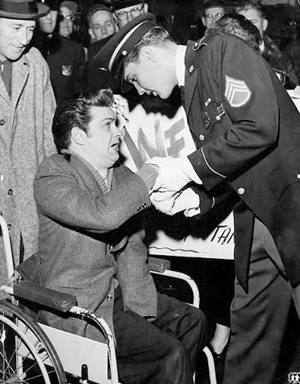 |
Elvis with his friend Gary Pepper
Elvis was not regarded as being an avid letter writer and the story about his handwritten letter to Gary Pepper is heartwarming.
Another example of Elvis’ concern for others is illustrated by this account:
... Singer Ivory Joe Hunter was hospitalized in Memphis with cancer. A direct request for a donation to help with his care came in, and Elvis sent a check for $1,000 to the Ivory Joe Hunter Fund along with a note. The note said, “I am very sorry to hear of Joe’s illness. I have been a long-time admirer of Ivory Joe and his talent. Please tell Joe for me that I wish him a speedy recovery. Joe is a great talent and has been an inspiration to many artists that have come along. It hurts me deeply to hear of his condition. I sincerely hope that this check will be of some help. Thank you for letting me know about Joe. Sincerely, Elvis Presley.”
In relation to his generosity to members of the Memphis Mafia (many of whom were overly “dependent” on him) and signifying the underlying psychological driver for that generosity and its potential extravagance, Ms Hoedel records:
“Of course, the spending increased as well when they were all stuck in California for weeks on end and in search of fun. One night, Elvis bought the guys Cadillac convertibles. Explaining away his generosity, he said, “Hell, we were all poor kids from Memphis. We deserve it.” Another night, there were motorcycles for everyone so they could all ride together on Sundays.”
As with most things in life, there are often two sides to the story. The unfortunate dark side to generosity and the peeling back of human frailty/weakness is candidly put by the author in this passage:
“Giving to strangers left those around him in awe, but generosity amongst the guys created problems. Jealousy developed if one thought someone was gifted more than another. From that jealousy, greed developed within the group, which left Elvis feeling vulnerable, not knowing who he could ultimately trust.”
Ms Hoedel develops the issue with this important comment by Ann-Margret:
“People think of Elvis as having everything, but that wasn’t all true……He had a great capacity to love, and he wanted to be loved in return, but he knew the world he existed in, the life he led, as well as all the people who surrounded him, who hurt him, who wanted something from him. Everyone but a few made it virtually impossible for him to ever feel that affection, and if he did, he didn’t know whether or not to trust it.”
Apart from well-known examples of Elvis’ generosity (Elvis’ spur-of-the-moment decision to buy Mennie Person and her husband a Cadillac, stands out), the author has uncovered fascinating information about the disparate ways in which he helped others:
“Grand gift-giving gestures would be the stuff of Elvis legend well into the next decade, but it was not always gifts. Sometimes it was merely quiet arrangements, many of which have been lost to time. Christopher Riordan was an actor/dancer on several films with Elvis, such as Viva Las Vegas, Tickle Me, Spinout, Clambake and Double Trouble. At the end of one film, Elvis said to Christopher, “See you on the next one.” That struck Christopher because he was not aware of any arrangements. “What I didn’t know then was that Elvis had put me on a list where I was one of the people to be called whenever they came to town to make a movie,” recalled Christopher. “And what I didn’t know until about four years ago was that I was the only guy on the list. All the rest were girls.”
Ms Hoedel goes on to explain Elvis’ motivation for this – you will need to read the book to find out the details.
There is so much interesting and diverse information in “Destined to Give”. For instance, it details how Vernon and Dee Presley helped a young family in Memphis after they suffered a great tragedy. And why did the Eastern European city of Budapest (a place Elvis never visited), make him an honorary citizen and name a small park in his honor?
There is also the experience of Elvis’ longtime cook, Mary Jenkins, who recounts the time Elvis took her aside – this encounter is a wonderful reflection of Elvis’ caring and thoughts for others:
“Mary, you have really been putting in some long hours these past few weeks, and in that time, I’ve never heard a complaint from you. I’ve never seen you with a frown on your face. You’re always so pleasant to everyone.” He continued, “I want you to know how much I appreciate you, and I want you to know I really love you.” Then he placed a hundred-dollar bill in her pocket.”
When we think of people giving to others we see it as a positive thing, which it is. However, there also can be a downside.
Sally Hoedel notes that “Money is a good servant but a bad master.” Her discussion of this in relation to Elvis is candid and instructive:
“Elvis spent with reckless abandon, and the money inevitably became his master because he could not afford to fire the Colonel or to stop touring for a year or more.”
Contextually, she also states:
“Elvis had pure intentions, but fame taints everything over time.”
At one point she discusses the impact on Elvis’ Christmas gift giving after his over-spending on the Circle G ranch.
At another, some readers will likely be angered when they read how the Colonel took control of something very “personal” to Elvis, his annual Christmas donations to Memphis charities, and discover why Elvis was not happy in presenting a cheque for $50,000.00 to the Motion Picture Relief Fund.
In relation to the biographical element of “Destined to Give”, Ms Hoedel raises many interesting and thought-provoking issues, including the seminal observation:
“Elvis also did not fully understand the impact being away from the stage would have on him creatively and mentally.”
She offers salient discussion about Elvis’ years in the wilderness in the 1960s:
“Opportunities for tours and for television appearances were declined routinely. The musical genre won Oscars in the 1960s, so the film industry was primed for a star like Elvis, but he was kept from that caliber of opportunity, as well.”
Continuing the theme, Ms Hoedel comments:
“Some say Elvis never grew up. On the contrary, Elvis grew up hard and fast due to extreme poverty and became the provider for countless people at an early age. However, his career did not “grow up” at a proper rate with him. He never saw himself playing the same role repeatedly. Elvis was in his thirties for half the films he made. The material did not grow up with him – not the scripts, the characters, the settings or the soundtracks. Elvis grew, matured and cared more about his craft.”
It is well chronicled that Elvis spent his adult life searching for meaning and having a great desire to be a serious actor. He also experienced an underlying feeling of insecurity throughout his life.
As Ms Hoedel notes:
“Elvis consistently critiqued his own acting abilities with negativity and self-doubt. Not being “ready” was echoed repeatedly when discussing his future film plans for a more serious role.”
What Elvis wanted in his life and how it was for most of the 1960s forms a strengthening thread throughout “Destined to Give”.
This passage covers several of its major themes:
“Elvis’ friend and actress Dolores Hart agreed. They starred in Loving You and King Creole. By their second film, she was keenly aware of Elvis’ vision for his movie career. “Elvis was much more serious this time around,” she recalled. “He desperately hoped that King Creole would be the beginning of a new direction for his movie career. He loved James Dean and wanted to have a career just like his, but he was afraid the Colonel would lock him into run-of-the mill schlock, which is what ultimately happened.
Dolores, like Elvis, felt called to a higher purpose in life and wanted to help people. She ultimately left Hollywood to become a nun. During filming breaks, the two discussed Bible verses and connected over a shared faith. Elvis could never quite solidify how to anchor his “calling” as Dolores had. He continued to live, learn, and longed to help others whenever possible, always contemplating how to best serve that ache inside him.”
A primary reason for the sad state of Elvis’ film career is revealed with this discourse around an article in the Hollywood “bible”, Variety:
“The article noted that the “Presley-Parker tandem” was one of the few in Hollywood with a focus on profits alone. It stated that once the deal was made, they had no say on cast or script. The Colonel responded, confirming just that. “We don’t have approval on scripts, only money. Anyway, what does Elvis need? A couple of songs, a little story and some nice people with him. We start telling people what to do, and they blame us if the picture doesn’t go. As it is, we both take bows, and if it doesn’t hit, maybe they get more blame than us. Anyway, what do I know about production – nothing.””
After discussing Elvis’ relationship with Priscilla, the author makes a thought-provoking observation when considering his other relationships with women in the 1970s:
“None of the women Elvis dated in the 1970s had those ideas or societal expectations. The changing times also came with a lack of commitment from men, even if it did give women options.”
Earlier, I mentioned Elvis’ underlying insecurity about his life and success. Thanks to Sally Hoedel’s research it is apparent others outside his inner circle recognised it. When Elvis was honored as one of the “Ten Outstanding Young Men of America”, Frank Taylor, Chairman of the Jaycees, understood his insecurity, commenting:
“For the first time, he was being placed on the level with achievers in realms other than entertainment. For the first time, Elvis felt he was being accepted like a true professional. He really felt like a human being.””
Ms Hoedel’s consideration of what the Jaycees award meant to Elvis is powerful:
“The struggle to be his own man within the roles of provider and entertainment icon was real. He wanted his life to have meaning and purpose beyond the exterior image the world knew. Elvis believed in the brotherhood of the Jaycees’ creed, and he was living it. He was fascinated by the human landscape of his vast professional world and committed to being of service to humanity as his “great work of life.” If there were justifications for the loss of privacy, the lack of true trust, and for the greatest human tragedy of never knowing if someone loved him for him, those justifications were encapsulated within that award. His service through his art and generosity was just that – service.”
Testament to the exhaustive nature of the author’s research for the book I suspect few readers will have been aware that Elvis hosted a cocktail party at Graceland for his fellow honorees!
On the issue of “personal control”, Ms Hoedel posits that by the time of his death, Elvis had come to the realisation that he needed to take control of his life. Unfortunately, that realisation came too late. The reader cannot help but think, “If only!!”
Towards the end of the book, the record of Vernon Presley’s address circa 15-16 August 1977 to the Memphis Mafia members about to go with Elvis on the ‘tour that sadly never happened’, will undoubtedly reopen strong feelings in the reader about where Elvis was in his life as he approached his final days.
I found Ms Hoedel’s “Reflections & Acknowledgments” a poignant and fitting close to the main narrative. Do we choose “silence”…… or “noise”?
The author’s meticulous research is highlighted by the 18 pages of 'Notes' which contain 307 source references for those readers wanting to further explore the subject matter.
There are two appendices, “Charity List” (3pp) and “Rings List” (9pp).
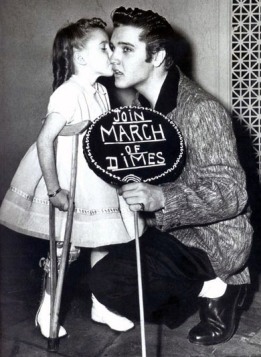
The photos (one per chapter) are in b&w and include Elvis and the March of Dimes campaign, Gary Pepper welcoming home Elvis after his Army service in Germany, Elvis aboard the U.S.S. Potomac, Elvis and Priscilla at the Jaycees luncheon, and a somber “Final Salute” by Memphis police as the white limousine carrying Elvis’ casket leaves Graceland.
Verdict: “Destined to Give” is one of this year’s best Elvis books. Sally Hoedel has written a fitting, final volume to her Elvis trilogy. It is a release which effortlessly interweaves Elvis’ biography with a primary character trait in his compassion for and helping others. The book informs, answers, and above all, celebrates the wonderful humanity of Elvis Aaron Presley. It is an uplifting release which engenders some moments of sadness and dismay, but overall, many moments of great joy.
Click to comment on this Review
Buy - “Destined to Give: The Legendary Generosity of Elvis Presley” - via author's website
Autographed “physical” copies can also be obtained by contacting the author: sally@elvisauthor.com
Only Kindle and audiobook editions of the book will be available (shortly) from Amazon sites
Read EIN’s reviews of the author’s earlier books….
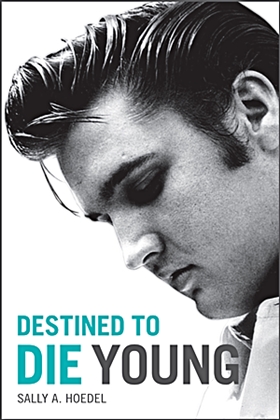
Destined to Die Young - - - - - Destined to Fly: The Story of Ron Strauss
Book Review by Nigel Patterson.
-Copyright EIN June 2026
EIN Website content © Copyright the Elvis Information Network.
About the author: Sally A. Hoedel, a lifelong Elvis fan and historian is the author of Elvis: Destined to Die Young, Destined
to Give: The Legendary Generosity of Elvis Presley and Destined to Fly:
The Story of Ron Strauss – From Iowa to Elvis. She been honored with an Independent Publisher Book Award and a Pencraft Award for best nonfiction book of 2021. A lifelong Elvis fan and history enthusiast, she has a journalism degree from Michigan State University. Sally lives in Northern Michigan and is the proud mother of four daughters.
|
(Book Review) Destined To Fly: The Story of Pilot Ron Strauss – From Iowa to Elvis (Sally A. Hoedel): In 2020, Sally Hoedel published her first Elvis related book, the acclaimed Destined To Die Young. Ms Hoedel’s second book, the fascinating story of the pilot of Elvis’ Lisa Marie jet, Ron Strauss, is nearing publication (September 2022).
The book includes a fabulous Elvis-related story about Ron Strauss visiting his bank manager to obtain a home mortgage and the time Ron fell asleep in Elvis’ bed will bring a smile to the reader’s face. Other interesting accounts include Ron’s reaction to Elvis carrying a loaded gun on board (in a pressurized cabin), and many readers will appreciate reading how Ron felt about Linda Thompson and Ginger Alden.
EIN’s Nigel Patterson recently took flight with an advance copy. What Nigel found, not only added appreciably to his knowledge of a rarely written about aspect of the Elvis Presley story and provided greater insight as to who Elvis was as a person, but also offered a wonderfully rich and entertaining account of the life and times of the underappreciated, Ron Strauss.
Read Nigel’s full review
(Book Review: Source:ElvisInformationNetwork) |
 |
(Book Review) Destined to Die Young (Sally Hoedel): Could Elvis’ death at the young age of 42 have been avoided? This question is answered in Sally Hoedel’s thought provoking book, Destined to Die Young.
The book is the result of exhaustive research by the author who found a key factor which was to affect Elvis throughout his life – one which meant that regardless of his diet and overuse of prescription medication, he was destined to die young. The narrative is full and colorful, and its depth of detail reflects the extent of research undertaken by the author.
In her introduction, the author establishes an important context for Elvis’ longevity (or lack of longevity) and health issues, this being his family tree.... Hoedel identifies the genetic disorder as Antitrypsin Deficiency, a condition which can result in lung and/or liver disease. In this respect, her discussion of the life and death of Gladys Presley is thought provoking..
Go here to read EIN Nigel Patterson's detailed review
(Book Review. Source: ElvisInformationNetwork) |
 |
Sally Hoedel (author of Destined to Die Young) talks to EIN: Elvis’ death at a young age could not have been prevented! Why did Elvis die so young?
This question is examined in Sally Hoedel’s new book, Destined to Die Young. Sally kindly agreed to take time out to speak with EIN’s Nigel Patterson about her research into the untold story of Elvis’ health struggles.
In her revealing interview, Sally discusses the key factors that affected Elvis’ life and health from pre-birth and how his lifestyle and overuse of prescription medication contributed to his premature death.
What Sally has to say challenges several commonly held beliefs about the causes of Elvis’ death!
Read the interview to learn more...
(Interview, Source: ElvisInformationNetwork)
|
 |
EIN Website content © Copyright the Elvis Information Network.
Elvis Presley, Elvis and Graceland are trademarks of Elvis Presley Enterprises.
The Elvis Information Network has been running since 1986 and is an EPE officially recognised Elvis fan club.
. |