











Copyright the Elvis Information Network.
Elvis Presley, Elvis and Graceland are trademarks of Elvis Presley Enterprises.
The Elvis Information Network has been running since 1986 and is an EPE officially recognised Elvis fan club.
 |
 |

Introduction Were Elvis's movies all as bad as many critics would have you believe? EIN presents a look at Elvis's 31 narrative films in chronological order. We offer both critics views (principally from the TV Guide 'CineBooks USA' reviews) and our own (subjective) opinion on each film (EIN reviews by Nigel Patterson), plus a little bit of trivia along the way. Fans can visit the TV Guide web site at: www.tvguide.com Film watching is inherently a subjective experience influenced by one's affinity to the star(s) and subject matter and by various internal and external influences. Fans obviously tend to watch an Elvis movie with some degree of rose coloured glasses while many critics are out to find whatever flaws, significant or insignificant, they can. EIN welcomes your comments, suggestions and disagreement with the reviews. Let us know what you think. You can write to us via email: nigel@elvisinfonet.com The ratings: each film is rated on a 1 to 5 stars basis - 1 star meaning a lousy movie and 5 stars representing an exceptional movie. Other details: for each film we list its USA date of release, director and original running time.
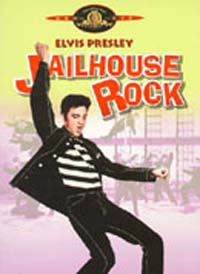
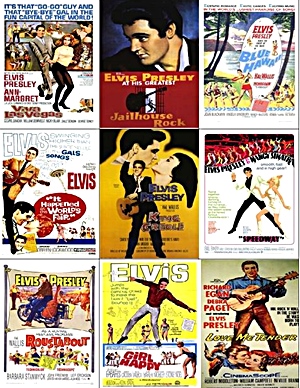
Phase 1: 1956 - 1958 "The Dramatic Years" LOVE ME TENDER: Robert D. Webb, 1956, 94 minutes New York Times: Elvis's dramatic contribution is not a great deal more impressive that that of the slavering nags. Los Angeles Times: Elvis pales in comparison when pitted against the resonant inflections of Egan, of course, but who came to watch Elvis act? Editors Note: The Los Angeles Times review was arguably a direct clue for reviewers in how to 'contextually' assess future Elvis films TV Guide rating: 1.5 stars TV Guide review: Elvis Presley's first screen appearance turned what would have been a routine western into one of Fox's biggest box-office successes. The story takes place near the end of the Civil War, with Presley playing Clint, the youngest of four brothers and the only one who has not gone to war. Believing his brother Vance to have died, Clint marries his sibling's girl, Cathy (Debra Paget). But all three brothers return home after stealing a Union payroll and hiding the money. Finding Cathy married to Clint, Vance (Richard Egan) decides to take off and return the money, but Clint, egged on by Confederate loyalists, goes after his brother and dies in the climactic shootout. Elvis' movie debut was to have been titled THE RENO BROTHERS, but was wisely (if misleadingly) renamed LOVE ME TENDER after the song of the same name. The performances (including Presley's) are lifeless, the script is overly dramatic, and the direction routine. Though Presley's songs provide the high points, they are not well integrated into the plot. Songs: "Love Me Tender" (W.W. Fosdick, George R. Poulton), "Poor Boy," "We're Gonna Move," and "Let Me" (Presley, Vera Matson.) EIN rating: ** EIN review: Elvis's screen debut is forced. His lack of dramatic acting experience is very apparent. Luckily for Elvis a reasonable plot and solid supporting cast allow Love Me Tender to rise above Elvis's acting inadequacies. As a western, Love Me Tender is only average - not bad and not particularly good. The inclusion of Elvis songs at points in the movie are not well placed and his hip movements clearly anachronistic to the Civil War setting and time period. Thankfully his next three films would prove to be far superior. LOVING YOU: Hal Kanter, 1957, 101 minutes TV Guide rating: *** Elvis Presley's second film was a fictionalized version of how he made it to the top. He's cast as Deke Rivers, a young Texas truckdriver who becomes a singing sensation overnight. After delivering a load at a political rally, Deke is talked into doing a number by press agent Glenda (Lizabeth Scott) and bandleader Tex (Wendell Corey). Naturally, he's a big hit and they ask him to join Tex's band. Soon Deke is a statewide sensation. He falls for Susan (Dolores Hart), a singer with the band, but is also drawn to Glenda, whose talent for staging publicity stunts is increasing Deke's fame. When Deke is booked for a big one-man show at a theater outside Dallas, Glenda pulls off another promotional gimmick, buying Deke a fancy car and telling the press it's a gift from an anonymous rich widow, but she has to fire Susan in order to pay for the vehicle. When Deke discovers that Tex and Glenda used to be married, he takes off, but Glenda finds him and brings him back for the big show. By the fade, Deke ends up with Susan, a TV contract, and down-home values intact, while Glenda and Tex reunite. LOVING YOU is one of Presley's better films. He gives a fine performance, both in the great concert scenes and in the dramatic ones; Hal Kanter directs with vigor. Presley sings some great songs including "Loving You" (Jerry Lieber, Mike Stoller), "Teddy Bear" (Karl Mann, Bernie Lowe), "Lonesome Cowboy" (Sid Tepper, Roy C. Bennett), "Got a Lot of Livin' to Do" (A. Schroeder, Ben Weisman), "Party" (Jessie Mae Robinson), "Mean Woman Blues" (Claude DeMetrius), and "Hot Dog" (Lieber, Stoller). Look for Elvis' beloved mom as an extra. EIN rating: *** Loving You is the Elvis story (at least to 1957) on film. Integrating his southern background with a heady mix of country, rock and blues flavoured songs, it is a much stronger film than Love Me Tender and is the first film in which Elvis demonstrates real dramatic acting potential. The soundtrack generally overwhelms the plot but this does not distract from our viewing pleasure. A greater balance between story line and soundtrack would be achieved in Elvis's next two films. JAILHOUSE ROCK: Richard Thorpe, 1957, 96 minutes MGM publicity: From the Big House to the Big Time - Elvis style. Donald Zec, The Daily Mirror: I am suffering from ninety-seven minutes, 8,687 feet of Elvis (The Pelvis) Presley in a film called Jailhouse Rock. A dreadful film. An unsavoury, nauseating, queasy-making film, to turn even the best-insulated stomachs. Memphis Press-Scimitar: The new MGM film is the first which has to be carried solely by Presley….and he carries it easily. Time: For moviegoers who may not care for that personality, Presley himself offers in the film a word of consolation. "Don't worry", he says, "I'll grow on you." If he does, it will be quite a depressing job to scrape him off." TV Guide rating: 3.5 stars All shook up and enjoyably bad, JAILHOUSE ROCK captures early Elvis in all his leg-quivering, nostril-flaring, lip-snarling teen idol glory. This hot black-and-white number was Elvis Presley's third (after LOVE ME TENDER and LOVING YOU) and set the standard for the rest of his movie outings--too bad the the others omitted the dangerous element of his character presented here. Elvis comes across like a white-trash musical genius version of James Dean, playing Vince Everett, a surly good ole boy who accidentally kills a man while defending a lady's honor... in a bar. This heroism gets him sent up for manslaughter, sharing his prison cell with Hunk Houghton (Mickey Shaughnessy), an ex-singer who convinces him to perform in the slammer's convict show. After Vince is freed, he meets Peggy Van Alden (Judy Tyler), with whom he forms a record company, and in no time he is a national star on his way to Hollywood. Peggy, however, sees that Vince is turning into an egomaniac, and she can't stand it. There's little surprise but JAILHOUSE really rocks, establishing pre-Army Elvis, the rockabilly elemental force, when he was really something. The steamy songs are mostly by Lieber and Stoller; the latter can be seen as the pianist in the famous "Jailhouse Rock" sequence (which the young King choreographed). The title song sold two million records within two weeks, and the picture, in turn, grossed several million, with Presley receiving 50 percent of the profits. Other tunes include "Treat Me Nice," "Baby, I Don't Care" and "Young and Beautiful." EIN rating: 3.5 stars Simply an Elvis classic. Elvis is at his moody best as the young singer destined for stardom and dramas along the way. A sensational music score by Jerry Lieber and Mike Stoller punctuates the strong story line and The King is very believable in a James Dean like role. Tight direction, some great camera work using stark black and white images and a nice pace produce a highly enjoyable film. KING CREOLE: Michael Curtiz, 1958, 116 minutes Bosley Crowther, The New York Times: ELVIS CAN ACT!!! TV Guide rating: *** KING CREOLE features Elvis Presley's best film performance, a result perhaps of the helming of Michael Curtiz--who had also directed Cagney, Bogart, Garfield, and Flynn and who will always be revered for CASABLANCA--or of the script by Herbert Baker and Michael Gazzo, which was based on a novel written by Harold Robbins before he became a pop fiction cottage industry. Whatever the reason, the film will be remembered for the many facets of Elvis that emerged in his portrayal of Danny Fisher, a singing busboy at a sleazy nightclub on New Orleans' Bourbon Street. One night he rescues Ronnie (Carolyn Jones) from a drunk who is harassing her. She turns out to be the moll of local hood Maxie Fields (Walter Matthau), whom she would like to leave, but she fears for her safety. Later, Danny is kicked out of school for getting into a scuffle with some fellow students. Shark (Vic Morrow), the brother of one of the students, jumps Danny with a bunch of toughs, then invites him to join the gang, having been impressed with his fighting ability. Eventually, Danny does join the gang, who rob the drugstore where his father (Dean Jagger) works while Danny sings and acts as a decoy. Things begin to look up when he lands a gig singing at another nightclub, the King Creole, and soon customers are packing the place to see him. He dates the sweet Nellie (Dolores Hart), who would like him to give up this wastrel life and marry her, but he's also attracted to Ronnie, who lives in fear of the cruel Maxie and can't act on her feelings for Danny. Maxie, meanwhile, wants to lure Danny away from the King Creole to work for him. Failing to do so, he tries to blackmail the singer by framing him for a holdup. Danny reacts by beating Maxie up and takes refuge with Ronnie--who, however, is killed in the finale, clearing the way for Danny and Nellie to reunite at the fade-out. It's a heavy plot for a musical, but they managed to cram it all in along with 13 songs. This entertaining Elvis vehicle would be his last film before being drafted into the Army. The tunes: "King Creole," "Banana," "New Orleans," "Turtles, Berries and Gumbo," "Crawfish," "Don't Ask Me Why," "As Long As I Have You," "Trouble," "Hard-Headed Woman," "Lover Doll," "Dixieland Rock," "Young Dreams," and "Steadfast, Loyal and True." EIN rating: **** Is this Elvis's best ever film? Many critics think so. Like Jailhouse Rock, King Creole benefits from a great balance between dramatic plot and superb songs. From the opening strains of Crawfish, the New Orleans setting is evocative and the film, while slow in parts, is a roller-coaster ride of dramatic scenes punctuated by sensational music performances. The supporting cast is among the best ever assembled for an Elvis movie - soon to be a superstar, Walter Matthau, is great as mobster Maxie Fields, Carolyn Jones is excellent as the love interest torn between two worlds, Oscar winner Dean Jagger turns in a well crafted performance as Elvis' weak father, and a young Vic Morrow (soon to find fame as the lead in TV's Combat) is very effective as Shark, a street thug. King Creole also stands out as one of the few Elvis films that uses major film techniques such as closed frames to convey meaning and accentuate the viewer's reaction. Phase 2: 1960-1964 "The Presley Travelogues Begin" G.I. BLUES: Norman Taurog, 1960, 115 minutes Hal Wallis (talking about the industry preview for G.. Blues): …the most exciting run we've ever had and that takes in a lot. TV Guide rating: ** In his first movie after his return from real-life military service, Elvis Presley put his soldiering experience to good use as Tulsa McCauley, a GI who forms a combo with two dogface pals (Robert Ivers and James Douglas) and performs at a large Army show in West Germany. Juliet Prowse plays Lili, an icy cabaret dancer with whom Elvis is to spend the night if his buddies are going to win a $300 wager, the seed money necessary for them to start a club when they get back to the States. In the process of winning the bet (accomplished guilelessly), Elvis falls in love with Lili, and G.I. BLUES makes its way to a happy ending. Songs include "Shopping Around" (Sid Tepper, Roy C. Bennett, Schroeder), "Tonight Is So Right for Love," "What's She Really Like?" (Sid Wayne, Silver), "Frankfurt Special," "Didya Ever," "Big Boots" (Wayne, Edwards), "Pocketful of Rainbows" (Wise, Weisman), "Doin' the Best I Can" (Thomas, Schumann), "Blue Suede Shoes" (Carl Perkins), "G.I. Blues" (Tepper, Bennett), "Wooden Heart" (Wise, Weisman). EIN rating: ** G.I. Blues is one of those Elvis films I don't really like. And I'm not sure why. It is a pleasant enough Elvis vehicle with the usual array of pleasant scenery, attractive co-stars and aurally and viscerally satisfying songs. It just doesn't grab me but I know many fans love it - its huge box office made it one of Elvis's biggest grossing movies (in 1960 it grossed $4.3m in the US alone). Juliet Prowse is very effective as Lili and Elvis cruises through his part as the handsome, singing GI. The soundtrack is strong with Blue Suede Shoes and Wooden Heart stand-outs. The latter track failed to chart in the US but sold more than a million copies worldwide. In West Germany it was a huge hit. G.I. Blues Trivia: 'She has a body that would make a bishop stamp his foot through a stained glass window' - Elvis talking about his co-star Juliet Prowse FLAMING STAR: Don Siegel, 1960, 92 minutes TV Guide rating: 3.5 stars This was Presley's best film, far superior to the moronic material he was usually given. Here he plays a young man who is forced to choose between his white father, McIntire, and his Kiowa mother, Del Rio. Despite his parents' attempts to stay out of local racial hostilities, Del Rio is killed by a white man, and McIntire later dies in an Indian raid. By this time Presley has joined the Indians, while Forrest, his brother, tries to avenge McIntire's death by attacking the Kiowas singlehandedly. He ambushes and kills the chief but is severely wounded. Presley ties his brother to a horse and sends him to safety while fighting off the attacking tribe. Eden then tends to Forrest's wounds and tries to keep him in bed, but Forrest struggles off to help Presley. However, in the end he can only watch as the mortally wounded Presley rides off into the mountains to die. This violent western about prejudice focuses on the consequences of racism, rather than the causes. Siegel's crafty direction shapes the material into a strong story, and the film proves that, with an intelligent script, Presley could be a forceful actor. The film is refreshingly lacking in the record-peddling that dominates other Presley vehicles (there isn't a song sung after the first 10 minutes). The script was initially written for Marlon Brando by Johnson, then rewritten for Presley by Huffaker. Ten minutes were cut from the original version of the film. Classic Elvis! EIN rating: **** Great western with strong performances by all the leads, including Elvis. As half-breed Indian, Pacer Burton, Elvis shines in an unusual role. Along with his performances in Jailhouse Rock, King Creole and Wild In The Country, Elvis's delivery in Flaming Star offered a significant glimpse of his potential as a dramatic actor. A solid supporting cast includes everyone's favourite genie, Barbara Eden, Steve Forrest and seasoned actors John McIntyre and Dolores Del Rio. The direction is tight, the script first-rate and the drama builds very effectively throughout the film. One of the more serious Elvis films with its theme of racial prejudice and (for the times) quite strong violent content. Fans hated the ending where the mortally wounded Elvis rides off to the hills to die. Flaming Star Trivia: Flaming Star was banned in South Africa as it contravened that country's strict laws on racial separation. WILD IN THE COUNTRY: Philip Dunne, 1961, 112 minutes Philip Dunne (Director of Wild In The Country): What really surprised me was the extraordinary talent of Elvis Presley. He took to the part as if he had been a dramatic actor all his life, with particular feeling for Odet's colorful and poetic dialogue…I began to feel that between us we were creating a new dramatic star. TV Guide rating: 2.5 stars Presley is a backwoods delinquent youngster who, after a fight, is paroled into the care of his crooked uncle, a tonic manufacturer. He also must pay weekly visits to psychiatrist Lange, a widow, who discovers a talent for writing in the young man and nurses it along, finally becoming attracted to him. In the meantime, Presley is carrying on with the pushy Weld and the more reserved Perkins. Instead of concerning himself with romance, he concentrates on his education and leaves for college, presumably to become a literary giant. The well-versed fellow also manages a few tunes: "In My Way," "I Slipped, I Stumbled, I Fell" (Fred Weiss, Ben Weidman), "Lonely Man" (Bennie Benjamin, Sol Marcus), "Wild in the Country" (Hugo Peretti, Luigi Creatore, George David Weiss). Presley's character may be tough to swallow, but he makes the attempt in an enjoyable dramatic role that was a change from the typical swooning and singing pictures he churned out. One of the less-than-memorable efforts of screenwriter Odets, the once proletarian dramatist ("Golden Boy," "Awake and Sing") who turned to Hollywood in the middle 1940s after several successes on Broadway. Most of the critics of WILD IN THE COUNTRY called the premise--a country boy from the Shenandoah Valley in Virginia being groomed for a career in literature--unconvincing and romantic, without realizing that the author, J.R. Salamanca, may have based part of his story on the poet and novelist Jesse Stuart (Taps for_ Private Tussy), who came out of the hills of Kentucky to become the toast of New York literary circles in the 1930s and 1940s. EIN rating: *** Wild In The Country is underrated. As Elvis's only melodrama, it is slowly paced but rich in characterisation. Elvis's moody persona is well balanced by temptress Tuesday Weld, while Hope Lange and John Ireland are solid in their more middle of the road roles. It also features Elvis in arguably (Love Me Tender excluded) his most unusual and unromantic role - as a young man with great writing ability. Wild In The Country benefits from only having a few Elvis songs, in fact Lonely Man was cut from most prints of the movie. The slow pace of the movie and lack of songs will turn many fans off, but if you persist with it the movie is surprisingly satisfying by its end. Wild In The Country Trivia: Readers of Teen magazine voted Elvis and Tuesday Weld the 'Damp Raincoat Award for Most Disappointing Performers of 1961'. BLUE HAWAII: Norman Taurog, 1961, 103 minutes TV Guide rating: ** Chad Gates (Elvis Presley) returns home to Hawaii after a stint in the Army only to defy his parents (Roland Winters and Angela Lansbury), who want him to follow them in the family pineapple-growing empire. Striking out on his own, Chad becomes a guide for the tourist agency where his girl friend (Joan Blackman) works but quickly gets in trouble when he is assigned to escort a group of teenage girls and their teacher around Honolulu. Lots of tunes, romance, and misunderstandings later, Chad is ready to settle down with his love and start his own agency. Depending on your level of Elvis fandom, you'll either find this a typically fluffy Presley vehicle with mainly forgettable tunes--save the hit "I Can't Help Falling in Love"--or none of that will matter. EIN rating: *** The first of the Elvis 'travelogues'. Blue Hawaii was such a big hit at the box office (while dramatic films such as Flaming Star and Wild In The Country experienced significantly lesser box office receipts) that it became the prototype for most of Elvis's early to mid 1960s films. Exotic, romantic locales, complemented by a bevy of beautiful girls, a regular dose of happy Elvis tunes and obligatory love songs and exciting occupations for the lead became the norm after Blue Hawaii. The 'boy meets girl-boy loses girl-boy wins girl back' concept was highly successful for a few years but gradually fans grew tired of the same old thing. Blue Hawaii is a good film. Colourful Hawaiian land and seascapes complement well crafted performances from the lead characters (and what a scream Angela Lansbury is as Elvis's mother!). The plot is thin but was never expected to be anything more - its Elvis, fun times and great music that the fans wanted. Blue Hawaii certainly delivers on that score. The soundtrack album was #1 on the Billboard Top Album charts for 20 consecutive weeks. Blue Hawaii Trivia: Blue Hawaii was banned in Mexico because on the unruly behaviour of Elvis fans during screenings there of G.I. Blues KID GALAHAD: Phil Karlson, 1962, 95 minutes TV Guide rating: ** The makers of KID GALAHAD adapted the 1937 original starring Edward G. Robinson and Humphrey Bogart, added several songs for Elvis Presley to sing, and came in with a running length six minutes shorter than that of the first film. Obviously, the story--which had already been recirculated, with a circus background, in THE WAGONS ROLL AT NIGHT--was truncated, but this remains a passable remake. Ex-GI Walter Gulick (Presley) is a sparring partner at a training camp operated by Willy Grogan (Gig Young) and Dolly Fletcher (Lola Albright). Willy detects talent in Walter and convinces him to turn pro--over the objections of Dolly, who dubs Walter "Kid Galahad" after he saves her from the clutches of some gangsters. The Kid wins some fights, falls in love with Rose (Joan Blackman), Dolly's sister, and wants to quit the game after his next bout. But Willy owes money to crook Otto Danzig (David Lewis) and decides that the only way to repay the debt is to set the Kid up against a much more experienced opponent, prompting Dolly to walk out on her partner. To ensure the Kid's loss, Danzig tries to bribe the Kid's trainer (Charles Bronson), who gets his hands broken as a punishment when he refuses. The Kid wins, however, Willy is forgiven, and the Kid gets to retire with his girl. Elvis isn't called upon to play anything but the nice, soft-spoken lad he really was in those days, and Bronson is excellent as his trainer, underplaying his role in the style that became his trademark. Elvis sings a number of songs, including "King of the Whole Wide World," "This Is Living," "I Got Lucky," "A Whistling Tune," "Home Is Where the Heart Is," "Riding the Rainbow," and "Love Is for Lovers." EIN rating: ** Elvis as a singing pugilist! What will they think of next. If that combination isn't weird enough watch the contrast in Kid Galahad between the corny soap opera love angles and the hard-hitting violence of mob involvement in the fight game. Elvis is OK, Oscar winner Gig Young is wasted while future superstar, Charles Bronson, is particularly effective as Elvis's trainer. The music is pleasant without being particularly memorable - there are no stand out songs or hits. Several critics have praised the fight scenes in Kid Galahad, personally I don't find them particularly convincing. Kid Galahad is entertaining but is certainly no Rocky! GIRLS! GIRLS! GIRLS!: Norman Taurog, 1962, 101 minutes TV Guide rating: 2.5 stars A year and several pictures after making BLUE HAWAII, director Taurog and actor Presley returned to the Aloha state for GIRLS! GIRLS! GIRLS! (no question but that Presley could churn out musicals). Here Elvis takes on the role of a Hawaiian charter-boat captain who is suddenly without a boat. By day Presley fishes for tuna; by night he sings in a nightclub, trying to come up with enough cash to buy the sailboat that once belonged to his father. Two women play prominent roles in Presley's life: chanteuse Stevens (singing for the first time in movies) and Goodwin (a rich girl who pretends not to be). Both are after Presley's heart, but it's Goodwin who gets it--although when she buys his dad's boat for Presley, it's nearly curtains for the romance (sure). Musical numbers: "The Nearness of You" (Ned Washington, Hoagy Carmichael, sung by Stevens); "Never Let Me Go" (Jay Livingston, Ray Evans, sung by Stevens); "Girls, Girls, Girls" (Jerry Leiber, Mike Stoller); "Return to Sender," "We're Coming In Loaded" (Otis Blackwell, Winfield Scott); "A Boy like Me, A Girl like You," "Song of the Shrimp," "Earth Boy," "The Walls Have Ears" (Sid Tepper, Roy C. Bennett), "Thanks to the Rolling Sea," "Because of You," "Where Do We Come From?" (Ruth Batchelor, Bob Roberts); "We'll Be Together, Mama" (Charles O'Curran, Dudley Brooks); "I Don't Wanna Be Tied" (Bill Giant, Bernie Baum, Florence Kaye); "I Don't Want To" (Janice Torre, Fred Spielman). EIN rating: 2.5 stars This formula vehicle works nicely. The plot is reasonably well constructed and the acting sound without being outstanding. As usual, Elvis cruises through his part as a charter boat captain and nightclub singer, and the kids almost steal the picture. The Hawaiian locales are as usual colourful and the 14 songs are a diverse but effective mix. Elvis ends up with nice girl Laurel Goodwin, personally I found Stella Stevens more appealing. Apparently (in real life) Stella Stevens didn't think much of Elvis or his talent…there again whatever happened to her? FOLLOW THAT DREAM: Gordon Douglas, 1962, 109 minutes TV Guide rating: 2.5 stars This Presley vehicle sees him as an Army vet in Florida. He joins forces with O'Connell and four adorable orphans--including 19-year-old Helm, who loves Presley from afar--against a gang of thugs trying to steal the family's squatters' rights to some unclaimed land. Presley uses some new judo moves, fending off a nosey parker from the state's welfare department, and croons five songs along the way: "Follow That Dream" (Fred Wise, Ben Weisman), "What a Wonderful Life" (Sid Wayne, Jerry Livingston), "I'm Not the Marrying Kind" (Mack David, Sherman Edwards), "Sound Advice" (Bill Giant, Bernie Baum, Florence Kaye), "Angel" (Sid Tepper). For Elvis fans only. EIN rating: *** One of Elvis's better light comedies. Elvis is very good as the backwoods boy helping his Pa fight bureaucracy. Arthur O'Connell (to be seen again as Elvis's Pa in Kissin' Cousins) is effective as are Elvis's siblings in the movie. Follow That Dream is one of those easy to watch movies perfect for all the family on a lazy Sunday afternoon. Sure the plot is basic and some of the comedy obvious, but it is carried off in an engagingly pleasant way. The soundtrack is solid without being outstanding, but by late 1962 both the artistic and music quality of Elvis movies were starting to slip. IT HAPPENED AT THE WORLD'S FAIR: Norman Taurog, 1963, 105 minutes TV Guide rating: 2.5 stars You don't need much of a plot to please a diehard Elvis Presley fan, just lots of songs and the King himself, and that's just what this picture offers. Bush pilot Mike Edwards (Elvis) goes to the 1962 World's Fair in Seattle, where he finds himself falling in love with nurse Diane Warren (Joan O'Brien) and taking care of adorable lost tot Sue-Lin (Vicky Tiu). His partner, Danny (Gary Lockwood), informs the welfare authorities of the child's whereabouts in order to get Mike back in the piloting business so the two can redeem their debt-impounded airplane. Unknown to Mike, however, their next flight is to be a smuggling expedition. Meanwhile, Sue-Lin, terrified of the prospect of life in an orphanage, runs off. Mike retrieves her on the fairgrounds and takes her to the waiting aircraft, where he grows suspicious about the cargo and thwarts the bad guys. What's more, he wins Diane and reunites Sue-Lin with her uncle. Elvis sings "I'm Falling in Love Tonight," "They Remind Me Too Much of You" (Don Robertson), "Take Me to the Fair," "Relax" (Sid Tepper, Roy C. Bennett), "How Would You Like to Be" (Ben Raleigh, Mark Barkan), "Beyond the Bend" (Ben Weisman, Fred Wise, Dolores Fuller), "One Broken Heart for Sale" (Otis Blackwell, Winfield Scott), "Cotton Candy Land" (Ruth Batchelor, Bob Roberts), "A World of Our Own" (Bill Giant, Bernie Baum, Florence Kaye), "Happy Ending" (Sid Wayne, Weisman). EIN rating: 2.5 stars Another formula Elvis vehicle lifted above many others by its setting in Seattle at the 1962 World's Fair. The plot is routine, direction uninspired and the songs very fluffy. Nevertheless, the film proved to very popular with audiences and hence was very profitable. And of course who can forget Kurt Russell's small part as the young boy who unceremoniously kicks Elvis in the shins. How ironic that Russell would later play Elvis so well in Elvis The Movie and not so well (as a quasi Elvis impersonator) in the recent 3000 Miles To Graceland. FUN IN ACAPULCO: Richard Thorpe, 1963, 100 minutes TV Guide rating: ** Following a traumatic accident in the States, Mike Windgren (Elvis Presley), a vertigo-afflicted trapeze artist, turns up at an Acapulco resort hotel working as a lifeguard and singer. There, he falls in love with Margarita Dauphine (Ursula Andress), the hotel social director. Unfortunately, fellow lifeguard and cliff diver extraordinaire Moreno (Alejandro Rey) also has his eye on her. The two men battle for her affection, which leads to the final sequence at La Quebrada, where Mike conquers his fear of heights, does a 136-foot dive, and wins the lady's affections. With 10 forgettable numbers, FUN IN ACAPULCO is just a travelogue, cashing in on Presley's slowly diminishing box office appeal. Songs (all sung by Presley): "Fun in Acapulco" (Sid Wayne, Ben Weisman), "Vino, Dinero y Amor," "Mexico," "The Bullfighter Was a Lady" (Sid Tepper, Roy C. Bennett), "El Toro" (Bill Giant, Bernie Baum, Florence Kaye), "Marguerita" (Don Robertson), "(There's) No Room to Rhumba (In a Sports Car)" (Fred Wise, Dick Manning), "I Think I'm Gonna Like It Here" (Hal Blair, Don Robertson), "Bossa Nova Baby" (Jerry Leiber, Mike Stoller), "You Can't Say No in Acapulco" (Dee Fuller, Lee Morris, Sid Feller), "Guadalajara" (Pepe Guizar). EIN rating: 2.5 stars The great Acapulco scenery, a bright script and great Latin songs lift Fun In Acapulco above many other Elvis formula vehicles. Elvis doesn't stretch himself, but there again the script doesn't require him too. Ursula Andress (in her US film debut) makes a formidable heroine while young Larry Domasin as Raoul virtually steals the picture with his cheeky and amusing antics. The music is strong, fun and very danceable. It may have a corny title, but There's No Room To Rhuma In A Sportscar is virtually guaranteed to get your foot tapping. Bossa Nova Baby was a major hit single for Elvis and other pleasing tracks include Vino, Dinero y Amor and Mexico. The climactic cliff dive scene could have been staged more dramatically but overall this doesn't detract from another enjoyable, fun Elvis matinee. VIVA LAS VEGAS: George Sidney, 1964, 85 minutes MGM publicity: That Go-Go Guy and that Bye-Bye Gal in the Fun Capital of the World. MGM publicity: Elvis is at the wheel. But Ann-Margret drives him wild. TV Guide rating: 3.5 stars Presley's one really good musical, mainly because it features a female costar, Ann-Margret, who can match the coiffed one in the charisma stakes. Elvis plays Lucky Jackson, a race-car driver who comes to Las Vegas to compete in the upcoming Grand Prix against his arch-rival, Count Elmo Cancini (Cesare Danova). To earn money for a new engine, Presley takes a job as a waiter at a casino, romancing swimming teacher Rusty Martin (Ann-Margret) and singing songs in his spare time before the race. They include: "The Lady Loves Me" (Sid Tepper, Roy C. Bennett); "Viva Las Vegas," "I Need Somebody to Lean On," (Doc Pomus); "What'd I Say" (Ray Charles); "Come On, Everybody" (Stanley Chianese); "Today, Tomorrow and Forever" (Bill Giant, Bernie Baum, Florence Kaye); "If You Think I Don't Need You" (Bob "Red" West); "Appreciation," "My Rival" (Marvin More, Bernie Wayne); "The Climb," "The Yellow Rose of Texas" (Don George); and "The Eyes of Texas Are upon You." EIN rating: *** I'll probably make some enemies here but I actually don't really like Viva Las Vegas. While I've rated it three stars for its strong production values, it has always been an Elvis movie I've found hard to get into. Ann-Margret is undoubtedly a great co-star (in fact she gets to outshine Elvis in their music/dance scenes) and the story line is sound. The supporting performances are certainly good but with the exception of the great Ray Charles number, What'd I Say, the soundtrack is average. As for the climactic race scenes they lack real credibility, seeming too rushed in the way they have been shot (this possibly a deliberate ploy to make the action seem more dramatic*). Anyway, what would I know. * Having later seen Viva Las Vegas at the cinema I must say that the race scenes are much more effective on the big screen. ROUSTABOUT: John Rich, 1964, 101 minutes TV Guide rating: 2.5 stars After a fracas at the coffee house where he sings, Presley hits the road and lands a job as a handyman at the carnival run by Stanwyck. Presley by any other name still being Presley, it isn't long before he's singing (some 11 songs) and attracting throngs of young people to the carnival to hear him. Of course, he's also attracted the attention of the lovely Freeman, who talks him into returning to the carnival after a fight with a patron sends Presley packing and leaves Stanwyck in big financial trouble. Slightly better than average Presley fare, ROUSTABOUT boasts a better cast than most of the King's films--with Stanwyck's presence lending the production status. There are recognizable names, though, all the way to the end of the credits--Albertson, Welch (in her film debut), Kiel, and Barty, as well as Playboy's Miss November of 1958, Staley. Presley sings "Roustabout," "Poison Ivy League," "One-Track Heart" (Bill Giant, Bernie Baum, Florence Kaye); "Little Egypt" (Jerry Leiber, Mike Stoller); "Wheels on My Heels," "It's a Wonderful World" (Sid Tepper, Roy C. Bennett); "It's Carnival Time" (Ben Weisman, Sid Wayne); "Carny Town" (Fred Wise, Randy Starr); "Hard Knocks," "There's a Brand New Day on the Horizon" (Joy Byers); "Big Love, Big Heartache" (Dolores Fuller, Lee Morris, Sonny Hendrix). EIN Rating: *** Amiable light comedy successful for the strong performances of its supporting cast, notably Oscar winner Barbara Stanwyck and The High Chapparall's Leif Erickson. The soundtrack is short and fluffy but enjoyable (the soundtrack album runs for just over 20 minutes yet made #1 in the US!). The plot is thin and the carnival setting adds some atmosphere. Look for Raquel Welch in a bit part in the opening scenes. This article was originally written in November 2001 and updated in March 2005. EIN Website content © EIN Website content © Copyright the Elvis Information Network.
Elvis Presley, Elvis and Graceland are trademarks of Elvis Presley Enterprises. The Elvis Information Network has been running since 1986 and is an EPE officially recognised Elvis fan club.
|
|