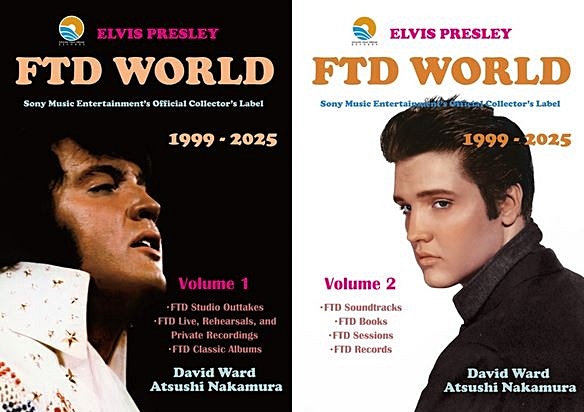
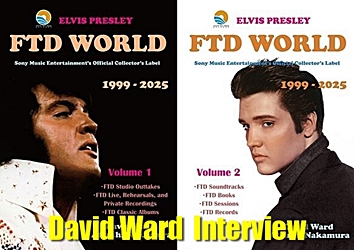
A new 2-volume book (152 pages each) from David Ward & Atsushi Nakamura covering all the FTD releases until now was published last month. Vol 1: FTD Studio Outtakes - FTD Live, Rehearsals, and Private Recordings - FTD Classic Albums
Vol 2: FTD Soundtracks, FTD Books, FTD Sessions, and FTD Records
Since the FTD label began Elvis collectors have always been fascinated with the minutia of each new release. It was always a scramble to find out which tracks were previously unreleased, which exact concert did the live soundboards come from, is the audio quality improved, any new photos and what had been missed out.
In 2015 Atsushi Nakamura first published a book about the FTD label - in Japanese - and followed up with a second volume 6 years later while Erik Lorentzen published the massive 3-volume deluxe set 'The World Of FTD' in 2017.
Declaration: While 'The World Of FTD' was basically Keith Flynn’s hard work I was also a co-author.
In 2025 it was certainly time for an update and with over 280 titles to their name the new 2-volume book ‘FTD World 1999-2025’ by David Ward & Atsushi Nakamura covers all the releases until now.
And if you are a collector who loves facts and figures this book is for you!
The set is split into two easy to access 152-page soft-cover books Volume 1 features FTD Studio Outtakes - FTD Live Concerts, Rehearsals and Private Recordings plus FTD Classic Albums
Volume 2 features FTD Movie Soundtracks, FTD Books, FTD Recording Sessions and FTD Vinyl
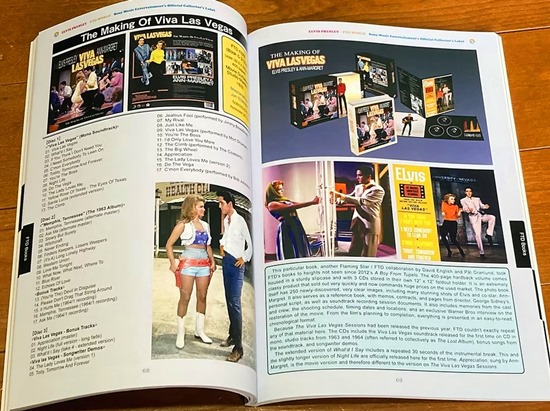
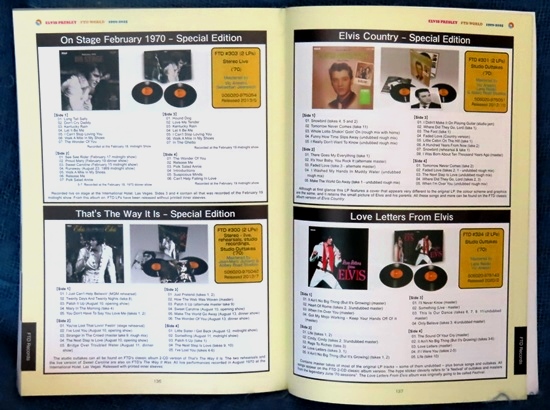
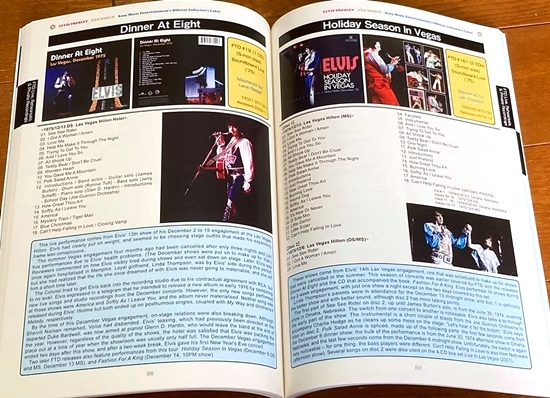
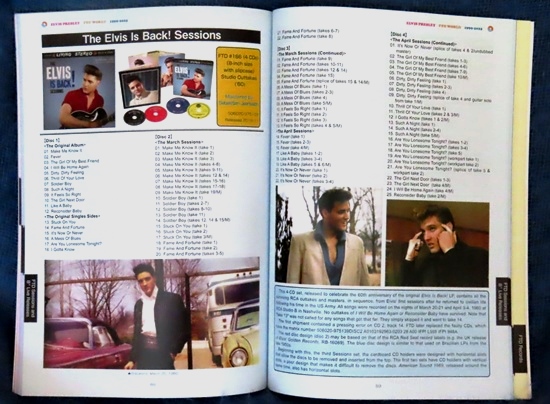
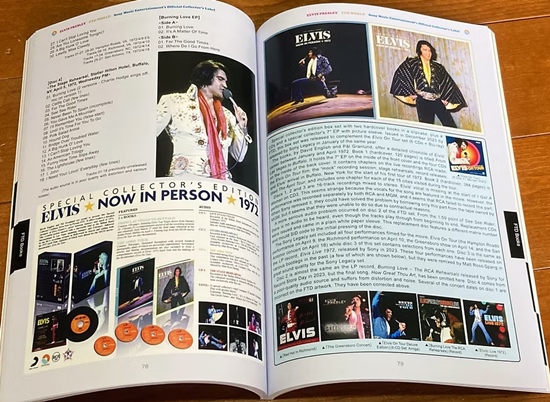
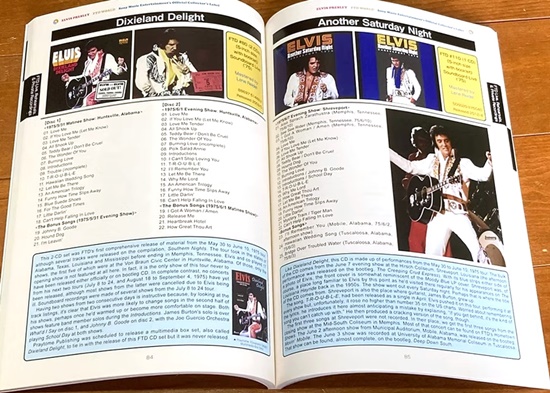
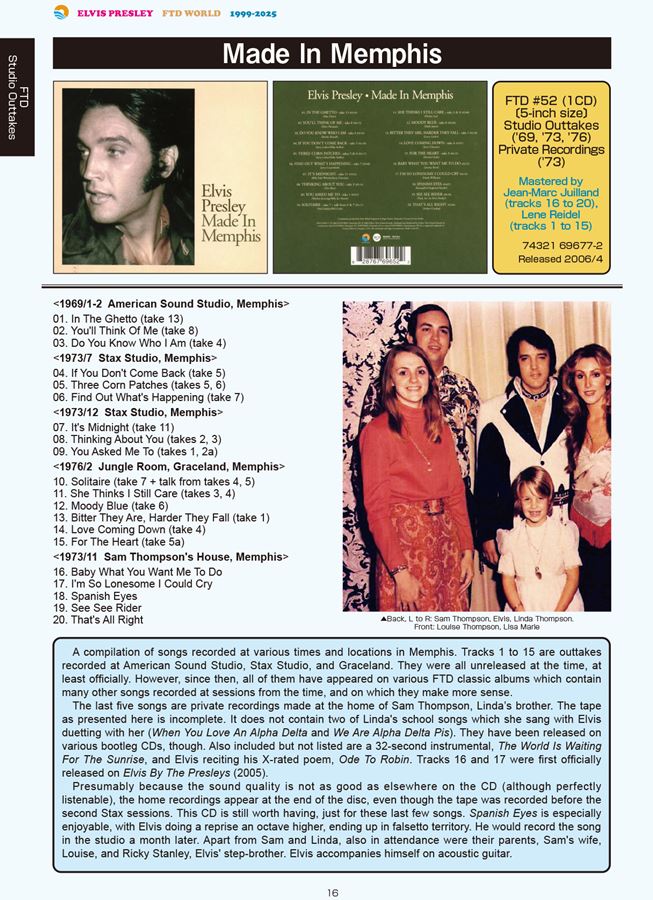
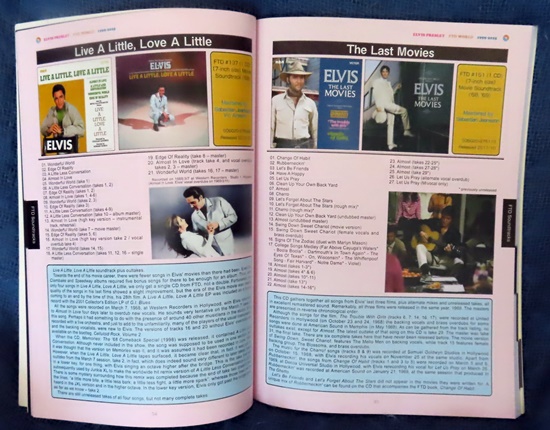
Each page features the FTD cover images, the track listings, recording and release dates, who mastered the audio plus a section of notes and other interesting information.
The FTD books get one page for the ‘regular’ publications with two-pages for the ‘deluxe’ books. For the special album releases two FTD vinyls are squeezed onto one page.
The book notes that from 2013's 'On Stage February 1970' FTD albums no longer included printed inner-sleeves
Rather than put them in FTD publication order each section of the book is chronologically presented according to when the music was recorded.
This is particularly useful when it comes to FTD’s ‘Classic Albums’ and movie soundtrack releases and essential for the 90 pages dedicated to all of FTD’s Elvis concert releases and rehearsals.
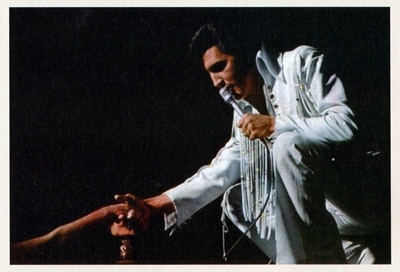
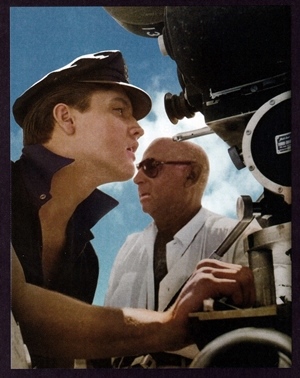
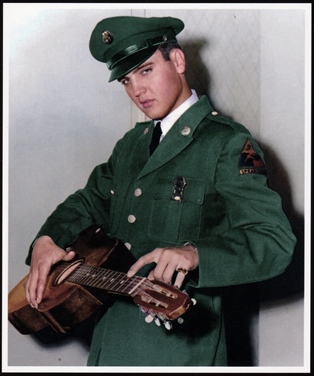
As you can see the design, on 'A4' size pages, is simple but effective with some lovely additional photos adding colour to each page. There are also a few well-designed colourised photos sprinkled throughout the book.
It is terrific to see the concert performances in chronological order and fans might be surprised to discover that there are only three FTD releases from 1971, only 6 from 1973 yet the impressive 22 releases from 1974. ('Note to self', I need to re-organize my shelves of FTD releases!)
While most fans can track down reviews and tracklistings on the internet it is the notes about each release that people will find fascinating.
Not only are there short notes about each recording session, quality of soundboard recording or about the performance itself but the difference between each FTD pressing is also noted, as well as the various tracklist errors and also the, often commented on, speed errors that cause Elvis’ performances to run slow.
Interestingly there were, for instance, four different pressings of the ‘Viva Las Vegas’ soundtrack release, do you know which version you own? The book explains how to spot the differences of every version. Some reprints can only be identified by faint logos on the CDs.
Another real positive is that the book also notes bootleg variations and other mainstream releases and also when the MRS label has re-released the show in DES ‘stereo’ and perhaps speed-corrected.
I was surprised as there is a lot more information included than might be expected.
Elvis’ ‘He Touched Me’ album was never one of my favourites but I was shocked to discover that on the Classic Album release there is an audio issue where “Elvis's vocals in the centre curiously shift to the left channel when The Imperials’ backing vocals come in on the right channel.”
This is indeed a very weird effect where Elvis’ lead vocal strangely moves from the middle-to-left channel and shows me that I never bothered to listen to this album on headphones.
Other titbits that fans might be interested in could be..
- Tracks that are only available on certain releases, i.e. ‘I Got A Feelin' In My Body’ Take 6, albeit a false start, is only found on 2001’s ‘Easter Special’
- When did Jerry Scheff first contribute to an Elvis recording.
- When did Elvis introduce the “gong” at the end of ‘I Just Can’t Help Believing’ – it is used in the original TTWII movie, but that was an MGM edit!
- Why the Dennis Ferrante mixes on ‘The Nashville Marathon’ possibly sound better than the FTD ‘Classic Album’ versions.
- When did Johnny B Goode become part of the Introductions, rather than in the actual concert setlist.
- When did the TCB band start using the instrumental ‘Coming Home’ as the backing for the introductions. I also forgot that on one tour they played ‘Green Onions’ instead.
- When did Elvis start using proper stage monitors so he could hear himself properly.
- When did Elvis start shouting out “ELVIS!” in the middle of his performance of ‘Fever’.
- When did Sherrill Nielsen start singing his O Sole-Mio introduction to It's Now Or Never.
- And somewhat amusingly did the ‘Wild In The Country’ FTD soundtrack really misspell Elvis’ name on both the first and second pressing!
- How does Sandwich, Massachusetts, fit into Elvis' legacy.
I had forgotten the amazing number of books that FTD have released over the years. Reading this delightful volume made me regret not buying a few books that I just could not afford at the time. It also has me on the lookout for second-hand copies!
While there are no lengthy reviews for each release there are often comments mentioning why a particular performance is important or highlights of the studio collections.
The book includes an interesting interview with “Celluloid Sell-Out” author Bob Pakes explaining why he considers Elvis’ promotional material worthy of several books and also his personal highlights. It is great to discover that there will be a ‘Celluloid Sell-Out! Elvis Movie Memorabilia 1968-1969’ coming out in 2026.
There is also a short interview with FTD art designer Jimmy Carpenter.
I would have loved more pages about each FTD book especially the larger ones, for example ‘Something For The Girls!, ‘Taking Care Of Business In A Flash’ and Madison Square Garden all only get a single page each. Unfortunately most FTD books sell-out very quickly so if I don’t own them by now, it’s probably too late.
Personally I would have liked the books to have been 200 pages each, which I guess is a good sign of wanting even more - but being 152 pages for each volume keeps the price and postage down.
There are two interesting indexes at the back of the book.
The very detailed '1969-1977 Concert Data and Discography' neatly explains what performances have been released, whether they are multitracks, or soundboards - what is still missing - and when they were released.
One can safely presume that FTD released what they considered the most interesting performances first, so there’s some nice research for readers to do.
There is also an ‘FTD Catalog 1999-2025’ that lists in publication order all the FTD CDs, Books and Vinyl.
I was surprised to discover that there was three years between the fifth FTD book ‘Live in LA’ and ‘King Creole The Music’ that followed in 2010.
And while only six 5” single CD releases came out in 2002 a decade later saw eighteen releases in 2012 which included several books and four double-LP releases. It quickly became expensive being a FTD collector.
My only small niggles are that it would have been useful to have the tour # and year listed at the top of each FTD ‘Live Concert’ as you often have to read the notes to discover which particular tour the performances have been taken from. The cross-referencing from one FTD to another could also have been improved as I did find myself going to the book’s index and then back again.
I believe that the importance of David English’s research and contribution to FTD books cannot be overstated so I was surprised that more wasn’t made about his involvement. The fact that ‘Welcome Home Elvis’ was his first book is not even mentioned.
Overall Verdict:‘FTD World 1999-2025’ is a super-impressive publication containing far more than fans might imagine. The combination of David Ward and Atsushi Nakamura’s knowledge is remarkable. More than just tracklistings and credits each release gets a page of notes that makes the books well-worth reading through.
FTD aficionados will be fascinated by all the little details as well as the noted corrections where needed, while general collectors will no doubt enjoy discovering what is special about other FTD publications that they might have missed.
Reading the book has got me playing some of my older FTDs that I haven’t listened to in years and makes me realise what a wealth of fabulous material has been released since the very first FTD ‘Burbank’68’ .
‘FTD World’ books in Japan quickly sold out of their own copies so if fans want copies they need to check with their local Elvis dealer asap.
The books are divided into seven sections: Studio Outtakes (16 titles); Live, Rehearsals, and Private Recordings (87); Classic Albums (40); Soundtracks (31); Books (40); Sessions (16); and Records (52).
Both books contain many beautiful photographs related to their respective titles.
Check this neat YouTube trailer where David Ward explains even more....
'Elvis Presley FTD World' David Ward Interview: Being published this month is the new 2-volume book from David Ward & Atsushi Nakamura covering all the FTD releases until now. Vol 1: FTD Studio Outtakes - FTD Live, Rehearsals, and Private Recordings - FTD Classic Albums Vol 2: FTD Soundtracks, FTD Books, FTD Sessions, and FTD Records
All 281 FTD titles are in these two books, from Burbank 68, released in 1999, to the most recent, Good Times – The Outtakes Ocean Blue Limited Edition in 2025.
Both books contain many beautiful photographs related to their respective titles. We believe that these books will please all Elvis fans...
Co-author David Ward kindly agreed to answer some more questions for FTD fans - as well as including some new sample pages. EIN's Piers Beagley asked the questions... (Interviews, Source;ElvisInformationNetwork)
(Interview) Dick Dekker and David Ward, authors of the new book, ‘From Memphis To Tokyo – A Reference Guide To The Absolute Mastery of Elvis’ Japanese Vinyl’: With the release of this book imminent, EIN’s Nigel Patterson and Elvis Day By Day’s Kees Mouwen, went treasure hunting in the land of the rising sun to discover what gems can be found in Dick Dekker and David Ward’s new discography about Elvis’ Japanese vinyl (and learning a few new Japanese words in the process).
Discover the delight of Japanese Elvis vinyl...
... The authors discuss the love the Japanese producers put into their releases. Making alternate, high quality and adoring covers for their records, that fascinate Elvis vinyl collectors.
... Virtually every record has something about it that’s different to the equivalent release in another country, whether it be different artwork, different songs or extras like a lyric sheet. That’s what makes the Japanese releases interesting objects for both Elvis and vinyl collectors... Read Dick and David’s fascinating interview
(Interview, Source: EIN/EDBD)
Book Review 'From Elvis in Japan': David Ward's 'From Elvis in Japan: Elvis Presley Japanese LPs 1956-2018' is the a very detailed and visually attractive Elvis “discography”. It covers Elvis LP (vinyl) releases in Japan between 1956 and 2018, the e-book is full of interesting information about each release and stunning images of the LP covers and discs.
The discography contains information on 131 Elvis LPs released in the “land of the rising sun”, a complete song index, and “value add” sections such as How to Read Elvis’ Name in Japanese, Japanese Albums with US Artwork, and English Lyrics (the translations are often outrageously funny!).
Japan also pressed plenty of unique compilations such as 'Elvis Presley Special 24', 'Elvis on Screen', 'Elvis Presley The Complete Singles (11 LP box set)' and 'Elvis Presley By Request of Japanese Fans'.
In a fascinating and entertaining interview with EIN’s Nigel Patterson, David discusses: - the extra effort RCA Japan put into Elvis’ LP releases
rare albums
- what you can find in Japanese obi strips on Elvis LPs
- the Elvis LP obi strip doubling as a poster
- Elvis’ record sales in Japan
- the single you need to hold up to the light
- some very funny Japanese transcriptions of English lyrics, and a lot more.
There is also a shout out to Ernst Jorgensen!