|
 |












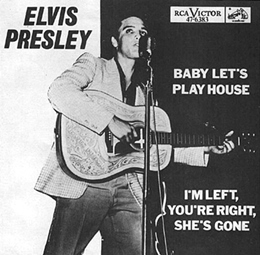
EIN: Thanks for agreeing to the interview, I'm sure there are lots of fans interested to find out more about your new book. First can I ask you how Warren Schubert fits into this fascinating Elvis world, where did you grow up and when did you discover Elvis. Warren Schubert: Thanks for the invite, Piers. I was born in Brisbane, Australia and lived there until I reached my early 30's, at that time I relocated to the USA. I lived in Georgia for a number of years before moving across the country to Seattle Washington, where I now live. My mother and oldest sister introduced me to Elvis as an infant, they played his music and watched his movies every chance they could. One of my earliest memories was asking my mother to play the man's music, I was around 3 years old and didn't yet know his name. As I grew, as did my interest. I received a compilation album for Christmas at 7 and bought magazines with my school lunch money, because there was a photo of him inside shown on stage. The first Biography I read was simply titled 'Elvis' by Dick Tatham and put out by the Elvis Fan Club of Great Britain in 1976, I was 8 years-old. It was in this book that I saw a photo of a Sun single for the first time, a copy of Mystery Train. At the time, despite not having heard any of the Sun songs, it became my dream to someday own one, that day came 20 years later. In 1996, I bought a nice copy of Baby Let's Play House, I soon added another, this time it was Mystery Train. About 2 years later I had two full sets of 45's and a set of 78's, I sold them when I decided to relocate. I didn't own another Sun until around 2017, an upside down 209 That's All Right, which I still have. I have owned at least 3 of those over the years since, I buy or sell as I feel the need. Since 2017 I have owned well over 50 Sun singles, not all at once, but I did have 47 at one point.
EIN: Obviously you were not around when Elvis's glorious SUN singles were first released so what exactly makes them so interesting for you.
W.S: Well, as I learned more about Elvis, Sun and music in general, I began to understand just how important and influential the label was. My interest was fueled by compilation albums of other Sun artists and documentaries about Elvis and the label. I also read all I could find about the records, the next big step in my education was Neal Umphred's book A Touch of Gold, a guide to Elvis' releases and memorabilia, in which he devoted a section to Sun. Here I learned about variations, to a small degree. Fast forward to about 2018-19 I began earnestly collecting not only Elvis , but any Sun record I could. I have over 200 of the releases, some only as 45rpm, some only as 78rpm and a few where I have both formats. To this day I get excited when I find what my friends and I refer to as a 'Sun in the wild'.
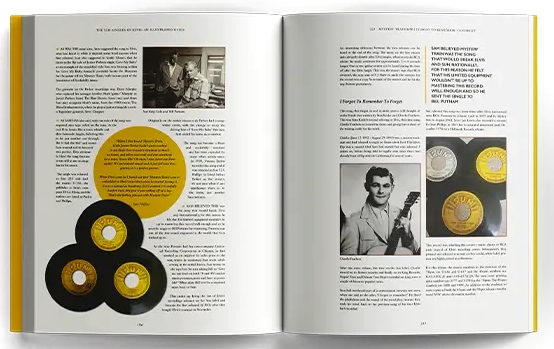
EIN: There are multiple books already produced about Elvis' vinyl releases, such as the ElvisUK series or 'Elvis On Record' books - there were only five Sun singles released surely fans don't need anymore! W.S: I wondered that as well, but the more I thought about this subject and the more I talked to some others about it, I realized there was a need for this. Speculation has been rampant for decades regarding the label variations, with no clear answers. I don't give the exact numbers, because even after 5 years of intensive searching another may pop up a week after the book comes out. But I gave photos of different variations, as well as known combinations of those seen before. It also lets owners check and see what they have in their collection.
RCA releases have had extensive coverage, whereas Sun usually gets a small section at the front of the book. Two major book releases have happened about the Sun years and there have
been several other smaller books. These tend to focus more on the day to
day of the rise of Elvis and not on the records themself. As long as there are fans and opinions, there will be new books, I may have one more about Sun in me and possibly help with one other fan book in the future. It's also possible this is expanded into a book just about other Sun variations, for example Sun 221 Johnny Cash has at least 3 variations just for placement of the 221 catalog number, 334 Carl Perkins Blue Suede Shoes has several font changes. An early release, Bear Cat by Rufus Thomas, Sun 181, has at least 2 or 3 variations.
I geek out over these details, small to some but to me and many others this is important minutia.
EIN: How long have you been working on the book W.S: The book has been on my mind for around 15 years or more. I began hearing about the variations to labels from early in my collecting life, and became fascinated by that. However no one seemed to be able to tell me anything about what they all were, with rumours of up to 37 variations just for 209. So that began my obsession with finding as many as possible. At first the book was just an idea that floated for a long time, about 5 years ago it moved from just an idea to something I needed to do, with much encouragement from a few friends.
A fascinating look at the Mystery Train metal stamper - Click for high-res image
EIN: Along with stull like acetates or even metal-stampers, how on earth did you go about tracking down all the variations of every Elvis SUN pressing. Are you the world's biggest collector of Sun releases. W.S: When I began my actual research, I owned a set of the 5 Sun singles at 45rpm. I started using online resources to help me track down variations, one obvious place was eBay, since so many pass through there each year. I used the Discogs and Cat45 websites quite a lot as well. I located a couple of databases online and contacted the creators, I also used Facebook groups to find variations. My friend John Boija has a fabulous website that I used and I had discussions with a multitude of owners of these records or fans of the label.
There are well over 100 photos of labels in the book and they are set out as the A side on one page with the B side on the next. That way, the reader can see what combination they came as rather than just a bunch of A side labels all in a row. I hope that makes sense? I spent nights and weekends comparing photos of labels to determine any differences, well over a thousand photos. Zooming in on details, or using a magnifying glass to examine closely any records on hand. I made visits to the Memphis library and other collectors homes. I could possibly have one of the largest private collections of Elvis Sun singles, with many of the photos from the book either currently or having been part of my collection. I own some letters and invoices from the Sun files, the earliest from 1953. I have some checks signed by both Marion Keisker and Sam Phillips, as well as original labels from the east coast Paramount pressing plant. A few of them also came from Marion's personal collection. I also have a couple of early acetates in my collection, one a Sun and the other was made by RCA using the original Sun tapes. EIN: So outside of Elvis' SUN singles what would be your three favourite SUN releases and why..
W.S: Okay, Sun 186 The Prisonaires, Just Walkin' in The Rain b/w Baby Please. The Just Walkin in the Rain side in particular, performed by actual prisoners of the state of Tennessee. They came to Memphis by bus in chains to record in the studio, the song was a minor hit for Sun and later became a large hit when covered by Johnny Ray. Elvis had several interactions with Johnny Brag, the groups lead vocalist, throughout his career.
Sun 192, Mystery Train b/w Love My Baby by Herman 'Junior' Parker. These two tracks were the embryo for Elvis' version of Mystery Train. The guitar pattern used in Parkers B side was the blueprint Sam suggested Scotty Moore use throughout the song.
Sun 232, Folsom Prison Blues b/w So Doggone Lonesome by Johnny Cash. This was Cash's second release on the label and his first big hit.The A side is just a timeless classic and has been covered by everyone, but only Johnny does it justice.The bass line intro grabs your attention right away and he tells a great story with the song. Johnny went to Sun shortly after seeing Elvis perform and then speaking with him at the opening of Katz's Drugstore at Lamar Airways shopping center in 1954.
These are Sun Label favorites, the small studio also was utilized by BB King to record another favorite of mine and released on the RPM label, She's Dynamite. Originally this was recorded by Tampa Red. Sam Phillips had the guitarist and piano player both playing boogie woogie, moved the song several levels higher than the original.
Click for high-res image
EIN: The classic SUN 209 'That's All Right' is probably the most iconic rock'n'roll record ever released - people don't recall Bill Haley's 'Rock Around The Clock' being Decca #29124 - why do you think that Elvis' first piece of shellac is so extra special.
W.S: Interesting question. Elvis and Sun 209 isn't just a Rock'n'Roll record and artist, they are Rock'n'Roll. As John Lennon famously said, "Before Elvis, there was nothing!" Bill Haley got the rhythm, but when you looked at him, he didn't have the look, Elvis did. Rock'n'Roll at the time was considered almost dangerous and Elvis looked like he was dangerous, particularly to parents and teens. Bill Haley's music has endured and become iconic, Elvis went way beyond that. You must also consider that Decca had a global reach, a large promotions department and a large advertising budget. Sun Records was Sam Phillips and Marion Keisker, working the phones and driving to prospective regional customers to try to promote Elvis and the single. The budget was whatever Sam and Marion could scrap together that week, with Sam using credit cards to their fullest. Any money coming in was going out fast to keep afloat. Because of that difference in the scale of operations, Decca was able to sell around 25 million copies of #29124 world wide, whereas Sun barely sold 200,000 copies of 209, mostly in the southern portion of the United States. Decca pressed initially tens of thousands of singles at a time, Sun meanwhile was keeping to 1000 copies maximum, spread over three plants, one on each coast and one in Memphis, after the initial preorder of approximately 6,000 copies was filled. These short pressing runs created the opportunity for the variations on the labels to occur, which created the interest among fans of 209 and the other singles and Sun collectors in general. These variations became the impetus of this project.
Click for high-res image
EIN: So how many of the original SUN 209 pressings do you actually own? W.S: I own 4 copies of the 78rpm with one having a large chip taken out and one I bought that is in four pieces having been dropped. I plan to have it framed with the pieces separated and a plaque that reads something like, "Elvis' First Smash Hit Record!"
I own 9 copies of the 45rpm, one has a misplaced label. Another one has the 'That's All Right' label on both sides, however the two labels are from different printing batches. I have the upside down 209, I have what I consider the first pressing, the one containing the word "with" above Scotty and Bill and each of my copies is some variation and all were used in the book. All up I currently own 38 genuine Elvis Sun singles, 10 are 78rpm and the rest are 45's, including those listed above. This doesn't include all of the bootleg or reproduction copies I have dating back to 1972. EIN: When I first heard of the concept of 'push marks' on Elvis' SUN recordings I was truly fascinated - after all I've never seen them on a RCA 45 rpm. What excitements does your book reveal about these weird anomalies and should fans even care.
W.S: 'Push marks' are most associated with Sun but aren't exclusively on Sun releases. I have seen a copy of an Elvis record from Germany that had them on an RCA release. But they were on other record labels as well. Sun just has the most famous examples. I explain what they actually are and how they were created, so that fans can better understand what they are talking about when they use the term.
EIN: The first SUN 45rpm I ever bought was obviously a bootleg but I'm sure I knew that because of the price. Does your book help explain how fans can avoid being duped by bootleg copies and do you think a few fans are going to be saddened to find out that they actually don't own the originals.
W.S: I try to explain that, but it has taken study to be able to glance at a copy and know instantly if its real or not. I point out the tell tale signs to look for on fakes as well as originals. Unfortunately, there will be some out there that may discover they have been duped, I feel for them, but I also think if you plan to make a purchase and spend high dollars, then a little research would be helpful, guides like this can help with that.
Click for high-res image
EIN: People who buy your book will surely be aware that it was RCA who added echo to their 'That's All Right' vinyl release. Did it surprise you that it took so long for SONY/ FTD to release the genuine SUN master - and did you shake your head in disbelief when Graceland bought their fake WHBQ acetate.
W.S: It did take a while for Sony, longer than it should have, but at least they got to it and did an excellent job with it.
On the second question, nothing that Graceland does surprises me anymore. They have the option of reaching out to many knowledgeable people for advice and yet they chose not to. Particularly when they are chasing such an important and in the end expensive artifact.
EIN: 78rpm or 45rpm releases - do collectors need both versions
W.S: Some of us absolutely do, haha. However that can be a costly collection on its own. Some will want just one, while most want a set of the five. It depends on the individual as to what they think they need, I can play both and so I have both. The 45's are more plentiful, because they are more durable and so easier to obtain. Many will opt for those. Or if their budget doesn't allow for a genuine Sun, there are some excellent reproductions.
EIN: What is your favourite Elvis single released by Sam Phillips and why.
W.S: This is maybe the most difficult question to answer, because in many ways I think they're all fantastic and I have had each as a favorite at some point in time. The easy answer is Mystery Train, because it is perfectly imperfect. The laugh at the end, because Elvis thought it was another run through, the abrupt ending on the Sun release, because Sam stopped the tape just after the laugh, The RCA release later in the year is 3 seconds longer in this part. Blue Moon of Kentucky is also amazing, I have a copy a good friend did some magic to and has isolated the individual parts in places throughout the song. You can hear Elvis strumming and singing alone, or Bill Black making a range of percussive sounds while also playing bass notes, or Scotty Moore playing his beautiful licks and filling in the voids. Elvis, his voice alone being an instrument and a huge part of the overall sound. That's All Right gets all the press, but in most places this side went higher on the charts and impressed Bill Monroe enough that he altered HIS signature tune to make it replicate this 19-year-old's version more than his original. EIN: What is the rarest SUN release.
W.S: Since it sold in lower numbers, Sun 215 Milkcow Blues Boogie is possibly the rarest of all releases.A variation of this has the 215 catalog number in the right of center or 3 o'clock location, rather than the traditional bottom or 6 o'clock location, is so rare I couldn't locate a picture in time for the printing. I have only seen 2 separate copies of this variation.
EIN: What do you personally think is the biggest myth surrounding Elvis' SUN recordings.
W.S: That the upside down 209 is the "first pressing", closely followed by the same claim for the misspelling of Roy Brown as Ray on 210 Good Rockin' Tonight. I put forward a case to dispel both in the book and let the reader decide.
EIN: Peter Guralnick published his 700 page biography on Sam Phillips. Do you think he could have done better.
W.S: Guralnick is a fabulous author and I respect his body of work immensely. I actually prefer his biography on Sam Phillips over the two Elvis Books, it is the last of the 3 that I have read and it explained many aspects of Sam's life and career very well. I look at these books as just one perspective and don't take them to be gospel. He covers most things well, but occasionally omits things that don't follow his narrative in the way he sees it or wants it to fit, or so it seems to me. I have not read his latest book on Parker yet, but will, however many reports on it haven't been too positive.
My book has a brief overview of Sam and the business, the focus for me was more on the labels than the man or his company or even Elvis. As you said, there are enough books about the men and the company, this is about the individual records themselves.
EIN: As I have stated many times in my reviews, nothing replaces the original mono release of Elvis' 50s recordings. However I find it fascinating to listen to these new 'DES' stereo versions to be able to discover just how much The Blue Moon Boys put into creating the classic mono releases. What are your thoughts about this. W.S: The technology available today is amazing, the ability to make it sound as if you are standing in the room as the songs are being recorded. The ability to isolate just Bill Black's bass, which I have heard an example of, is so mind blowing, hearing the percussive noises he made that gave the sound such fullness. Although nothing to me will sound as good as putting an original on the turntable, these new mixes are excellent. I will take a good stereo mix over the added echo mixes of RCA.
EIN: When is your book going to be published and is the only way they can buy it through Memphis Mansion publishing. W.S: It is at the printers now and will be ready for the October 3-5 Elvis Weekend event in Denmark at Memphis Mansion. I will be there to sign copies and help sell them.
They will be available a few weeks later for purchase in Sun Studios in Memphis, something that is like a dream come true for me. I will be bringing an obviously limited number of copies back to the US with me to sell here to reduce shipping costs. Once I have a definite cost including shipping I will make this known for US buyers. I will be signing copies in Denmark and also for the copies I sell from the US. Sun Studios will most likely not be signed unless they invite me to do so at an Elvis Week event.
Thank you again Piers for the opportunity to talk about the book.
EIN: Thanks for taking time out to tell us about the book, it sounds fascinating. We will be sure to post how fans can buy these books from you as an EIN news-update once you have them back in the US.
Go HERE to Memphis Mansion shop to order the book See Memphis Mansion 'Elvis Weekend' 3-5 October 2025 for all the details
EIN Website content © Copyright the Elvis Information Network.
Elvis Presley, Elvis and Graceland are trademarks of Elvis Presley Enterprises. The Elvis Information Network has been running since 1986 and is an EPE officially recognised Elvis fan club.
|
|