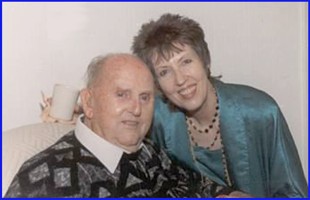
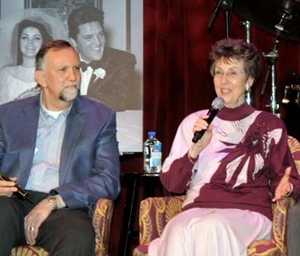
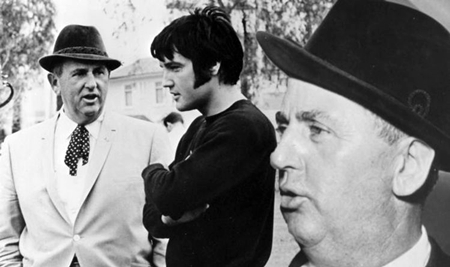
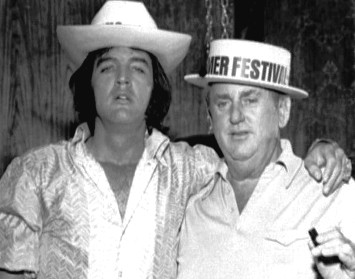
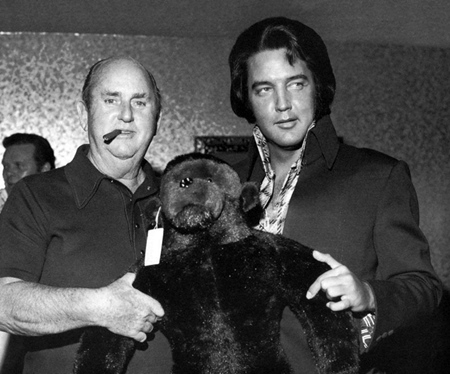
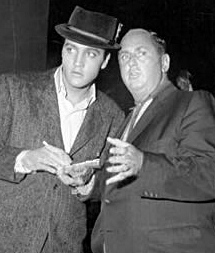
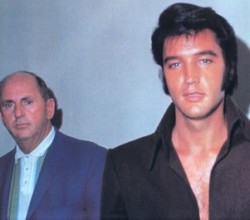
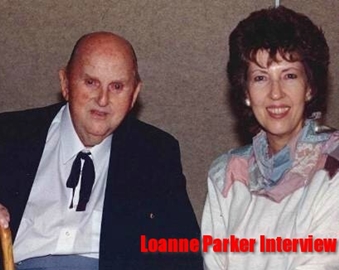
| The following interview of Joanna Johnson's with Loanne Parker from ETA Radio originally via yahoo was then published in newsgroup alt.elvis.king. |
There were absolutely no restrictions on the questions that ETA Radio was able to ask of Mrs. Parker, and in this interview Loanne and ETA's Joanna spend considerable time discussing the various myths and stories surrounding the Colonel.
As ETA Radio's Joanna Johnson states at the end of the conversation, Loanne is a most dignified and loving spokesperson - and all of us at ETA Radio wish to thank Loanne Parker for her gracious participation in this heartfelt and meaningful rare interview.
Hi Loanne, I'd like to thank you for agreeing to this interview. Of course we all know that there's been a lifetime of Elvis rumours, quotes, misquotes writings about the Col that people around the world have heard and we're going to get into that. We may get into that later but right now I'd like to hear form you and how you would describe the Colonel as your knew him, as a person, as your husband and of course the personal and working relationship you had, both of you with EP.
ETA: Start with when did you meet the colonel?
Loanne P: I met the Colonel in 1969 in Las Vegas, that was when Elvis was preparing to appear at the International Hotel, he was the second artist to appear, Barb Streisand (was) the first, because again the Colonel's wisdom was don't be the first act. You're going to have a lot of problems with sounds, etc. and he didn't want to put Elvis in that position. That's when I met him, I was an employee of the hotel
ETA: I believe you were his secretary, how did that happen?
LP: I was never his secretary. Colonel Tom and I had a personal relationship. And when they decided that Elvis would tour, the tour sponsor was RCA records, and they needed a secretary to travel on the tour and I was hired as the RCA records tour secretary and I held that position until Elvis' death. So I was on the road with the show. |
 |
ETA: How long were you married to the Colonel?
LP: Col and I were married in 1990 but again our relationship went back to 1970.
ETA: That's a long time.
LP: That's a very long time and we went through a lot together Joanna. There were very traumatic things that occurred in his life, Elvis death, that just turned our world upside down, His wife Marie died and before she died she was literally a vegetable, that was very, very difficult for him. There were other problems that came up of course, the problem with the state of Tennessee. Everyone says there was problem between the estate and Colonel Parker. The problem was with the guardian ad lidim who was appointed for Lisa, in fact the estate refused to make charges against the colonel and that's in the court record. The judge ordered them to proceed or they would be replaced. So there was never the problem between the estate and the colonel, that's another one of those stories.
ETA:. We're gonna come up with a few of them as we go along. Were you involved in any way with the Col's business dealings?
LP:. Absolutely, I was the secretary for RCA record tours but I was assigned to the Colonel and my initial during that period appear at the bottom of many, many of his letters, plus he confided a lot in me.
ETA: He was a great man.
LP: He was great all on his own, he didn't need anyone behind him. But I think he enjoyed having someone there who appreciated his work talents. Marie did not like show-business, she was uncomfortable with show business. And so he couldn't discuss it with her, probably didn't even think of discussing it with her. Because they were in the age group where a man had his life which was his business, the wife had her home, children if there were any and there were a few things that they would talk about in regard to the home and children but that was about it.
ETA: That's something that's very difficult, to have a working and personal relationship with your husband, you must have been very, very close.
LP: Oh, we were close, we were extremely close. In 1985 we closed all of our homes and moved here to Las Vegas. I'd had a home here all during that period and we were together 24 hours a day from 1985 until his death.
ETA: Is that where you're from, Las Vegas originally?
LP: No, I'm from Ohio.
ETA: When did you move out to Vegas?
LP: 1968.
ETA: Did you get to go to any of Elvis' concerts?
LP: Yeah. Of course. Elvis was dyn-o-mite
ETA: That's what you remember?
LP: I wish every one of your listeners could have attended a concert and seen him perform in person because you had to be there to feel the electricity, to feel the excitement, he had an aura, a magnetism that doesn't come across on film, he looks great on film but in person he was even more sensational. I was NOT an Elvis fan when I met colonel. I didn't dislike Elvis but he just wasn't my style but was I converted quickly, one show, that did it.
ETA: Would you say you ended up knowing Elvis very, fairly well?
LP: No, no, I didn't not that well.
ETA: What would you remember the most of Elvis? What stands out in your mind?
LP: I think the most that stands out is that he was a human being who cared. His talent was a plus but I think he would have been a caring human being no matter what occupation he'd gone into. And I think people forget about that, too often they see him as Elvis the entertainer. It's such a tough life to lead, I know people everywhere will disagree with that. A friend of mine who was an entertainer said one of the problems he had was, he said he was single at the time. He said that `women go to bed with a star and they wake up with me,' and I think that's very telling. Everyone expects a star to be a star 24 hours a day, and that's a lot of pressure.
ETA: Many of Elvis' friends have spoken highly of Colonel, have you kept in touch with these people?
LP: Yes, oh yes, Joe Esposito, Jerry Schilling, Sonny West, I've been in touch with Jack Soden CEO of the estate, Priscilla and I talk from time to time, I’m friends with those people. Dick Grob is another one. I had breakfast with Jerry Schilling and Joe Esposito about six weeks ago. Charlie Stone, he was on this show, Mike Crawly , Someone else that you might be aware of is Paul Gongaware He and his partner, Concerts West has booked Celine Dion in Caesar's palace. |
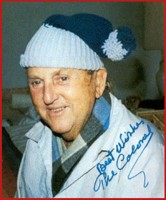 |
ETA: When you talk to these friends I'm sure you share stories about you know remember when Elvis did this or that. Could you share a story or two with us about Colonel and Elvis, something he would have discussed whether it be amusing?
LP: I'm trying to think of something with colonel and Elvis. All right, one night, our group always traveled ahead of the show and we had our own plane . I traveled with Colonel's group. We would go ahead and make sure that all the arrangements were set up, the hotel rooms were assigned. Every time a musician or any member got off the plane there was someone there to meet them with a hotel key and transportation to take them to the hotel and so forth. Colonel got a call before Elvis plane left and what they said was he's not in a real good mood tonight, Colonel.
So the Colonel went up to Elvis' suite and he borrowed some paraphernalia from the janitor of the hotel and when Elvis walked in, Colonel had a push broom and he was sweeping the hallways. Elvis said `Colonel what are you doing.? And Colonel said `Elvis, I'd do anything for you.' Elvis broke up, he thought that was really funny, It changed his mood.
ETA: How would you describe the relationship between E and the colonel?
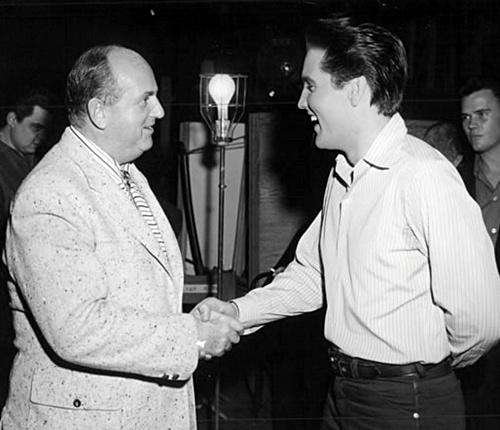
LP: Complex. They trusted one another to the point where colonel said Elvis I am not a singer, I'm not an artist, I don't know what songs you should choose, I don't know what kind of attire you should wear on stage. Elvis handled everything in the creative part and he did an extremely great job. Colonel took care of the business, Elvis didn't want to spend time in negotiation and things like that, so colonel would do that for him and here's the misconception people think that Colonel made plans and Elvis had to follow through and that's not true.
Colonel did not make any contracts for movies, personal appearances anything before talking it over with Elvis and Elvis agreed to it or didn't agree to it and if he didn't agree, colonel went back and said it's not a deal. No one told Elvis Presley what to do.
ETA: What happened, like the colonel engineered many firsts. For example the satellite show from Hawaii?
LP: Exactly and let's go back even further, way, way back when the he negotiated RCA Victor contract for Elvis. Prior to that time, the A&R man picked out the material that was to be recorded, and a recording artist would walk into the studio and was handed the songs that he was to do for an album. Colonel changed that. He wrote into the contract that Elvis chose his own material. Which didn't make Colonel very popular with the A&R people because that was a lot of power that they held before that time. And today I don't think an artist would dream of letting an A&R man tell them what to sing, absolutely not, Joanne. So he did, he held a lot of power.
ETA: Let's go back to you for a second, Loanne you've been involved in a project called the Definitive Elvis. Can you tell me a little about that. The video series in which you were involved...
LP: Oh right oh yes, the video this was done by Joe Esposito and Don Wilson, they went everywhere interviewing people. I was one of those people. At this point Joanna I think it's time some of the misconceptions are set straight and if I can help do that I would be very happy. I'd like you to set the record straight right now. Let's go.
We've heard the Colonel being an illegal alien and that's the reason Elvis never went overseas. Let's take a look at that at the time of Elvis' death Charlie Stone has told me Colonel had him checking into venues with plans to take Elvis overseas but going back just a bit common sense would tell us, how could Elvis pass customs carrying pills and guns. Frank Sinatra was arrested in Australia for a very small infraction. He couldn't have gotten through customs, I'm sorry, he couldn't.
That's number 1, number two, at that time the venues that we have today were not available. Elvis would not play outdoors, and I don't blame him, he realized that in playing outdoors he could have been mobbed. Unfortunately, sometimes fans get carried away. In the early days he's had his clothes nearly ripped off him, that was something that bothered his mother a great deal I've been told. He'd come home all scratched up. So he would not play outdoors and the indoor venues overseas were not large enough to enable a reasonable ticket.
(EIN Note: London's Royal Albert Hall was opened in 1880 with a capacity for 8,000 people but has held concerts of up to 12,000. London Earl's Court built in 1937 had concert capacity of 20,000
Led Zeppelin's 1973 European tour played venues of 14,000.)
The ticket prices would have had to been so high that quite honestly most of the Elvis fans could not have afforded to see the show. So if we just look at the practical aspect it makes a lot of sense. Col would not have needed to accompany Elvis overseas he could have sent him with concerts west, with Jerry Weintraub could have taken him. That is silly to say that Colonel didn't want to go overseas he was in Canada three times.
(EIN Note: It was only in 2008 that Americans and Canadian citizens were required to have a valid passport to travel between countries. Before that a valid ID or driver's license was all that was needed.)
When Elvis played Toronto in 1957, Ottawa April 3rd of 1957 and Vancouver August 31st of 1957. Colonel was outside the county and came back and forth.
ETA: That's true.
LP: Colonel did not prevent Elvis from playing overseas, it's that simple.
ETA: Now the series of what they call dead end movies that didn't challenge Elvis, how big a part did the Colonel play in this, did he dictate?
LP: No, lets think about Elvis' age at that time. He was young, he was having a wonderful time. I think probably the most important thing in his life, in any man's life, is the female relationships that they have. Elvis made extremely good money, he was making more money than almost any big star and Colonel does not get credit for that. They look at what Elvis was paid for a movie and say, `oh that's not much because they look at what a star is paid today and you can't do that. Back in those days it was quite different. Elvis approved every script, that's all I can say. As far as the money that he made, can we delve into, again, only what we've heard and you are setting the record straight?
ETA: Did the Colonel have gambling debts? And were his ties to the Hilton hotel, did this have anything to do with the amount of time that Elvis was working there?
LP: No absolutely not. Colonel gambled of course. Did he have debts? No, he paid as he went. And Joanna I can verify that because I was the person who quite often paid the gambling debt, he sent me down to clear it. I would take care of that. He never gambled something he didn't have and he was always very careful to made sure there was enough money to take care of Marie if she lived to be a hundred and fifty. His ties to the hotel, the Las Vegas Hilton was the biggest, best hotel when they started. In 1969 it was THE new place to be. He did not have an exclusive contract with the hotel Colonel could have played any other hotel in LV no one offered better money.
ETA: So it was a matter of choice. It was a good business deal.
LP: It was a good business deal. Yes he did play in Lake Tahoe, they also paid very well. It was just good business. Let's for one second go back to the movie years. I have I my possession a copy of a letter Colonel wrote to Elvis saying. Elvis enclosed is a script. It is my personal recommendation that you do not do this movie because I do not think it requires enough of your talent. You'd be better choosing a script that makes better use of your talents. Now does that sound like a man who just wanted money and didn't think of anything else?
ETA: This is why you're telling us this story, because you gotta set the record straight! Now how about the gossip about Colonel overlooking or ignoring Elvis drug problem?
LP: Let's use common sense again Joanna. Sadly, when you have a loved one who has an addiction, you would move heaven and earth to stop that. But what can you do if the person doesn't want to end their own addiction? There were no Betty Ford clinics back then and you could NOT put someone in a facility without them signing themselves in. You had to have their permission.
Colonel even at one time left, he and Elvis went their separate ways. He said, `I'm not gonna book you anymore', that's a matter of record. I think it was in 75 that, Colonel said, no I'm not gonna book you any more Elvis, you've gonna have to straighten yourself out, he even talked to Vernon about this. Vernon was very distraught about this. Everyone around was distraught. Everyone tried in their own way, but Elvis didn't believe, he didn't believe he had a problem, and we can sit here and judge Elvis all we like but we were not in his body. We don't know the pressures that he was up against and it's well known he was an insomniac. Which, it's no fault to him being an insomniac. If Colonel could have discovered how to stop a person's addictions, he would have made millions, just telling everyone else how to do it and it would have been done.
ETA: How about the terrible rumor of overworking Elvis to the point of exhaustion?
LP: The only time that Elvis stayed away from drugs, or let me say, you don't stay away from something with an addiction the only time Elvis used fewer drugs was when he was performing and Elvis himself wanted to perform. It was a constant worry to Colonel that if Elvis stops performing he would go up in his bedroom and eventually no one will ever see him again. But Elvis himself agreed to every tour. Now, I don't doubt that he complained about it on the road. Of course, don't you and I complain about our jobs sometimes? He was a human being. And I'm sure he complained about it, ` Colonel's got me booked again' blah blah blah. But he would agree to the next tour and the next tour he was a human being.
Elvis himself knew that the only thing that kept him going was his fans. They wanted him and he needed to be out there for them. And looking at all that his body was undergoing and so forth and probably most of it caused by the drugs, but we should say prescriptions I guess, using drugs because that's what they call it, these were all prescription medication. I think that when we look even at the last show that was videotaped for the CBS special. Elvis did very well despite the physical condition. He really, he wanted, he wanted to perform for his fans.
ETA: As far as Elvis goes, I bet you feel your heart cries, your heart laughs, your heart enjoyed, your heart appreciated, but moreover as I have understood from every word you've said you understand the predicament he was in, you understand and you're a very wise woman.
LP: when you understand but you can't change it, of course you hurt, everyone around Elvis hurt, it was not easy, it was not, and it's so sad to be judged unfairly by those who weren't there. One of the things that invariably is said during a conversation I have today with someone who is on the show, that is, we can only talk to one another about this because no one else can begin to imagine what it was like. We were all under tremendous pressure. Anyone of us would have given anything to help that situation.
ETA: Loanne, what are your feelings about the books that have been released about the Colonel lately and what kind of reaction have these books found among the Colonel's friends?
LP: Actually they're so far from the truth that we just disregard them. I guess, the way I feel about them is this, the writers of the books used what information they were able to gather. But Joanna, if you wanted to find out what it was like to eat an ice cream cone, would you talk to someone who had eaten an ice cream cone? Or would you talk to someone who had watched a person eat an ice cream cone? Or a person had read about another eating an ice cream cone? Or someone who had heard about an ice cream cone but never really got close enough to see it? And that's they're problems. The people who were closest to the Colonel are not talking. Because they fear their words to be twisted and misused, it's that simple.
ETA: What do you feel is the biggest misconception about the Colonel?
LP: The biggest misconception is that he cheated Elvis, that he made E do things he didn't want to do, that he misguided Elvis, that's not true. Colonel lived for Elvis. He didn't take a vacation because his thinking was, 'what would I enjoy doing more than I do right now?'. I'm working for Elvis.
And the day after Elvis died, Number 1, the Colonel did not go to New York. I was with him on a chartered plane to Memphis. Jerry Weintraub was there Pat Kelaher was there Tom Hewlett was there, Mark Hewlett, Tom's nephew was there, and myself, George Parkhill. And Colonel gave us a little talk cause we were all just torn up and he said, I'm sorry, this is hard (she sobs) he said, `just because he's gone we're still working for him, it will always be Elvis and The Colonel till the day I die. He will always be there for me. And he said, 'make him proud of us.'
When we get off this plane, I don't want any scenes, I don't want anyone breaking down and getting emotional and in respect to him I want us to walk off, do our jobs, pay homage to him and make him proud. And then Col read that he had been riding a motorcycle in the funeral procession cause someone reported that which is so silly.
ETA: I'll ask another question but I didn't want to disturb you. What was the Col' relationship like with EPE and Priscilla after Elvis' death.
LP: It was strained during the period of time when the estate was forced by the state of Tennessee to proceed, because the people who were the estate at that time were not allowed to talk with the Colonel and everything had to be negotiated through attorneys. But once that was over at the settlement, when they were signing the papers, Priscilla looked at Colonel, smiled and said, "I wish you were my manager.'
Anyone who worked with Elvis or FOR Elvis can talk about their relationship with Elvis and their relationship with Colonel, but their relationship with Colonel was always on a more friendship basis, because anytime that Elvis and the Colonel had a meeting they either excused themselves or they asked the guys to leave the room so those meetings were just Elvis and the Colonel and there can be all kinds of speculation about what happened but the people weren't there, there were only two people there.
ETA: It was all behind close doors. That's the same thing you did when you got home with the colonel. You closed the door, they weren't in there, they weren't involved.
LP: Colonel may have told me what transpired in the meeting and Elvis might tell the boys what transpired. So everyone today who's alive today has had only the opinion of one of those people but they weren't there.
ETA: There's Elvis' friends and the Colonel's friends who have sat and talked to me and said this was my experience with Elvis but they had another experience with the Colonel and they were such wonderful stories, talking about what a benevolent man he was. It was incredible to hear that and I'm going to get on that and hear your opinion of that. I'd like to know if the Colonel worked with or helped promote any other artist after Elvis died?
LP: He was very free at giving advice but no, he did not work with any other artist, absolutely not.
ETA: Was he approached by any other artist?
LP: Oh, yes, absolutely, and I really don't think it would be fair of me to tell you who they were, but just one and I don't think he would mind me saying it but it was Tony Orlando. Who was real big at one time. He still plays here in Vegas and still does a great show. Tony called the Colonel and said he would like to talk to him and Colonel said `fine I'd be happy to see you any time Tony, but bring your manager.' Because Colonel would NOT talk to an artist without their manager being there, and the manager had to be in agreement because he wouldn't go behind someone's back.
ETA: Oh wow.
LP: Tanya Tucker's dad came and asked if Colonel would manage Tanya. He said `No, I wish you all the success in the world and if I can give you any helpful advice, I will do that but no Elvis was, that was it,' he said, ` I've had the greatest, anything else would be a step down.'
ETA: I believe the Colonel turned over much of his memorabilia to EPE. Do you still own a considerable amount of Elvis memorabilia?
LP: No, in 1990 EPE purchased all of the memorabilia and all of the records , I'm talking about business records that Colonel had in his office in TN. And at that time his offices in Las Vegas and Los Angeles were sent to Tennessee so they got all of that. The only thing that I have now is personal records of the Colonel.
ETA: Do you have any plans for this memorabilia?
LP: I'm holding onto it, I'm keeping it safe because yes, probably at some point I will donate it to a university. So that's it's made available to anyone who is interested and wants to look at it. You know there are no secrets, Joanna, no secrets, because Colonel had no reason to keep things secret. When the problems arose with state of Tennessee and the estate and Colonel. Colonel's feelings were let them go ahead, I've done nothing wrong. I have nothing to hide.' Everything that the state of Tennessee requested, he made available. And eventually there was a settlement. In all the time this was discussed and talked about and threats of a lawsuit came up, it was not instigated. They never found anything that they could go to court with.
ETA: Something got proved right.
LP: Yeah.
ETA: Loanne, how do you feel about the Elvis entertainer, the imitator, the tribute artists? Have you ever seen any of them perform?
LP: I saw Donnie Seaton perform and two others, they were in Elvis, an American Musical, which the estate, it was their show they sponsored this. I'd like to call them tribute artist. I think that's fair, `imitators' takes something away from the person, the artist that's doing the singing, but tribute artist, I like that a lot better. I have not seen many of them for a very selfish reason, it hurts.
One of Colonel's friends and yours Charles Stone, Oh yeah and Craig Parker, he's a very personable man and I have no doubt that he's very talented. He's, gonna be here in February and I'm looking forward to that. I think he's at the Sun Coast Casino. Feb 15 to 17, he's fabulous. Las Vegas is a great place for Elvis fans and admirers to come because Elvis of course just captured the town, absolutely took it over.
ETA: Second time around, not the very first appearance, I'm told over and over again first time Elvis was in Vegas.
LP: And Colonel said `If it was such a bad event, why did they ask us to stay over and why did they offer us a chance to come back?" Well good for him because that's what we think. They wanted him to stay an extra week but he was going to be in a movie in fact they stopped here on their way to the coast. They just picked up a little work on their way to the coast. Both Elvis and the Colonel gave generously to charities. He gave to so many, there was one group in TN these women ran a day school for under privileged children, and he gave a lot to them but he gave to different religious groups.
Even when you think about when they had the Pearl Harbor Memorial, when they did the concert for that, each of them coughed up $35 thousand dollars, I mean Elvis and the Colonel, because any box office receipts went directly to charity. There was nothing deducted, nothing. If there were Expense, Elvis and the Colonel divided those expenses and paid for them out of their own pockets. I have volumes of letters from charities that Colonel donated to, letters thanking him. Every time he sent out a check it was with was a stipulation that there was no publicity he felt that you give from the heart not because you want publicity or attention.
|