








'The Colonel and The King'  

By Peter Guralnick

Book Review by Piers Beagley / Vince Alex

'The Colonel and the King: Tom Parker, Elvis Presley, and the Partnership that Rocked the World'

The publicity promises..
From Peter Guralnick the award-winning biographer of Elvis Presley, a groundbreaking dual portrait of the relationship between the iconic artist and his legendary manager — drawing on a wealth of the Colonel's never-before-seen correspondence to reveal that this oft-reviled figure was in fact a confidant, friend, and architect of his client’s success

The close personal bond between Elvis and the Colonel has never been fully portrayed before. It was a relationship founded on mutual admiration and support. From the outset, the Colonel defended Elvis fiercely and indefatigably against RCA executives, Elvis’ own booking agents, and movie moguls. But in their final years together, the story grew darker, as the Colonel found himself unable to protect Elvis from himself or control growing problems of his own.

Unfortunately it appears that in trying to "debunk the myths" and create an alternate viewpoint about Parker, Guralnick has ignored a large amount of known history and obfuscates the facts. Perhaps the book actually helps confirm that Baz Luhrmann’s 'ELVIS' movie was closer to the truth than we might have expected. 

EIN's Piers Beagley and Vince Alex take an in-depth look at this intriguing new book...


(‎Little, Brown and Company, USA, 2025, Hardcover, 624 pages, Illustrated, ISBN-10:0316399442) 

Reviewed by Piers Beagley / Vince Alex (aka 'Iwillbetrue' from the Steve Hoffman forum)- August 2025

CEOs need to be bullish in negotiations and a large number of CEOs are known to have manipulative psychopathic personalities. Col Parker was the “CEO” of Elvis Presley Inc. where sadly there was only one employee who he needed to thoroughly exploit in order to increase their incomes.

Managers of other celebrities, e.g. Basil Grillo who became the head of ‘Bing Crosby Enterprises’, achieved similar things to Parker seemingly without the psychopathic personality.

Of course what Parker achieved in the 1950s as Elvis’ manager was extraordinary and quickly pushed Elvis into the $1million a year bracket. It is no wonder that they stuck together as a team for as long as they did.

However having only one employee meant that Parker, with a known gambling habit, would obviously push for money over the creative interest of his client. There would have been less pressure on Elvis if Parker had actually managed other clients thus getting additional income streams.

The Beatles manager Brian Epstein was able to book international tours, line up movie contracts and record deals for the world’s biggest group yet he also managed multiple other stars such as Cilla Black and Gerry and the Pacemakers .

Sadly there is no doubt that Peter Guralnick’s new book about Col Parker is a disappointing whitewash of the truly bizarre character that was Elvis' manager.

However I do believe that other reviewers have missed an obvious explanation as to why Guralnick published such a book.

The author notes that he has been collecting information and working on the theme of this Parker book for around 30 years. So you can imagine his disappointment when in 2003 Alanna Nash beat him to it when she published her very well researched 400-page book ‘The Colonel: The Extraordinary Story Of Col Tom Parker And Elvis Presley’.

Nash’s fascinating in-depth look at not only the early years of Col Parker, his management of Elvis as well as life post-Elvis, covered exactly the same ground as Guralnick.

But a way that Guralnick could guarantee more interest in his version of the same book would be if he took an opposite stand to the regularly acknowledged rather negative view of Col Parker. And the fact that Baz Luhrmann’s drama ‘ELVIS’ (it was not a documentary) featured Col Parker as 'the villain' added another timely marketing opportunity.

By Guralnick stating that everyone’s assumption of Col Parker was in fact wrong - that he never interfered in Elvis’ musical recordings, all those bad 60’s movies were Elvis’ fault, that he did everything to support Elvis throughout his later career - guaranteed that the author would get masses of exposure and interviews on mainstream media.

It was a clever marketing move and he did indeed generate the expected publicity.

However to get to this new view-point Guralnick had a few major hurdles where he needed to alter reader’s previous perceptions, including the following..

  1. Parker’s discharge from the US army due to “Psychosis Psychogenic Depression.. Constitutional Psychopathic State, Emotional Instability.”
  2. His strange behaviour in cutting himself off completely from his Dutch family.
  3. His malicious treatment of Hank Snow – partner of “Jamboree Attractions”
  4. His participation in cutting off Elvis from good composers i.e. Lieber / Stoller, and the Suspicious Minds debacle.
  5. The lousy 60’s movies.
  6. Wanting the ’68 Comeback Special to be Christmas themed.
  7. Not touring Elvis internationally.
  8. The malicious financial exploitation of Boxcar Enterprises. Parker earned 40%, his cronies 45% but Elvis only got 15%
  9. The RCA Buyout – Parker getting $6million, Elvis only $4.5million
  10. His later 70’s demands to “get the boy onstage” despite Elvis’ health issues
  11. His 50% contract on Elvis’ earning + side benefits
  12. Attorney Blanchard Tual’s 1981 legal case noting that Parker was guilty of “self-dealing, collusion, conspiracy, fraud, misrepresentation, bad faith and overreaching” And that he had “violated his duty both to Elvis and the Estate”.
  13. Parker actually stating that he was indeed an illegal alien!

That's a pretty long list - and I'm sure there are several more items that people could add – but the way Guralnick often gets around this these points is either by ignoring them completely or suggesting that people's past recollections were not accurate.

Guralnick stayed on good terms with Col Parker's second wife Loanne and he often uses her recollections to challenge previously stated facts. This is ridiculous seeing as she obviously had a positively biased viewpoint about her husband, as well as the reality that Parker would tell her fanciful stories of his past, tales that he just made up.

To wrap up this gorgeous rose-tinted look at Col Parker Guralnick bookends his version with two telling statements..

Elvis in November 1955 upon the signing to RCA Records and receiving more money than he had ever dreamt of… “Again I say thanks and I love you like a father.”

And Parker in 1978… “We made a hell of a team. Sure, I loved him."

But knowing how Parker actually exploited Elvis after his death, a better more representative quote might have been …

“Elvis didn't die. The body did. .. It don't mean a damn thing. It's just like when he was away in the army.. This changes nothing.” – Parker in August 1977


The 624-page book is divided into two halves, the first features Guralnick’s look at Parker's life with reference to his telegrams and letters. The second half of the book includes a selection of these actual letters with the author's interpretation of how they fit into the Elvis' history. Some of the stories are repeated in both sections of the book so it would have been a more attractive read had he combined both sections chronologically into one.

Guralnick's detailed Footnotes, Index, Bibliography, the large number of photos, and list of credits is top-notch as we would expect from any of his volumes. 

To be honest if one ignores the obvious bias towards the angelic side of Parker there is still a fascination to all the details that Guralnick has discovered, as well a chance to read plenty of the telegrams that Parker sent. In the past these telegrams have been a real guide to any author or museum that needed to know about the timeline of Elvis' historic legacy.

Parker’s early carnival life is absolutely riveting, albeit highly romanticised by PG. The very rootsy style of promotion, sometimes bizarre but almost always successful, that he developed there, would eventually become a blueprint for modern music industry.

The Eddy Arnold section is also notable for how the roots of managing Elvis were laid down.
25% commission, putting band on salary, synergistic promotions, obsessive focus on the client, the way he saw the opportunity and pushed Eddy Arnold on to Steve Sholes.

Once Parker took over Elvis’ management the hard-core deals and pushy negotiations are fascinating to observe via his actual correspondence.

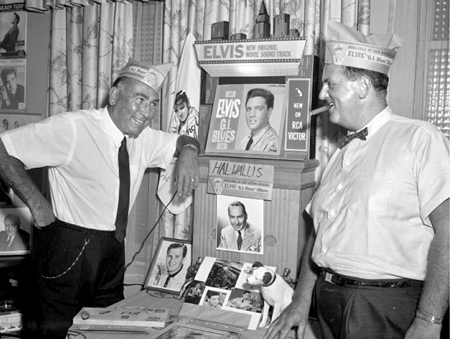
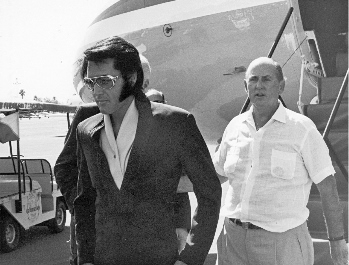
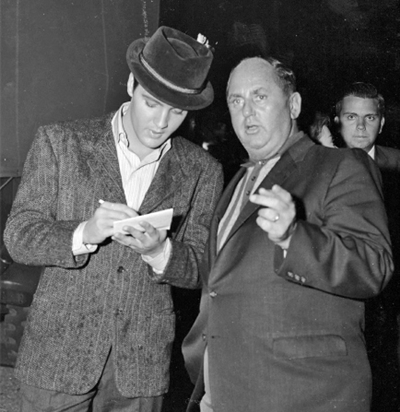
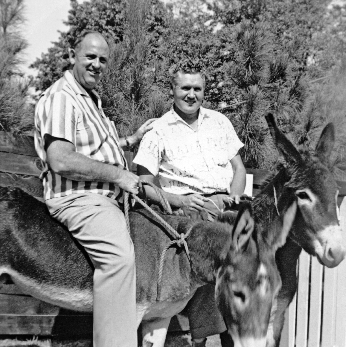
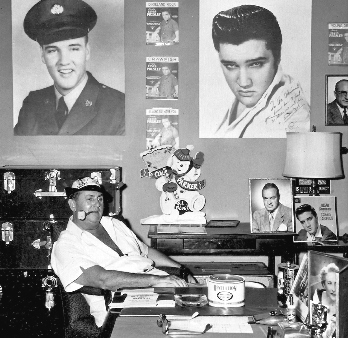
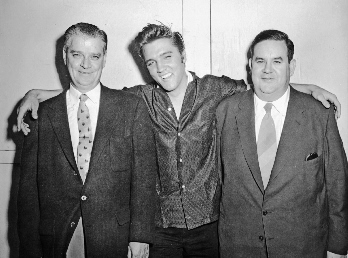
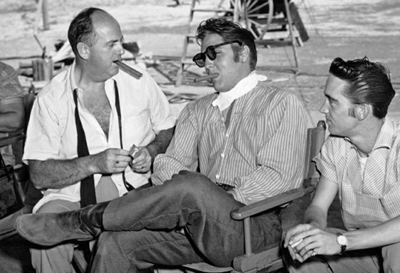
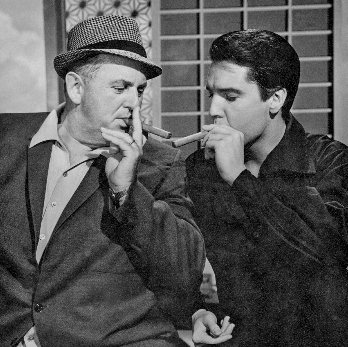
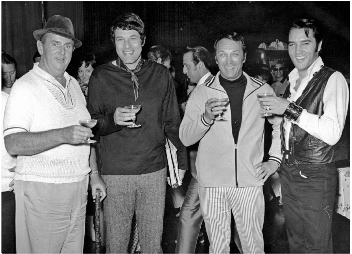
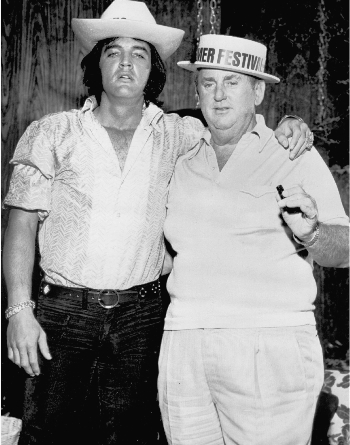
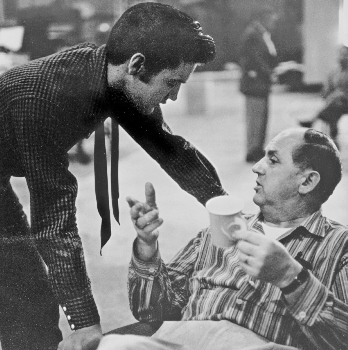
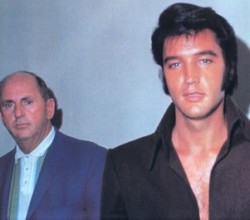
Having access to the Graceland archives the book also includes tons of fascinating photos, including over thirty of Parker with Elvis, plenty of them that I have not seen previously.

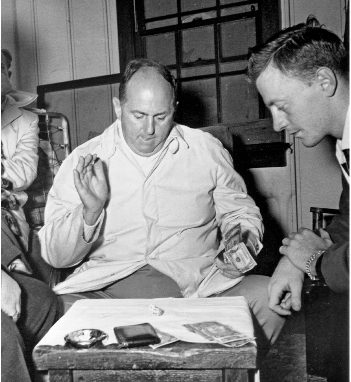
Throwing dice with Red West on location for King Creole, March 1958.

But for me the strange outcome from reading the book is that it never actually changes my previous negative view towards Parker since so much of the known history has been deliberately left out or obfuscated. The new details only help confirm how Baz Luhrmann’s movie was closer to the truth than we might have expected. Any knowledgeable reader would surely feel that Guralnick is trying to do a “snow-job” on us all. Parker would be very proud!

Looking briefly at Guralnick’s snow-jobs..

1. Parker’s discharged from the US army due to “Psychosis Psychogenic Depression.. Constitutional Psychopathic State, Emotional Instability.”

This is partly explained by suggesting his second-wife Loanne knew the real answer "She was convinced that he simply grew tired of the regimentation... and, true to his nature, conceived of an ingenious, if inexplicably painful, way out".
Guralnick also makes a very tenuous comparison to actor Sidney Poitier who "sick at the racial inequities sought a discharge for being 'mentally unfit.'"

2. His strange behaviour in cutting himself off completely from his Dutch family.

This is partly excused by “the permanent estrangement from his mother, and entire family… was certainly the cruellest in its consequences both for himself and those he loved.”

Until then Parker had been sending his Mother letters and a monthly allowance which then stopped. Parker could have of course re-established the family relationship at any time, so in fact the emotional trauma was solely forced onto the family, not the absent son.

3. His malicious treatment of Hank Snow – partner of “Jamboree Attractions”

Briefly noted as “an uncharacteristic action, and one that went against all his principles of business”.
Hardly 'uncharacteristic' as Parker taking advantage of a weaker associate was surely his main modus operandi!

4. His participation in cutting Elvis off from good composers i.e. Lieber / Stoller, and the Suspicious Minds debacle.

Stating that Parker was never involved in Elvis’ musical endeavours is ludicrous.
It was Parker that set up Elvis publishing and the Hill & Range deal restricting Elvis to lesser composers.
Parker even writes to Elvis warning that, “There are many writers and publishers that are watching to see you do some tunes where you do not have part of the publishing.. so they can turn Jean and Julian Aberbach down.. - then you would be up the creek.”

The main example of Parker cutting out the brilliant Lieber / Stoller team when they tried to stimulate Elvis’ creative side is easily avoided as there is no mention whatsoever of these great composers in the whole book! 

Similarly, while Tom Diskin is noted to be Parker’s right-hand man doing everything he is asked to - even signing letters that Parker wrote - the Suspicious Minds debacle where Chips Moman refused to give up the publishing is excused by blaming Tom Diskin! It is malicious to state that Col Parker wasn’t physically there so it was nothing to do with him.

5. The lousy 60’s movies.

In the book the low-quality 1960s movies in the book are blamed on Elvis where Guralnick suggests, "It was not so much the movies’ lack of creative sustenance as Elvis' own almost total absorption in his spiritual studies that kept Elvis away from what had been the one driving force of his life ever since he was a small child. .. it was obvious to everyone he couldn’t wait to get off the movie set as soon as possible, just so he could go back to his new spiritual texts."

This is no excuse as Parker had already signed up his client for the unending treadmill of movie fluff way before Elvis met Larry Geller and started delving into his spiritual quest. The contracts were signed with no stipulation that Elvis had any right to insist on a good-quality script. The Beatles made one film per year – the idea that one artist could bang out three per year was absurd.

6. Wanting the ’68 Comeback Special to be Christmas themed.

This is detailed below, but Guralnick’s defence for Parker is very weak

7. Not touring Elvis internationally.

The possibility of Elvis touring internationally in 1970, 1971 or 1972, when he could have made millions overseas and really enjoyed meeting his foreign fans, is not discussed. Later on there is the lame excuse of Elvis’ prescription drug use. This makes little sense as in the 70s & 80s all the famous bands that enjoyed “sex&drugs&rock’n’roll” were touring overseas.

8. The malicious financial exploitation of Boxcar Enterprises. Parker earned 40%, his cronies 45% but Elvis only got 15%

There was no excuse for this total exploitation of Elvis and it beggars belief that Guralnick deliberately avoids the issue by never mentioning it in the book. Not one word.

9. The RCA Buyout – Parker getting $6million, Elvis only $4.5million

This is excused with the comment that “Elvis had a desperate need for money” it was an “unprecedented deal” and that Parker negotiated more than RCA originally offered as if that makes it fair. Nothing justifies the manager getting more than his client.

10. His later 70’s demands to “get the boy onstage” despite Elvis’ health issues.

The traumatic “ice-bucket” moment is not mentioned in the book. 
There are however several late 70’s letters where Parker complains about Elvis not wanting to meet with him but getting no response.

After a terrible Hartford concert in July 1976 the book notes, “Col went backstage to talk to Elvis about the show but Elvis had been too groggy to respond. Loanna notes that Parker said, “What can I do? The real Elvis is sharp and clever, but the person I saw tonight didn’t even recognize me. No one knows how much I miss the real Elvis. If only I knew how to bring him back. I miss my friend so much.”

Lamar Fike’s angry statement to Parker upon hearing of Elvis’ death, “Well it took you a while but you finally ran him into the ground, didn’t you? He couldn’t run anymore, could he?” isn’t in this book.

11. His 50% contract on Elvis’ earning + side benefits.

The excuse that Parker made a sacrifice being solely Elvis’ manager is a poor one. Earning more that the talent you represent is outrageous. Parker’s income would be zero without his only client. The more he worked his client, and the higher percentage he took, the better for Parker’s gambling depts.

(His gambling addiction is nicely discussed in the book)

12. Attorney Blanchard Tual’s 1981 legal case noting that Parker was guilty of “self-dealing, collusion, conspiracy, fraud, misrepresentation, bad faith and overreaching” And that he had “violated his duty both to Elvis and the Estate”.

This is brushed over rather lightly noting that Parker “offered point-by-point rebuttals to each of the charges, with thinly veiled contempt..” towards Tual.

13. Parker actually stating that he was indeed an illegal alien!

So in the Blanchard Tual’s 1981 legal case Parker tried to avoid (or at least delay) his legal troubles by stating that the federal court lacked jurisdiction “since I am not a citizen of the US or any foreign country.” Nor was he a U.S. citizen, “having never become a naturalized citizen of this country or of any other.”

This was of course something that would have always caused Parker anxiety. For years he had tried to hide ties to his Dutch family and this presumably caused him genuine fear and a desire not to want Elvis to tour internationally. In his offices he officially blocked any mail for him arriving from Holland - "DO NOT OPEN"!

Guralnick however ridiculously plays down this fact writing that “Parker was “a man without a country.” Well, maybe so although in the end this argument, so far as I can see, proved to be something of a red herring.”

He then points out that after two years EPE did settle out of court and came up with a deal to buyout Parker and obtain all his memorabilia to use in the future opening of Graceland to tourists. While this maybe what happened it doesn’t in any way negate Blanchard Tual’s findings.


Vince Alex (aka 'Iwillbetrue' from the Steve Hoffman forum) adds his thoughts about the book below..

An obligatory disclaimer. I do believe that ultimately Elvis was responsible for his life, and accepting his flaws is as important, nay, necessary in accepting his greatness. His passivity, emotional volatility, cowardice when confronted, frequent bad behavior etc. has been written about aplenty. And while aspects like trappings of supernatural fame, generational poverty, socio-cultural background, artistic temperament, addiction, possible depression can shed light on his lows (and highs), it is important to acknowledge in good faith that these very valid aspects should be looked at to get the nuance, and not to excuse.

One of the people who tried to get this nuance and succeeded more than anyone in his two previous Elvis biographies is Peter Guralnick.

So, it is only natural that one would expect the same from his biography of Colonel- especially with the treasure trove of letters/ memos/ telegrams published in this manner for the first time.

Unfortunately, what we get is obfuscation, willful omission, and most insulting for the readers- an almost insistent editorialising pushing them to observe something in the letters that they could read and decode for themselves.

Guralnick puts down almost every collaborator but Colonel as responsible for whatever went wrong with the Elvis story. He refuses to look at the 'Gaslighting' evident in the letters - which is frankly tone deaf in 2025.

Most of the time, he doesn’t interrogate Colonel’s motives or abilities for something which had bad results, instead offers a myriad of cornerstone details that, unless one knows at least somewhat of a chronology/ alternate accounts, can simply be lost for a reader.

This is not adding nuance, but making excuses, time and again.
This is not a biography- but a hagiography.

What is excellent about the book is the availability of letters. It is also written with an easy to read prose, without any salaciousness, which, while expected from PG, still is a good feature.

It would have been better had he just published the letters, with some context/ chronology given, as originally intended. Or at least structured the book so that the letters follow the narrative chapters appropriate to them, instead of dividing it in two sections.

The book is an attempt to cast Colonel is a ‘new light’, but in attempting to do so, PG has in fact shone light on just how much merit there *is* in these so-called myths.

The early days of the relationship between the upcoming sensation and a dazzlingly intelligent promoter are noteworthy for how just much Colonel believed in Elvis. These early letters to different industry personalities are replete with Colonel succinctly summarizing the best qualities of the Hillbilly Cat. He cajoles, he threatens, he begs. The feeling of utter belief in the promise of a unique stardom for the boy is palpable in every letter.

His 1955 letter to William Morris for example, states “this boy, Elvis Presley, has the same type of personality and talents along the line of James Dean” (something he obviously got from Elvis himself). Examples of pushing Elvis' unique artistry and abilities abound in 1955 and 56 letters. These letters truly show Parker's vision and maverick ways. And frankly, this vision is enough to earn him a place in history as one of the greatest managers.

But PG is not content with that. After Mae Axton's quote about Colonel getting dollar signs in his eyes at seeing Elvis getting his clothes torn off in Florida - PG interjects, "But I think even Mae would be willing to admit that this was a reductive picture of a man she had come to admire for both his intellect and determination."

Why? Even if Colonel did get the dollar signs in his eyes, there is nothing inherently wrong in it. He was a promoter, not an artist after all.

One of the most illuminating factors is the 'Gaslighting' in the early letters to Elvis (and it is present till the end of Elvis’ life). In a 1955 letter, he subtly threatens to dissolve his involvement in Elvis’ career, but he also passingly mentions “I have just mailed a deposit check for $1000”. In a letter full of warnings about not trusting people who don't give publishing rights, he writes, “Always remember, the well-wishers did not try too hard to find you when you was living on Getwell and trying to figure out where you could get some money to buy things for your mother and dad with. I can always remember the tears in your eyes and your mothers when I was able to give you your first $5000 check” And this dangling references of money, welfare of parents, as well as references to staying within publishing limits and not trusting outsiders increase in their ominous vibe as Elvis expands his wings and comes in contact with people who can connect with and influence him.

It is rather telling that PG doesn't note the blatant gaslighting. This is 2025! The pattern of a controlling relationship, where the older and wiser party slowly isolates the younger one (there are several references where people like Scotty actually ask Colonel permission to talk to Elvis), ensures that they are dependent psychologically and emotionally, exerts control over them through promises & dreams, makes them doubt their own judgement, plays hot and cold - is now clearly understood as a form of manipulative control.

That the more powerful person might love and care for the other does not negate the inherent power imbalance and precarious results as the younger one spreads their wings.


Colonel repeatedly insists (and PG agrees) that he never interferes with Elvis’ creative process but the letters tell a vastly different story. The publishing issues raise their head as far back as 1956. While PG includes letters in which Colonel is advising Elvis that he ‘must also be very careful so we do not have some of these songs going out without having at least the protection for your return’- the crippling effect it eventually had on Elvis’ career is not spelled out for context.

Guralnick doesn’t see how the interference is evident in the letters. Like the one in which Colonel is insisting that Elvis' voice should be at forefront and not instruments, or most tellingly- several letters to Wallis and other persons associated with movies, with outright editorial suggestions. Be it the storyline that follows Elvis as a Gypsy child or a Hawaiian theme "perhaps try the Native Hawaiian beat type songs which more or less are of the same wild type and also in ballads very soft and soothing.”

There’s a ridiculous defence of Kissin Cousins “it is a flavor that one can cover up many shortcomings in acting and presentation” or the eye-roll worthy suggestions for improving the latter movies. But PG never points out this contradiction, ”We don’t know anything about making films” the Colonel says, “and leave all that to the people who do.” PG doesn't see the irony, as to why Elvis Presley - one of the biggest stars in Hollywood - did not have any creative control.

What is infuriating about the entire movie era is PG putting the blame on 'Elvis' spiritual studies' for ignoring music and movies. His theory is that the delayed reaction to his mother's death led to his metaphysical quest, and that resulted in his disinterest in movies. No mention of how only soundtracks albums were released as a policy devised by Colonel. How publishing restrictions became oppressive. The context of changing music scene. How the movies became cookie cutter precisely because of Colonel's ignorance of movie industry.

The Viva Las Vegas fiasco where Colonel failed to understand the merit of having a good budget, a good director and a good co-star- instead prioritizing cheap productions to increase profit margins. One would imagine that Elvis was making likes of A Streetcar Named Desire all this while, but then a sudden interest in being a Yogi side-lined him into making Clambake instead!! But hey, PG points out, as if pleading for Colonel's achievements, "Harum Scarum, for which Elvis received a salary of $1 million plus profit sharing". Yay!!

Regarding Elvis' mid-1960's recordings PG writes.. ‘From early 1964 Elvis didn’t go into the recording studio for anything but soundtrack recordings for the next two years. Now many reasons have been advanced for this.’

Of course it was Parker who had signed Elvis up for SIX movies and related soundtrack albums of poor quality Hill & Range material between March 1964 and February 1966. This would hardly increase Elvis’ desire to rush back into any studio, but Parker gets no blame.  

PG then suggests that it was Parker who caused Elvis’ resurgence in musical creativity with the ‘How Great Thou Art’ session. He states that it was Elvis' interest in spiritual studies which prompted Colonel to strike a RCA deal to record a Gospel album. This has have never been noted before. Ernst Jorgensen has written that Parker specifically wanted a Christmas single and that it was Elvis’ home recordings that influenced Elvis’ inspired recordings at the ‘HGTA session’. It is also noteworthy that Elvis' buddy Lamar Fike befriended Felton Jarvis in Nashville and suggested him as a new producer for Elvis. Jarvis would obviously be more open to recording anything that Elvis wanted compared to the old team of Steve Sholes / Chet Atkins. The importance and influence of having the young Felton Jarvis as his new RCA producer is not even mentioned by PG.


Parker celebrates his 59th birthday on the ’68 Special set with Steve Binder, Bob Finkel, and Elvis.

The ‘myth’ that Guralnick is most concerned about is the trouble over the Comeback Special. How he treats it however, neatly reveals all the weaknesses of his book.

PG states that Colonel was 'A-Okay' with the non-Xmas nature of the show pretty much from the start. He writes, “Contrary to popular legend and even more popular movies, Colonel was not dragged kicking and screaming into the new approach’. ‘If you simply take into account the dating of the memos’, he writes, ‘you will see this is not the way it happened.’ He quotes a May 8 letter to corroborate that it was a Singer exec Alfred Scipio along with Finkel, who had convinced Colonel that it was fine to deviate from Xmas theme.

However if you check the dates from Steve Binder’s book in which he painstakingly presents his documentation a different story is told.

Feb & March: Finkel contacts Binder (who is primarily known for edgy content and not Xmas specials), Binder agrees to associate with the project after Howe tells him about his experience with Elvis. Finkel and Binder have lunch.

April: Finkel communicates with Binder that he will be formally hired shortly.

May first week: Binder receives material previously sent to Finkel and meets up with Parker. He is handed the script at the meeting for a show “The complete script for Elvis’s Special Christmas Program scheduled on your station for Sunday December the 3, 1968” it has more than a dozen Xmas songs and the only talking part is a five second seasonal greeting message from Elvis.

May 10 - Binder and Elvis meet for the first time, Binder shares his vision for the show which Elvis loves. They meet again twice and by May 21 the broad outline of the show as we know it, is ready in its documented format. Binder shares the first draft of budget for key personnel (costume, sets, arrangements) with NBC on May 21st.

June: Binder is formally hired. As in he signs the contract. The delay is due to the fact that he and Howe ask to be remunerated and credited for the show soundtrack that they will be producing but are told by William Morris and Colonel that there will be no soundtrack.

When one looks at this documented chronology it is uncomfortable for PG’s framing of the narrative that Colonel was fine with the changes BEFORE Binder got involved and that it was a Singer exec who influenced his change of mind. He also states ‘there was never any showdown of any sort with director Steve Binder’. But if that was so, assuming Binder (and Howe) are simply lying through their teeth, why did, as PG himself writes, Finkel ‘anticipate trouble’ and ‘was fending him off Binder’? PG never interrogates this. It is frankly insulting to not just Binder, but also Finkel and Howe. And to Elvis!

PG writes, “I imagine it took Colonel a moment or two to get used to the idea, but once he was assured that at least one Christmas song would be retained, he never sounded a note of protest.”

Very strangely Guralnick then negates his own theory by including the following angry letter from Parker to NBC from months later in August 1968! Parker certainly does protest!

“When the deal was consummated it was to be for a Christmas show, 12 to 14 Christmas songs, some old and some new. Then when I was approached about going half-and-half due to the tremendous value of some of Elvis’ other material I agreed.

If the inclusion of one Christmas song poses such a problem as was explained to me last night, for reasons that are hard to understand when Little Egypt the fan dancer is included in the program, I suggest we put this show on ice until next summer and do a complete Christmas show for this fall as per our contract, for it does call for a Christmas show.”

PG also doesn’t mention Colonel’s sleight of hand regarding any RCA soundtrack remuneration to Binder and Howe. Parker lied when he gave Binder his word that “That would definitely be no RCA song or soundtrack album released from the television special.”

The book becomes more even-handed as Parker’s and Elvis’ relationship falls apart and Colonel’s letters to Elvis during this time are actually very moving. He is unable to go through his ‘partner’. He can see that the boy he placed all the bets on and thought could control, is now hurtling towards self-destruction. His pathetic attempts to still rouse the drug addled, paranoid, uncommunicative Elvis are frankly tragic. Especially given his own gambling addiction, which is portrayed very sensitively by PG.

But just when you feel for the aging Colonel in the clutches of his own addiction, you learn that post Elvis’ death the 50-50 arrangement continued. No matter how much Parker wanted to 'take care of business for Vernon and Lisa Marie', in addition to the 50% he also wrangled an additional $675,000 for 'advice, promotion and counsel' within just two years.

While Guralnick does imply that Parker’s negotiations were sometimes misunderstood, to his credit he does include Colonel's angry late 80s claim when he summoned Jack Soden and Priscilla to a meeting in Las Vegas “to demand that he be taken care of in the way that all his years of service demanded. He wanted $1,000 a week as a 'Special Consultant' — and even that, he said, was hardly enough.” By then Loanne was even embarrassed.


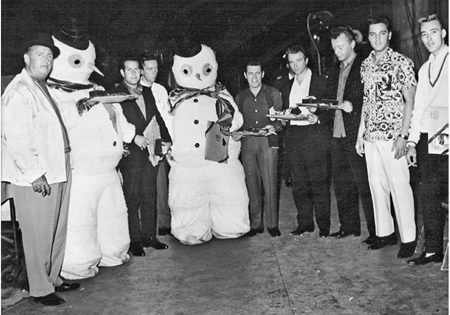
Snowmen’s League of America, with Joe Esposito, Gene Smith, Charlie Hodge, Cliff Gleaves, Red West, Elvis, Richard Davis on the set of Blue Hawaii 1961. 

Discussed at the end of the book PG’s own interaction with Colonel is quite illuminating in itself. It is tempting to speculate that PG got ‘snowed’ by the Colonel, but I think it would be too simplistic a statement.


Overall Verdict: No doubt many readers who cherish Guralnick’s Elvis biographies and other publications will be similarly baffled and disappointed by this book. This was a good chance to put nuance and better historical understanding to this titanic figure. Colonel’s wit, vision, dynamism are enough to stand on their own. He played a critical role in giving the world once in a century talent. He was also a human being with his own insecurities, baggage and humanity.

Alanna Nash, for all her speculative and sensationalistic focus on the ‘murder that Colonel might have committed’, provided a much more rounded picture of Colonel. We actually hear from people of all backgrounds who love the man, or admire him, or are fascinated by him, or learn from him. She highlights the visionary dynamism, as well as greed and power hungry control. While Guralnick’s book includes copious Parker correspondence and some previously unknown stories I recommend that her book needs be read alongside Guralnick’s to get the full picture.

Send EIN Your Thoughts - Have we misjudged this book? Do you agree with Guralnick's view on Parker

You can check out the book here Amazon US >> 'Hardback' / Audiobook / Kindle
Amazon UK >>  'Hardback' / Audiobook / Kindle

Book Review by Piers Beagley / Vince Alex.
-Copyright EIN August 2025
EIN Website content © Copyright the Elvis Information Network.


EIN thanks our good friend Vince Alex (aka 'Iwillbetrue') for his help and advice regarding this very detailed review.


'The Dark Side Of Colonel Parker' - EIN Spotlight: June 26th 2009 is a special date that commemorates four unique events of the Elvis World.
1. The 100th Birthday of Colonel Parker.
2. The 32nd Anniversary of Elvis' final concert in Indianapolis.
3. The 30th Anniversary of the death of Elvis' father, Vernon Presley.
4. The 30th Anniversary of the revelation to Elvis’ estate that Colonel Parker was still fleecing his client.

Although comedian Nipsy Russell stated that "Every entertainer should go to bed at night and pray he finds a Colonel Tom Parker under his bed when he wakes up in the morning" - is that really the truth?
It is a fact that after Elvis' death an official investigation found that "both Colonel Parker (and RCA) acted in collusion against Presley's best interests. Colonel Parker was guilty of self-dealing and overreaching and had violated his duty to both Elvis and to the estate."
While there is no doubt that Elvis and The Colonel's story is extremely complex, in this in-depth Spotlight EIN takes a look at the darker side of Colonel Tom Parker - and includes plenty of insights from Elvis’ colleagues and friends.
. Go here for this fascinating investigation- and also Have Your Say.
(Spotlight, Source;EIN)

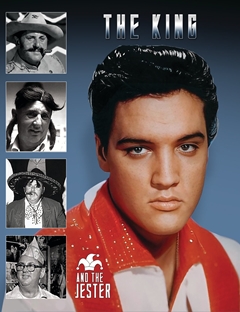
Book Review 'The King and The Jester': Elvis author Paul Belard's new "special interest" book all about Elvis and manager Col Parker is out now.
The cover notes, "As this uncultured philistine said of himself, "I did not know what to make of Elvis, or his music. I did not care, but I saw the reaction of the audience says and it was enough for me". Parker promptly realised that Elvis was his own ticket to wealth."
Belard's new 260 page book's twenty three chapters include, 'The Hank Snow Affair', 'The Snowman', 'The Lost Years', 'The Narcissist',  'World Wide Tour', 'What Could Have Been' and 'Exposing The Con Man'.
The author makes his disdain for Parker known from the outset and he does not hold back about what he sees as one of, if not the biggest, travesties and examples of unscrupulous mismanagement, in show business history!
The book is a very strong read and one that is very much a counterpoint to the recently published "rose colored glasses" account, 'Elvis and the Colonel: An Insider's Look At The Most Legendary Partnership In Show Business', by Parker employee Greg McDonald and Marshall Terrill.
Some fans have suggested that Baz Luhrmann’s 2022 ELVIS drama made Parker out to be too much of a cartoon villain but after reading this book the movie looks even more truthful than fans might have believed. ...
Go here and read EIN's detailed review by glimmer twins Nigel Patterson and Piers Beagley
(Book Reviews, Source;ElvisInformationNetwork)

Book Review - 'Marion Keisker: The Woman Who First Recorded Elvis Presley': Paul Belard's latest book is a detailed account of Marion Keisker's life and her key role in the Elvis story.
"That woman was the one who had faith she was the one that pushed me... Marion did it for me" - Elvis Presley 1971
.. Marion was Sam Phillips' assistant when he established the Memphis Recording Service, and later Sun Records.
She is best remembered as the first person to record Elvis in July 1953, then encouraging Sam Phillips (numerous times) to record him "commercially", therefore playing a pivotal role in Elvis' ascent towards the pinnacle of his career.
Throughout interviews given, Marion discloses the workings of Sun Records, the sessions, Elvis' moods during those first days of his career. There is a trove of little known or unknown anecdotes many fans will delight in.
This book is a fitting and well-deserved tribute to Marion Keisker.'

Packed full of great stories, rare photos and Marion's personal recollections this is a book that any Elvis fan should enjoy.
EIN's Piers Beagley spent some quality time enjoying this very fine tribute to one of the key inspirations behind the Elvis legacy...

(Book Reviews, Source;ElvisInformationNetwork)


'From Here to the Great Unknown’ Book Review: After all the publicity and hype Lisa Marie's revealing memoir has recently been published. There is no doubt that being part of a famous family certainly does not guarantee a happy life.
As Keough explains, “The early parts of the book are mostly my mother's voice, in the tapes she speaks at length about her Graceland childhood, the death of her father, the dreadful aftermath, her relationship with her mother, her difficult teen years. She’s frank and funny about my father, Danny Keough. She talks openly about her relationship with Michael Jackson. She’s painfully candid about later drug addiction and the perils of fame…
If you have ever wondered how Lisa Marie coped with life post-Elvis or noticed those old tabloid news reports saying that she had once again “gone off the rails” or spotted the tension between her and Priscilla, the answers and much, much, more are in this stunning memoir...
While Elvis died when Lisa Marie was only 9 years old there is still plenty new to discover from this intriguing book..
EIN's Piers Beagley checks out this powerful memoir, wonders why the Australian book has been edited - and discovers the delights of the Audio-Book..   
(Book Reviews: Source;ElvisInformationNetwork)

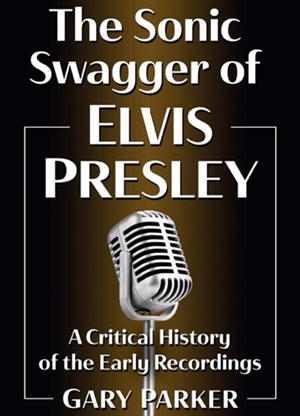
(Book Review) 'The Sonic Swagger of Elvis Presley: A Critical History of the Early Recordings' (Gary Parker): ‘For Elvis Presley, stardom was the promise, and he made the trip, but at an extraordinarily high cost’. This is one of the thought provoking themes in Gary Parker’s latest book which critically examines in thoroughly researched detail, Elvis’ seminal recordings in the 1950s (as well as more briefly discussing Elvis’ post Army recordings).
Noting that...  "Elvis' clever manipulation of his numerous interests remains one of the music world's great marvels. Presley, with one foot in delta mud and the other in a country hoedown, teamed with Scotty Moore and Bill Black to fuse two distinctly American musical forms -- country and blues -- to form what would come to be known as 'rockabilly'". This is a book with plenty to discuss.
In their 2,100 words collaboration, EIN’s Nigel Patterson and Piers Beagley, review what they have found to be one of the best, and most important, Elvis book releases of 2022.
Read the full review here
(Book Review, Source: ElvisInformationNetwork)

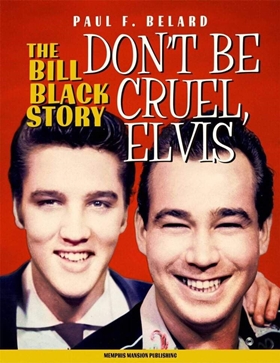
(Book Review) 'Don't Be Cruel, Elvis: The Bill Black Story': It is easy to forget that, in the beginning, Elvis was only one part of a trio put together by Sam Phillips, which included Bill Black on bass and Scotty Moore on lead guitar.
The unique sound that emerged from their early sessions was the result of a close collaboration of like-minded musicians and an engineer who wanted to generate something as yet unheard.
Bill Black's contribution to Elvis’ success went beyond the bass playing. His antics on stage — twirling his bass, riding it as if it was a bronco to be tamed, trading corny jokes with Elvis — delighted the audiences. Scotty confirmed that, “If it hadn’t been for Bill, we would have bombed many times in the early days.”
Memphis Mansion’s Henrik Knudsen fortuitously befriended Bill Black's family and was entrusted with the family’s treasured scrapbook.
Using this key source, plus the investigative power of author Paul Belard, key rock'n'roll bassman Bill Black finally gets the biography he deserves with this impressive 260 page book.

Packed full of rare photos, great stories and interviews, EIN's Piers Beagley spent some quality time enjoying this very fine tribute to "Blackie" a great musician and a true character ... go here to find out more..
(Book Review, Source;ElvisInformationNetwork)


'INSIDE ELVIS' - Book Review: With the world in lockdown now is the perfect opportunity to invest time into some quality and thought provoking reading. 'Inside Elvis' by author Arjan Deelen might be just what the doctor ordered, with insightful interviews from key Elvis musicians such as James Burton, Scotty Moore, Jerry Scheff, Glen D. Hardin, Charlie Hodge, Bob Lanning, Jim Murray, Duke Bardwell and many more.
We can learn what was it like working with Elvis. What was it like being on the road day after day as the world’s most famous entertainer and it all helps us understand more about Elvis’ complicated life story.
The 300-page book also contains over 300 photographs from the collections of various high-profile collectors, and most of these are in color and razor-sharp.
The artwork of the book was done by graphic artist Michael van Werven, who has made it a visually stunning work.
Also included is a Bonus CD with 29-tracks containing various rarities.

EIN's Piers Beagley takes a break and enjoys soaking up time with Elvis and his friends. Go here for his review and check out some example pages along the way.
(Book Reviews, Source;ElvisInformationNetwork)


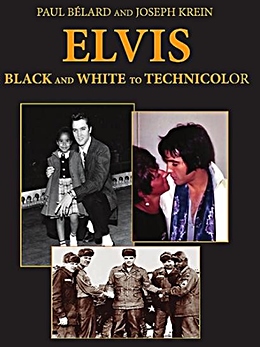
(Book Review) Elvis Black and White to Technicolor (Paul Belard and Joseph Krein): The latest release from Paul Belard (with Joseph Krein) is one of the more important Elvis books in recent years. The reason why is that addresses the controversial issue that Elvis was racist. The authors tackle the subject of Elvis' relationship with Black America head on through a balanced and impressive mix of text and image.

Belard and Krein's research has uncovered rare archival material on the issue and the book includes hundreds of comments about Elvis by Black Americans.


Read Nigel Patterson's detailed review

(Book Reviews; Source;ElvisInformationNetwork)


EIN Website content ©

Copyright the Elvis Information Network.
Elvis Presley, Elvis and Graceland are trademarks of Elvis Presley Enterprises.


The Elvis Information Network has been running since 1986 and is an EPE officially recognised Elvis fan club.


Did you miss these Popular EIN Reviews
'The Blue Hawaii Sessions' Box-Set FTD In-Depth Review:
'ELVIS: At 3am Sahara Tahoe 1973' MRS CD Review:
Book Review- 'ELVIS : ALOHA FROM HAWAII - Through The Eyes of Japan':
Book Review 'The King and The Jester':
'Elvis: Summer of '76' FTD In-depth Review:
(Book Review) Shake, Rattle and Blue Moon – The Formative Recordings of Elvis Presley 1953-1960 (Alan Tranter):
(Film Review) Priscilla – film by Sofia Coppola:
MRS CAMDEN Budget releases - reviews:
CD Review 'The Joan Deary Tapes Vol1' - and has Ernst won the war?’:
'Elvis Presley Rock ’n’ Roll No.1’ "Stereo" CD Review:
'ELVIS: Closing Night 1972' MRS CD Review:
'ELVIS: August Season in Vegas 1974' FTD Review:
'Elvis UK - Beyond RCA' "Physical Edition" Review:
'Elvis: Houston, Fort Worth, Baton Rouge 1974' FTD in-depth Review:
'Las Vegas Summer Festival 1972' MRS CD Review:
(Film Review) Reinventing Elvis: The ’68 Comeback…..” a battle for artistic integrity”:
(Book Review) 'Fact vs. Fiction in the 2022 ELVIS Movie' (Trina Young):
'Elvis: From King to Legend 72-73' / Spotlight / Review:
'From Elvis at Sun' Stereo CD Review:
'Elvis LIVE 1972' (double-LP) Review:
Book Review: 8mm Elvis - The Story of Elvis on 8mm': 
UPDATED - 'Elvis On Tour' Box-Set In-Depth Review:
'Elvis: Let Me Be There 1974' FTD In-depth Review:
'Elvis UK - Beyond RCA' Book Review:
'Elvis: From Louisiana and Memphis 1976' FTD In-depth Review:
'The Airplanes & The King' In-depth book review:
'ELVIS: Opening Night 1972' MRS CD Review:
(Book Review) Elvis For Vinyl Fans Only Vinyl Discography from Eastern Europe Yugoslavia * Romania (Piotr Soczynski):
(Book Review) Guaranteed To Blow Your Mind – The Nov 1976 Tour Revisited.
(Book Review) Elvis Live At The International 50th Anniversary Edition (Kieran Davis)
'ELVIS: From Vegas to Tahoe' 1973 FTD Review:
(Book Review) Elvis The King of the Rings Volume 2 (Paul Bélard):
Book Review: 'Elvis Presley, Gospel Singer – An Inspirational Life' (Madeleine Wilson):
'Elvis: Pine Bluff to Madison '76' FTD In-depth Review:
(Book Review) Destined To Fly: The Story of Pilot Ron Strauss – From Iowa to Elvis (Sally A. Hoedel):
Elvis author-researcher, Paul Bélard, reviews Luhrmann's 'ELVIS':
'Elvis UK Cover Story' Book Review:
'Aloha From Hawaii' Deluxe FTD indepth Review:
'ELVIS' EIN exclusive movie review:
'Walk A Lonely Street' Book Review:
(Book Review) Elvis and Ginger:
'The Elvis Files Vol. 1 1953-56' In Depth Book Review:
'A Boy From Tupelo' special In-depth Review:
 
Did You Miss these Popular Interviews?
"ELVIS : ALOHA FROM HAWAII - Through The Eyes of Japan" David Ward Interview:
(Interview) Dick Dekker and David Ward, authors of the new book, ‘From Memphis To Tokyo – A Reference Guide To The Absolute Mastery of Elvis’ Japanese Vinyl’:
Paul Belard Interview about Col Parker and Elvis 'The King & The Jester':
(Interview) Shane Brown author of 'Reconsider Baby - Elvis Presley: A Listener’s Guide'
Trina Young Interview 'Fact vs. Fiction in the ELVIS movie':
Anthony Stuchbury 'From Elvis At Sun' Interview:
Robert Van Beek Interview -author of 'Elvis: Prodigy of SUN':
Interview with actor Adam Dunn / Bill Black in 'ELVIS':
(Interview) Alanna Nash talks to EIN:
Interview – Gary Parker author of 'The Sonic Swagger of Elvis Presley: A Critical History of the Early Recordings':
Interview 'The Airplanes & The King' with Carlos Varrenti & Robert Van Beek:
EIN Interview with Mike Stone:
'Jay Thompson and Elvis Presley- 1956 Interview:
Interview: 'ELVIS UK3' authors John Townson & Gordon Minto:
Loanne Parker interview - Col Parker's widow talks
Ed Bonja RIP - EIN exclusive Interview
(Interview) Eric Wolfson, author of 'From Elvis in Memphis':
(Interview) Richard Zoglin (author of Elvis in Vegas) talks to EIN:
Ken Sharp Interview 2019: Elvis 1969 & more..
'Return Of The King' Gillian Gaar Interview:
Larry Geller talks to EIN - 2019:
Dave Hebler Interview Part Two with EIN:
Alan Hanson 'Elvis: The Movies' Interview:
Millie Kirkham  - Bob Hayden Interview for EIN:
Elaine Beckett -Easy Come Easy Go costar- Interview:
Shirley Dieu, author of Memphis Mafia Princess, talks to EIN:
Interview With Elvis author - : Gillian G. Gaar
Interview with Dick Grob, Elvis' Head Of Security:
Hollywood veteran Michael Hoey talks to EIN:
Interview with 'Elvis Films FAQ' author Paul Simpson:
"My Fast Life" Rare Elvis Presley 1964 Interview:
John Wilkinson Tribute & 1972 Interview:
RIP - Bernard Lansky talks to EIN:
Allyson Adams 'The Rebel and The King' Interview: 
Linda and Sam Thompson in Australia:
John Wilkinson Tribute & 1972 Interview:
Vernon Presley Interview:
Jerry Leiber Interview for EIN
Elvis Paradise Hawaiian Interview - with Peter Noone
Sam Thompson, Elvis' bodyguard, 2011 Interview
James Burton Interview - Rick Nelson & Elvis:
Elvis Drummer Jerome "Stump" Monroe EIN Interview:
Donnie Sumner Remembers his friend Sherrill Nielsen: 
Lamar Fike EIN Exclusive Interview
Ernst Jorgensen interview about 'The Complete Masters' and more:
D.J Fontana Interview - Elvis Week 2010 special: 
Red West Interview:- 2010 Elvis week special
Linda Thompson - Interview Special:
Dr. Nick talks to EIN
Larry Geller
Mac Davis
Roger Semon
Ernst Jorgensen
Wayne Jackson (Memphis Horns)
 
Did You Miss these Popular EIN articles
Elvis in Literature #3 – ''Elvis's Man Friday' by Gene Smith:
'Elvis Forever 2023': Where were you when Elvis died?
'Elvis: From King to Legend 72-73' documentary
Elvis in Literature #1 – celluloid jukebox – popular music and movies since the 50s:
Elvis, Ann-Margret, the filming of Viva Las Vegas, the slap heard across Hollywood, (and more):
"'ELVIS' biopic vs 'Agent Elvis' Revisionist History and Reinforcing Negative Stereotypes?'"
Anthony Stuchbury 'From Elvis At Sun' Mono II Stereo discussion
'The Elvis RCA Camden Collection' EIN Spotlight:
Baz Luhrmann ELVIS Sydney Premiere:
(Review) 'Elvis: Direct from Graceland' ROCKS Bendigo:
Spotlight on 'ELVIS' the new Baz Luhrmann movie
'Think Twice: Elvis in The Studio 1971':
UPDATED- The collapse of the Elvis Bootleg Empire: Has Ernst won the war?’:
'Jay Thompson and Elvis Presley' Spotlight:
EIN Spotlight: Changing Times, Heavy books, Are Fans being ripped-off:
NOW UPDATED - 'ELVIS In The 2010s' A Personal Review of the Past Decade:
Spotlight - Why We Should Take Elvis Fans Seriously:
Elvis LIVE Aug 23, 1969 Album Review + Elvis Concert Review 1969
'Counting Down Elvis' Finest 100' Spotlight:
'What was Elvis searching for?' EIN Spotlight:
The Memphis Sessions - 50 Years ago Today:
Trying To Get To You: The Truth Behind The Elvis And Roy Orbison Show Rumours:
'Money Honey' - EIN Spotlight:
'Marty Lacker: A Life Well-Lived' & Elvis at American Studio's Interview
'Secrets and Lies: Getting to the Truth about Elvis' Christmas Album':
All Shook Up - EIN Spotlight:
UPDATED - Elvis and the Coco Palms Resort:
'Elvis Meets The Beatles':
Did Elvis Record 'Tiger Man' At Sun?
'Trains, Jet Planes and Morning Rain' EIN Spotlight:
Wertheimer's Reaction To Finding The 'Mystery Kisser':
UPDATED - 'Elvis Madison 1977 - The Gas Station Incident' with Kathy Westmoreland:
Elvis' Personal Record Collection:
Happy Birthday EIN EIN turns 100 – a retrospective!:
Elvis Week Through The Years - Sanja Meegin looks back:
'The Wedding' Elvis & Priscilla EIN special Spotlight:
John Lennon And Elvis: It was "Thirty Years Ago Today"
Elvis at Madison Square Garden 40 Years Ago
'Elvis In Ottawa' Spotlight & Elvis Interview:
'1956, Elvis Presley’s Pivotal Year':
'Elvis In Concert' 1977 TV special; Should it be released officially?
Ernst Jorgensen interview about 'The Complete Masters' and more:
Dark Side of the Colonel
 
Audio-Visual
Graceland cam
EPE's Multimedia Elvis Gallery
Sirius Elvis Satellite Radio
Elvis Radio (ETA's)
Elvis Express Radio
Ultimate Elvis Radio
Elvis Only Radio
"Images in Concert" PhotoDatabase
Radio Interview: Vernon & Gladys Presley
Sanja's Elvis Week 2007 Photo Gallery
'EIN's Best of Elvis on YouTube'
The Music of Elvis Presley - Australian Radio Show
Reference
All about Elvis
All about Elvis Tribute Artists
All about Graceland
All about Lisa Marie Presley
Ancestors of Elvis
Art Archives
Book Releases 2009
Contact List
Elvis and Racism
Elvis as Religion
Elvis CDs in 2007
Elvis DVDs in 2006
Elvis Film Guide
'2007 New Releases'
Elvis Presley In Concert "downunder" 2006
Elvis Online Virtual Library
Elvis Research Forum
Elvis Rules on Television
Graceland - The National Historic Landmark
How & where do I sell my Elvis collection?
Is Elvis the best selling artist?
Links to Elvis' family & friends
Links to other Elvis sites
Marty's Musings
Online Elvis Symposium
Parkes Elvis Festival 2009 (Australia)
Presley Law legal archives (Preslaw)
Presleys In The Press
Sale of EPE (Archives)
6th Annual Elvis Website Survey
Spotlight on The King
"Wikipedia" Elvis biography