|
 |












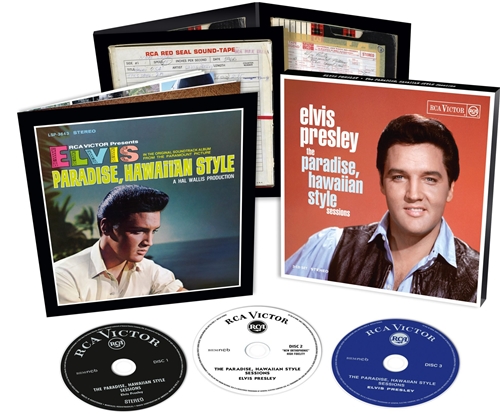
‘The Paradise Hawaiian Style Sessions' FTD Box-set Review While we are all Elvis fans and most of us have our favourite decades, favourite movie and favourite sessions I am certain that there is not one fan who would play ‘Paradise Hawaiian Style’ to a stranger in order to demonstrate why Elvis Presley was the greatest entertainer of all-time. Elvis' 21st movie was a pallid imitation of Blue Hawaii and Elvis knew it. At home Elvis was exploring his spiritual side & the meaning of life. Along with all the other creative musicians of the time, Elvis was reading insightful books like Aldous Huxley's 'The Doors of Perception' and Timothy Leary's 'Psychedelic Experience'. The Beatles were recording 'Rubber Soul', Dylan was writing 'Like A Rolling Stone', while Elvis was presented with filming one of the worst movies of his career and soundtrack numbers like 'Queenie Wahine' and 'A Dog's Life'! On the original 1966 RCA album, eight of the ten tracks required a spliced edit to create a satisfactory master. There is no other Elvis recording session where he had so little interest in achieving a credible final cut.
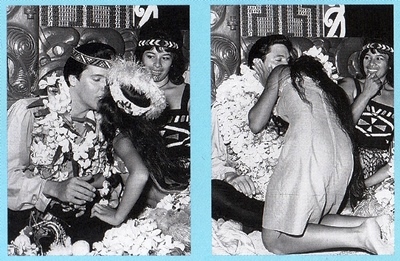
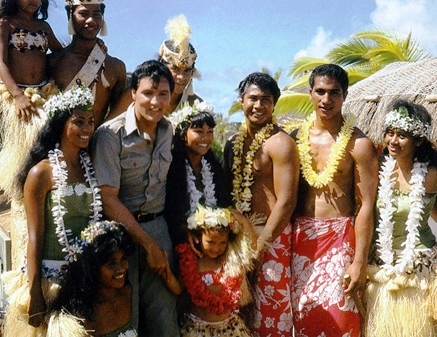
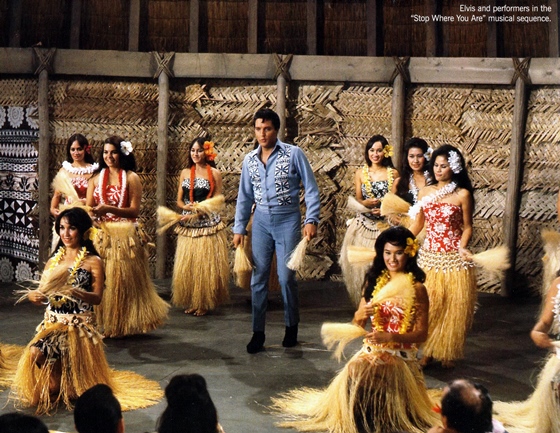
Elvis was honoured at a Polynesian Cultural Centre farewell party in the Maori meeting house on August 18. Journalist Hedda Hopper reported, “At a strictly private affair, and 25 Maori maidens rubbed noses with Elvis, and 125 native girls from Fiji, Tonga, Tahiti, Samoa and Hawaii took turns embracing him. They left him tousled, dishevelled and heaped with the leis”
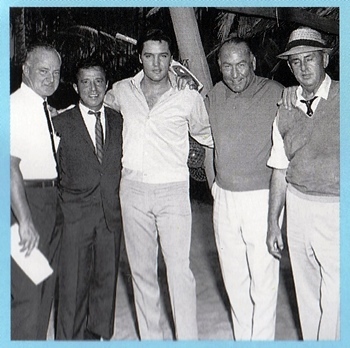
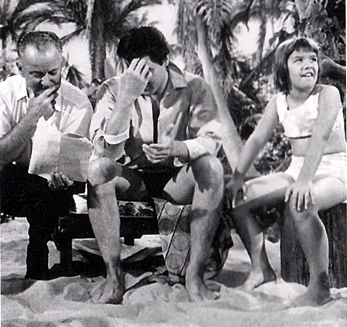
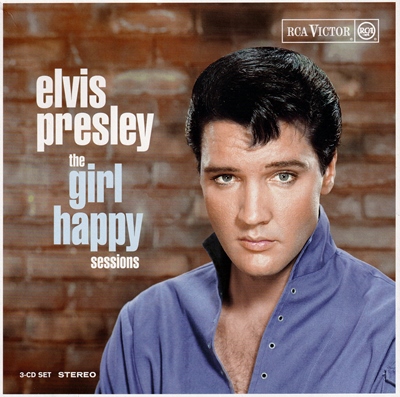
Reviews from the time were surprisingly varied. Variety in the US surprisingly described the ‘A Dog’s Life’ sequence as “a comedy gem.” UK’s Films and Filming I think got it right noting, “Critical faculties wither and die in the face of such pointless and banal antics. I'm amazed that Presley’s overlord, Col Tom Parker, continues to allow his goldmine to waste his talent in third rate films.” Similar to the ‘Harum Scarum’ sessions booklet Elvis doesn’t look particularly happy in any of the on-set photos nor with Col Parker. If Elvis was feeling threatened by the new artists on the Billboard charts, being forced to sing ‘Queenie Wahine’ wouldn’t make any creative artist happy.
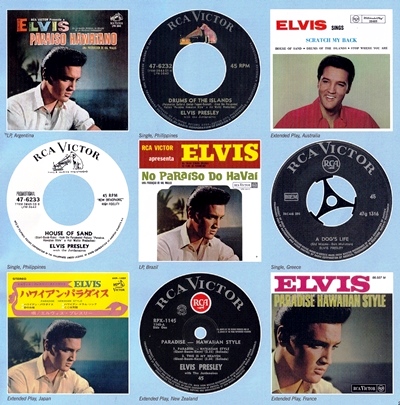
The booklet features the usual Sessions Data, movie trivia, foreign film posters, worldwide premieres plus chart listings and 45 and EP sleeve covers. Who knew that ‘A Dog’s Life’ was a 45rpm in Greece or ‘Elvis sings Scratch My Back’ an EP in Australia!
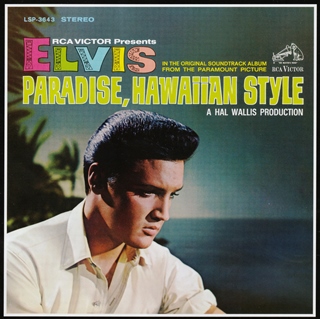
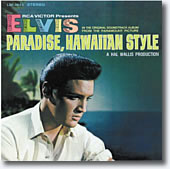
Again it is a very nicely compiled booklet with plenty of enjoyable photos. The P.H.S album was recorded in August 1965 but not released until ten months later in June 1966. Elvis had a right to be truly embarrassed by his Paradise Hawaiian Style recordings. Helping prove the point, no song was deemed worthy of being an RCA US or UK single, instead ‘Love Letters’ was released the very same week. Similarly, as with his previous film 'Frankie and Johnny', Elvis was also deemed 'too fat' for the album cover. Instead a 1963 photo from 'Fun in Acapulco' was used. How embarrassing. Col Parker was creatively ruining Elvis’ career.
For most fans the 2004 Paradise Hawaiian Style 'Classic Soundtrack Album' which included 24 tracks and ran 69 minutes would surely be enough. Audio Quality: While the musical content cannot be improved the session tapes have been lovingly remastered by Sebastian Jeansson / Vic Anesini and they sound great with a lovely clarity and delicious rich sound. They are even cleaner than their 2010’s “The Complete Masters” version and the outtakes are also a vast improvement on FTD’s 2004 ‘PHS’ Classic Album where engineer Lene Reidel added some echo and mixed the outtakes with a rather narrow stereo spread.
The Music The original album was the typical badly mixed soundtrack album, basically with all of the musicians left channel, Elvis' vocal in the middle and the backing vocals on the right. At times Elvis seems to be overcompensating by belting out the lyrics, possibly to try and offset the general lack of energy due to it being vocal overdubs. It is noticeable that Elvis doesn't do this on ‘Sand Castles’ the only track where he was singing live with the musicians. At the time Elvis said that he was ill and - similarly to Harum Scarum - he did not turn up for the first day of the planned Soundtrack sessions. Interestingly, on the second day The Colonel phoned the studio to say that Elvis would be there within an hour, but Elvis still didn't arrive. Since Elvis didn't make the session they saved time by getting the musicians & Jordanaires to record the backing-tracks for Elvis to overdub later on. This means that there can be no band interaction nor any interesting musical development on the outtakes since Elvis just sang over pre-recorded backing tapes. A soundtrack session can hardly get worse than this with bad compositions and no band interaction and the only thing that makes it interesting is the humour that Elvis sees in the dreadful material and his sincerity in singing the few worthwhile tunes. Elvis' band was the usual excellent team and this time also including the talented jazz guitarist Barney Kessel (Charlie Parker, Beach Boys etc), Charlie McCoy and even Larry Muhoberac on piano. However there was little they could do with such poor material and, of course, Elvis not being present in the studio made things even worse. The better songs would have sounded more exciting if recorded live with his band while the lesser songs were not worthy of Elvis’ time. ‘Sand Castles’ could have been a quality mid-sixties song if it only had better lyrics - but in any case it was left out of the actual movie. Hill & Range staff writers Giant/Baum/Kaye contributed 6 of the ten songs - who else would be interested in writing film songs for Elvis at this point? While they have to held responsible for some real stinkers like 'Queenie Wahine' and 'Beach Shack' they have to be forgiven a little bit since, surprisingly, they also wrote the classics, 'Edge Of Reality' and 'Power Of My Love'. To be honest the earlier FTD ‘P.H.S. Classic Soundtrack Album’ included nearly all of the most interesting outtakes – does anyone really want to listen to 8 attempts in a row of ‘Queenie Wahine’s Papaya’ or nine attempts at ‘A Dogs Life’ – but the improved audio-quality and one or two new extras make this worth a listen. Having played it multiple times I can assure you it will now stay filed on my shelf - and possibly forever. I found Elvis’ Harum Scarum and Girl Happy sessions of far more interest. Radio Recorder’s engineer Thorne Nogar had been at Elvis’ Hollywood sessions since the start and worked on Elvis’ second LP in 1956. One wonders what he would have been thinking hearing these new selections. This would be his last recording session with Elvis – who could blame him!
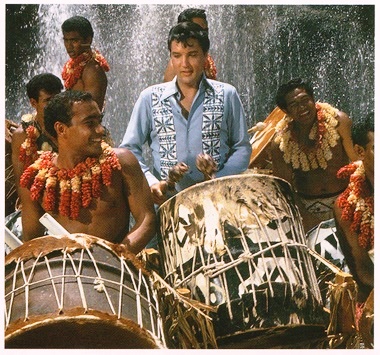
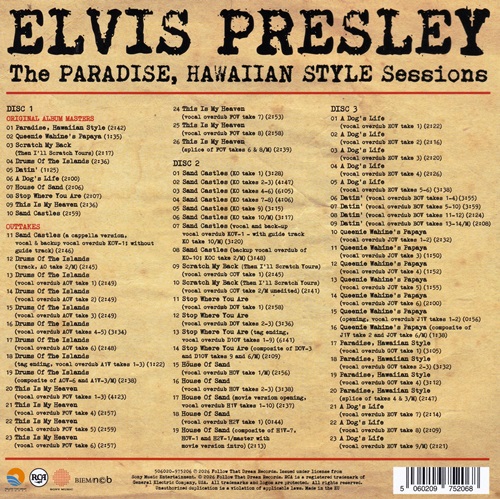
DISC 1 – 68 minutes Looking closer at the outtakes. The best of these outtakes were released on the original P.H.S. FTD classic album, while the recent 2026 double-vinyl included some other outtakes. ‘Drums Of The Islands’ was the first song recorded at Elvis’ August 2 overdub session, and the only song on this set where we get to hear the musicians earlier recorded backing-track. This demonstrates how The Jordanaires sang on the original session while The Mello Men added more vocals at Elvis’ overdub session. V Elvis vocal-overdub Take 1 is then similar to others where Elvis' first rough attempt sounds very disconnected to the musicians’ playback on the backing track. Takes 2 & 3 both sound similarly disconnected and on Take 3 Elvis asks “What ending?” as the backing tape suddenly stops. CL V Takes 4 & 5 where Elvis fluffs the lyrics “whoops” - have more interest in being quite fun - these were on the original FTD ‘classic album’. By Take 6 Elvis still sounds as if he is reading the lyrics and leaving The Mello Men to finish each line but then a few lines from the end Elvis gives up! Perhaps it was desperation since this was chosen for the Master with Elvis then having to do the final verse as a spliced vocal tag. Hearing Elvis perfect the final section with The Mello Men - a rehearsal and three attempts - is fun and an interesting bonus. EIN Even with the spliced Master the trouble with this song is that the DRUMS of the island should have had a powerful pounding feeling with Elvis actually singing along with exhilarating Polynesian drummers but instead it lacks any driving excitement. In Fiji this song called ‘Bula Maleya’ is their ‘welcome song’ and it is always a delight that whenever you visit a Fijian resort this song is played as your arrive on the island.
'This Is My Heaven' It’s hard to believe that only 2 years previously at the Girl Happy session Elvis said (on take 27 of Do Not Disturb).. "It was 'ok'... I don't like 'ok'!" and kept going for another nine takes. It was the opposite at this session. CL V - The first 2 takes quickly fail and on all the earlier takes Elvis sounds a little unsure. On Take 3 he starts well but starts to drift away from The Jordanaires which causes him to joke at the end, “Where was that last part!” Most of these outtakes were on the original FTD album. Before ‘new’ Take 5 there is short but cute rehearsal where Elvis sings the melody to himself but the following attempt still sounds rather stiff without the voices blending as they should. On Takes 6 & 7 CL V Elvis has on-going problems with his timing matching the pre-recorded “when you come to me” @02.20 backing-vocals - which he finally gets right on Take 8. The first part of Take 6 was used for the spliced Master as it had the stronger first section with Elvis holding the notes for longer.
DISC 2. – 65 minutes Unfortunately with lyrics “Then the fiddler crab plays his violin, on the back of a dancing whale” this could never be seen as a serious contender for a classic song yet both the musical accompaniment and the melody were truly delightful. If the lyrics had been more about “romance and sunsets” then this could have been a single release or at least a good B-side. None of the Sand Castles original session outtakes were included in the 2004 FTD P.H.S. Classic Album and this part of the session is in mono, which suggests that FTD have since discovered a new source. These are a treat for collectors. The earlier takes featured delightful steel guitar and sound very different to the final ‘acoustic guitar’ version and several of these outtakes are a nice addition to our collections. Take 1 is so gentle, being the first run-through, with Elvis taking real care while working with the live band. Interestingly there are no backing-vocals on this session. EIN On Take 2, even though Elvis stumbles on the lyrics half-way through, engineer Thorne Nogar notes “It felt good”. Take 3 sounds close to a perfect version. Like most “live sessions” the musicians stumble at some points while Elvis fluffs the lyrics on others. V EIN Take 4 soon break downs with a guitar fluff while on Take 5 Elvis stumbles on the word “Whip-Mermaid” - “Sorry folks” Elvis notes but it is all in good humour. Take 6 is a delight as Elvis again stumbles @05.10 “that they will ,ah, play once more” yet they keep going through to the end. EIN Take 8, still with steel guitar, is very good with a similar vocal feel to the master. “Felt pretty good” notes Thorne. Yet at this point they decided to change the arrangement to the acoustic guitar version. Take 9 with the change to acoustic guitar is a far more laid-back take. Elvis’ vocal is more predominant – there is a slight slip-up during the guitar solo and at 02.46. EIN The next, still with acoustic guitar, Take 10 was chosen as the master. Near Midnight and with only three songs completed everyone went home. August 3, 1965 CL Sand Castles 'Vocal –Overdub'. Now in stereo the musicians are isolated left channel, Elvis middle, while The Mello Men add the backing vocals right channel. This gives a very odd effect during the guitar solo. Elvis however delivers a delightfully light and smooth vocal. This has been suggested as the ‘movie version’ which was never used. Sand Castles “Choral Overdub.” The chosen Master Take 10 with original Elvis vocal then had similar backing-vocals overdubbed by The Mello Men. This was the released version. Scratch My Back The second attempt would be the Master. At the end someone comments “Well, that was good, great”.
'Stop Where You Are' CL V Take 1 is nearly complete but Elvis can hear hammering in the background causing him to laugh and stop. “I told you, don’t move an inch” which produces some fun in the studio - “stop the hammers!” V Take 2 stops halfway with Elvis breaking up, “Who’s that laughing?” Someone notes that the back door is open. EIN V Take 3 Elvis vocal becomes rather OTT in the middle and being an overdub Elvis misses his timing to match the “Stop” backing vocals. Again this is what this is what makes these vocal overdubs so disappointing, it sounds more like karaoke than a proper recording session. Again they give up trying for a complete take with Elvis recording an edited ‘Tag Ending’ instead. Once again it is interesting to hear the troubles Elvis still has with only the last 20 seconds of the song and it’s not until Take 9 that they get it right. Note that on the final release (@1.40) you can easily hear the edit as Elvis’ vocal changes from a rather held-back Take 3 vocal to the real punchy, and loud, End-Tag! House of Sand Take 1 would actually be saved for the Master. Listening closely you can hear The Jordanaires (or someone) mutter quietly in the background during the guitar solo. This would be why @01.42 there is a sudden fade on the right channel to cut them out. This also happens on the album version. V Take 2 fails when Elvis fluffs the words while Take 3 CL V, with Elvis still sounding rather unsure, has a great ending and very different from the Master. Perhaps showing the lack of interest in the session Elvis then went home without even finishing the required end-tag. The following day August 4 they continued with the required splices. CL First was the House of Sand ‘movie version’ solo opening line which Elvis has to record ten times before they were satisfied. “I had to cut it short, ‘cos it goes straight into the rhythm” he explained. Then the end-tag had to be recorded which Elvis luckily gets right first time.
DISC 3. – 58 minutes ‘A Dog's Life’ On 'new' Take 1 Elvis messes by the second verse on “if I had a bone to be picking” but being the first run-through he actually keeps going. Elvis actually seems to be having fun singing “where you going now eh, hound dog?” - This is a nice addition to our collection. EIN On Take 2 Elvis trips again on “bone to be picking” lyrics but still keeps going throwing in a deliberately over-loud “good enough for me, Hot damn.” Take 3 includes a ‘Star Spangled Banner’ intro from Elvis and is near satisfactory just stumbling slightly “that’s good, mmm, enough for me” at the end. Elvis notes, “Let me listen to it.” CL Take 4 is when the fun really begins, “ro, ro, ro, ro, rough” he jokes at the end. CL V Elvis does manage to get through Take 6 which is a very average version of a very mediocre song when they decide to hold it before coming back to finish it off later in the day. 'Datin’' CL V On Take 1 Elvis notes, “I'm going to start laughing.. lunch one hour!” - and he was right. On Take 2 he notes, “I’ve got soup in my throat, burning my nose” while before take 4 Elvis sings one line ‘Flying Saucers Rock and Roll’ the title of the 1957 Bill Lee Riley SUN novelty hit. If only Elvis had chosen some old SUN material instead. V On ‘new’ Take 5 Elvis breaks up after 30 seconds, while after Take 6 CL where he really loses it breaking up in laughter he comments, “If I miss it this time, I'll call a break”. CL V On Takes 7 and 8 Elvis starts laughing right from the start. It can't have helped that his Memphis Mafia friends were also in the studio. Elvis notes, “Joe, we’re getting ready to go to work. You guys don’t start laughing.” V ‘New’ Take 9 is very average even if Elvis does manage to get all the way through. CL V By Take 12 Elvis nearly gets it right but notes annoyingly “I missed one line.” Finally on Take 14 Elvis managed to get through the whole song. It has to be a treat for collectors to be able to listen to Elvis’ full sessions and there is plenty of amusement here - but it can't be something you would play very often. ‘Queenie Wahine’s Papaya’ Take 3 starts with Elvis solo & only the guitar but with the rhythm section (left) missing. It sounds very weird but they continue to the end, I guess this was just a rehearsal. V Take 4 is complete and almost good enough - “Missed one word, Jack” jokes Elvis. CL "Here we go, wind it up" jokes Elvis before Take 5 which is complete but still sounds like Elvis is reading the lyrics. On Take 6 the engineer messes up the mix not fading up Elvis’ first line, but with tapes running Elvis gets the rest correct “Try to beat that!” they note. And so, like all too many tracks here, it gets fixed by splicing on a new opening line.
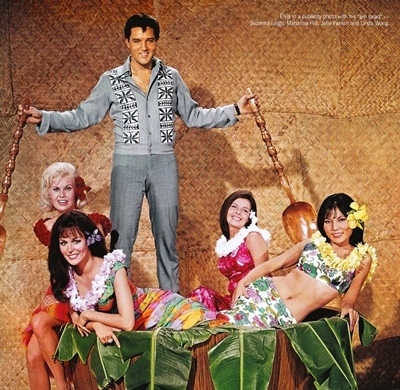
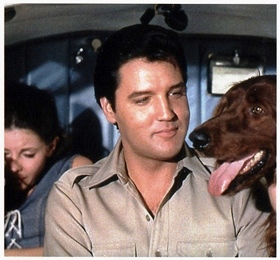
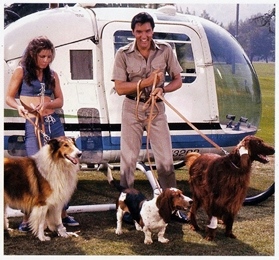
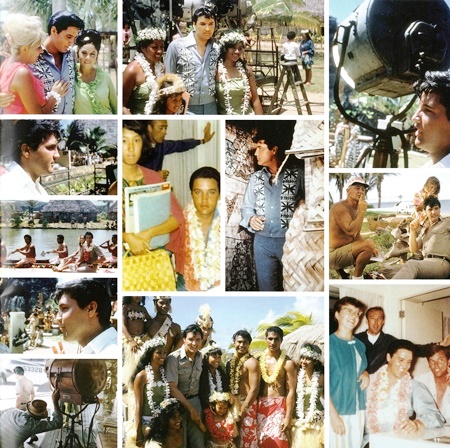
A lovely collection of candid photos from the booklet
‘Paradise Hawaiian Style’ V Take 3 starts rather weakly but Elvis increases his vocal and it ends up having a strong second section. This would be used for the final master. CL V Take 4 Elvis laughs, “I've got my nose full of chicken soup” and yet despite breaking up in laughter half-way through - “want an ice, baby?” – Elvis keeps going to the end of the song “That’s it man! Oh” - which makes it a really nice addition to your collection. As the engineer explains “We can use part of that believe it or not!” and they do, using the first section of Take 4 spliced with the ending of Take 3. ‘A Dog's Life’ (continued)' V On Take 7 for some reason Elvis tries out a different melody which is a more laid-back vocal version within him humming along to the guitar solo. I guess Elvis knew the end was in sight as he ends the track teasing “Meow.” EIN CL V Take 8, previous released, is one of the best messed up versions with Elvis noting ”Yeah oh baby” going into the guitar solo and then starts breaking up in laughter but for some reason decides to keep on going. "Bow-wow, hot dog, Oh no.." to the lyrics and ends with a fabulous, "Rufff". A gem. Luckily the following attempt was the final master. Near midnight Elvis must have been seriously happy to head out the studio and go home. With little time to spare the following day, August 5, Elvis and his gang had to fly to Hawaii to begin shooting the movie. Coincidentally on August 6 1965 The Beatles released ‘Help’ the soundtrack LP to their second movie. It included two #1 singles ‘Help’ and ‘Ticket To Ride’ as well as the Paul McCartney classic ‘Yesterday’. The Beatles soundtrack album has been voted as one of the "500 Greatest Albums of All Time" – it has sold over 4 million copies. ‘Paradise Hawaiian Style’ has not been voted one of the "500 Greatest Albums of All Time" The delight with this new box-set is the official release of the 'Sand Castles' session. But apart from that EIN could only discover a handful of other outtakes that added anything new to the previously released 70 minute 'Classic Album' version. The 24-page booklet is however excellent and with all the chart data and movie trivia the package provides exactly what collectors want - shame about the music!
EIN Website content © Copyright the Elvis Information Network. Elvis Presley, Elvis and Graceland are trademarks of Elvis Presley Enterprises. The Elvis Information Network has been running since 1986 and is an EPE officially recognised Elvis fan club.
|
|